Bangkok's burning season: air quality January to April
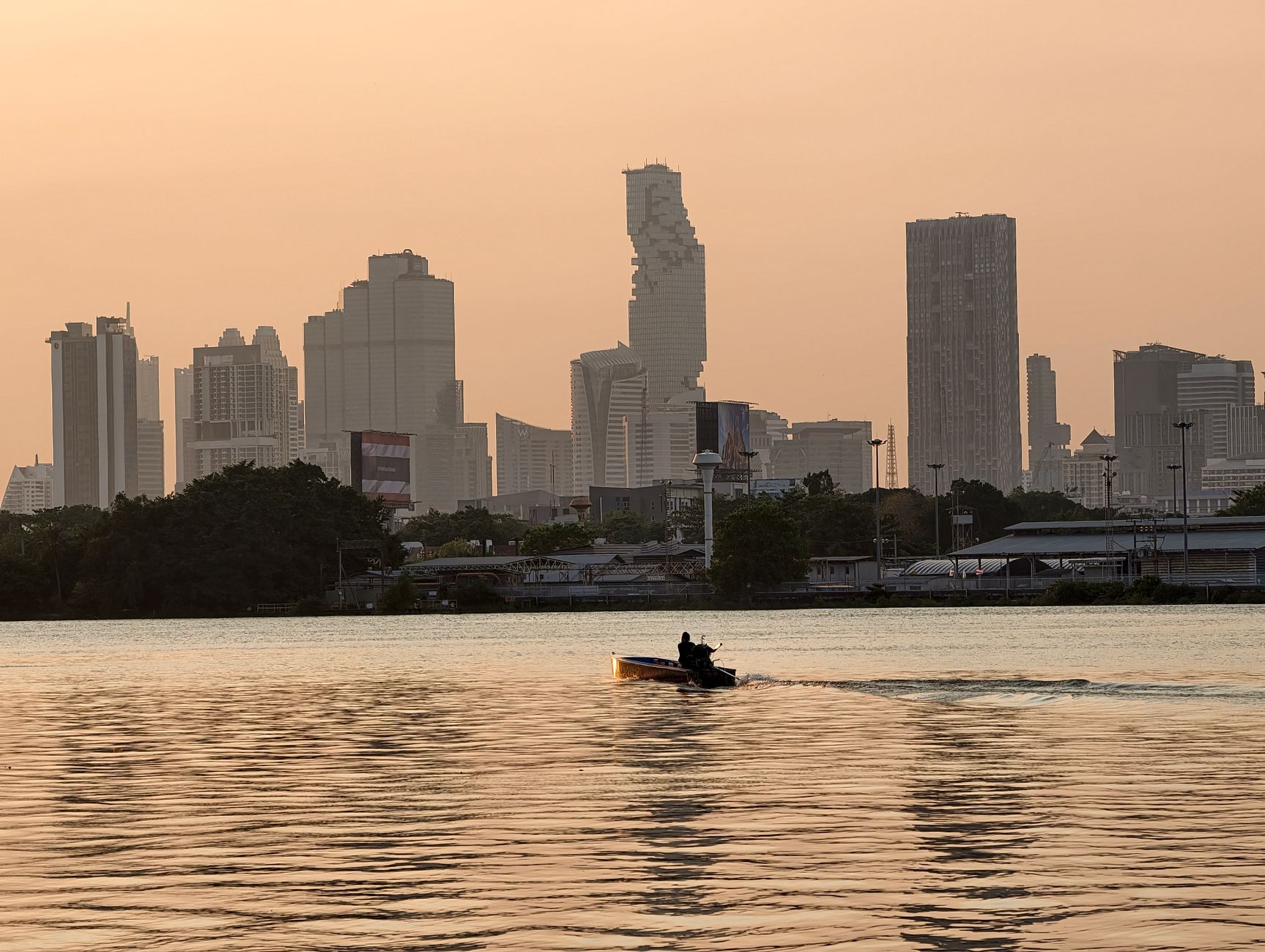 Hazy Bangkok skyline during burning season
PM2.5 regularly hits 150-200 from late January through March — here is what it means for your trip and when to reschedule.
What burning season actually is
From roughly mid-January to mid-April, farmers across northern Thailand, Myanmar, Laos and Cambodia burn crop residue — sugarcane, rice stubble, corn — to clear fields before the rains. The smoke drifts south and pools over central Thailand under the dry-season inversion layer, and Bangkok sits under it. Add the city's own traffic and industrial emissions, plus construction dust that is not damped down by rain, and you get PM2.5 readings that regularly cross 100 (unhealthy) and occasionally cross 200 (very unhealthy) for days at a time. The government tracks this on the Air4Thai app and issues advisories.
The worst weeks are usually mid-February through mid-March, when the burning peaks upcountry and the inversion is strongest. Chiang Mai gets far worse than Bangkok — often 300+ — but Bangkok is bad enough to matter for anyone with asthma, young children, older travellers or heart conditions. December readings average 40-60 (moderate); February averages 80-120 with spikes to 180. By late April the pre-monsoon winds start clearing the sky, and by June the rains have washed it clean.
What the numbers actually feel like
At PM2.5 of 50 (moderate) the sky looks slightly milky at distance but the city feels normal. Rooftop bar views are hazy rather than sharp. At 100 (unhealthy for sensitive groups) the smell of smoke is faint but noticeable outdoors, sunsets go orange and the far end of a long street looks foggy. Sensitive people get scratchy throats and headaches. At 150 (unhealthy) you can taste the air, the sun looks dim at noon, and even healthy visitors report tired eyes and mild coughs after a full day walking around.
At 200+ (very unhealthy) the city looks genuinely smoggy — Bangkok's tall buildings vanish into the murk, and photos from rooftop bars look like they were taken through greased glass. This is the level at which schools sometimes shut and the health ministry advises everyone to wear N95s outdoors. Bangkok crosses 200 maybe 8-15 days per year, almost all in February and March. It rarely stays there for more than 3-4 consecutive days before a wind change brings temporary relief.
How to check before you leave the hotel
Two apps run the show: IQAir (AirVisual) and Air4Thai. IQAir aggregates sensors across the city and gives a headline number plus a colour code — green under 50, yellow 51-100, orange 101-150, red 151-200, purple 201-300. Check it on waking and before deciding whether to spend a day outdoors. Air4Thai is the official government feed and has more sensor locations but a clunkier interface. Both are free. Readings vary by 20-40 points across the city — Bang Na and Din Daeng usually read higher than Sathorn or riverside — so check the sensor nearest your hotel.
Indoor readings in a well-sealed hotel with good HVAC are typically half the outdoor number. Older buildings, guesthouses with open-air corridors, and anywhere with windows that do not seal (most Khao San budget rooms) track the outdoor reading closely. If burning season air quality matters to you, pay up for a modern chain hotel — Marriott, Hilton, Novotel — where the HVAC is a filtered central system, and ask if the room has a HEPA purifier (many now do, on request).
What still works, what does not
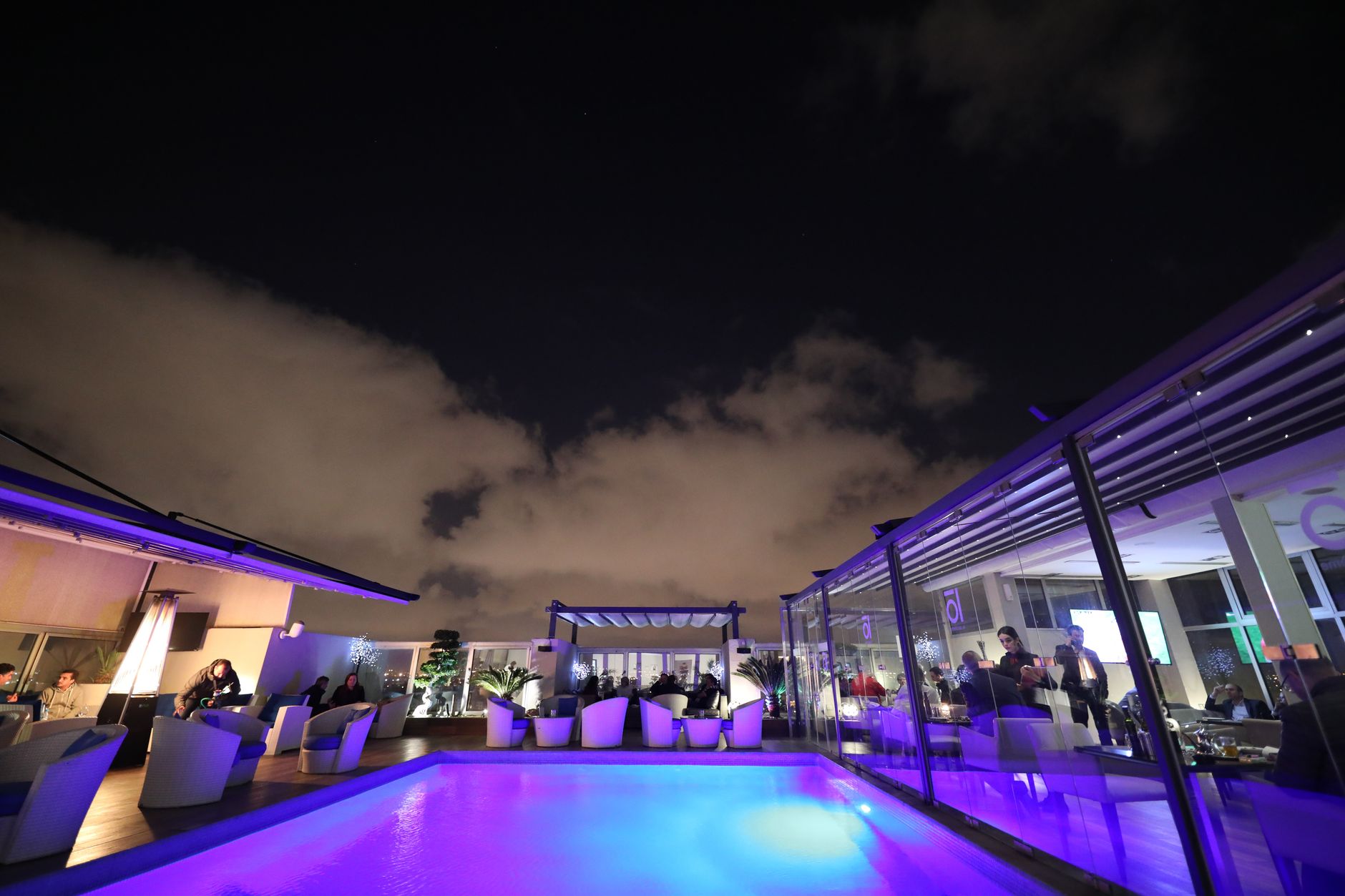
Indoor Bangkok carries on unaffected. Malls, museums, cooking classes, spas, restaurants and the BTS/MRT are climate-controlled and filtered. Chatuchak Weekend Market is partly covered but largely outdoor and unpleasant on a 150+ day. Grand Palace, Wat Pho and the Old City temples are outdoor and you will feel it after an hour. Rooftop bars are technically open but the view you paid for is gone — Vertigo at Banyan Tree and Sky Bar at Lebua both admit this and sometimes discount cocktails when visibility is under 2km.
Day trips make more sense in burning season than city days. Ayutthaya (an hour north) can be worse than Bangkok because it is closer to the burns. Kanchanaburi (west, three hours) is usually better because the westerly winds blow the smoke away from it. The islands — flying to Phuket, Koh Samui or Krabi — are entirely outside the smoke plume and often have air quality below 20. Many Bangkok residents build long weekends south during February and March. Domestic flights are cheap ($40-80 return) and hotels on the islands are in their high season but not unaffordable.
Room rates during burning season
Air quality is not yet priced into Bangkok hotel rates the way monsoon is. February is high season (cool, dry, no rain) and rates run 20-40% above the annual average across all categories — a four-star at $120 in September lists at $155-175 in February regardless of PM2.5. March softens slightly (a mid-shoulder month) and April drops back until Songkran. If you want cool-season weather without peak prices, target the last two weeks of March: temperatures are climbing but still tolerable, burning is easing, and rates dip 10-15% below February.
The exception is properties with a strong wellness or spa positioning — a few now advertise HEPA-filtered rooms and pool decks with mist systems, and they hold rates through the smoke weeks. If you have respiratory sensitivity and need to be in Bangkok in February or March, this is worth paying for. Expect $200-350 a night for a modern five-star with a full-building air-filtration system, versus $150-200 for the same tier without.
Who should reschedule and who should not
Reschedule if: anyone in the party has moderate-to-severe asthma, COPD, or an active respiratory infection; you have young children (under 4) and plan to spend days outdoors; you are visiting specifically for the rooftop-bar and Grand Palace photography experience; or you have flexibility to move dates to November-January or May-June. The difference between a February visit and a November visit is stark — the same city, twice the visibility, half the eye irritation.
Do not reschedule if: your trip is primarily indoor (shopping, spas, food halls, cooking classes, malls); you are here for two or three nights only and the weather forecast shows westerly winds (which clear the smoke temporarily); you already have hotels booked with good HVAC; or the alternative dates are during Songkran or full monsoon. Burning season is a real issue but Bangkok is a large, largely indoor city, and a moderately fit visitor with no respiratory conditions will get through a week without medical consequence.
The masks question
N95 or KN95 masks work; surgical masks and cloth masks do not filter PM2.5 particles effectively. Pharmacies (Watsons, Boots, Fascino) sell N95s for $1-2 each and stock heavily during burning season. A fitted N95 reduces your PM2.5 exposure by roughly 90%, so a 150 outdoor reading becomes an effective 15 behind the mask. The catch is that N95s are uncomfortable in 95°F heat and hard to eat or drink with, so realistically you wear one on the tuk-tuk and take it off in the restaurant.
Locals with sensitivity wear them all day in February and March; visitors typically wear them only when readings cross 150 or for extended outdoor time. Children under 2 should not wear masks (suffocation risk). For children 2-8, dedicated kids' N95s exist and fit better than cut-down adult sizes. If you did not bring masks, buy them at any pharmacy on arrival — the tourist markup is minimal and the selection is better than most Western pharmacies during their post-pandemic dry spell.
Before you book
What people ask before booking Bangkok.
No. Bangkok's annual average PM2.5 is around 25-30; Delhi's is 90+, Beijing's is 40-50. But during February-March peak weeks Bangkok crosses 150-200, which matches bad days in those cities. The difference is duration — Bangkok's bad air is seasonal (roughly 8 weeks); Delhi's is close to year-round.
Rarely. January-March is the driest stretch of the year, averaging under 1 inch of rain per month. This is precisely why the smoke pools — no rain to wash it out. The first pre-monsoon storms in mid-to-late April are what finally clear the sky.
On sub-100 days, yes. On 150+ days you will taste the smoke in the food and the exposure adds up over a two-hour dinner. Rooftop restaurants take a double hit — high exposure and no view. Move to indoor tables during the worst weeks; most restaurants keep both.