Getting around Bangkok without a car: a route-by-route guide
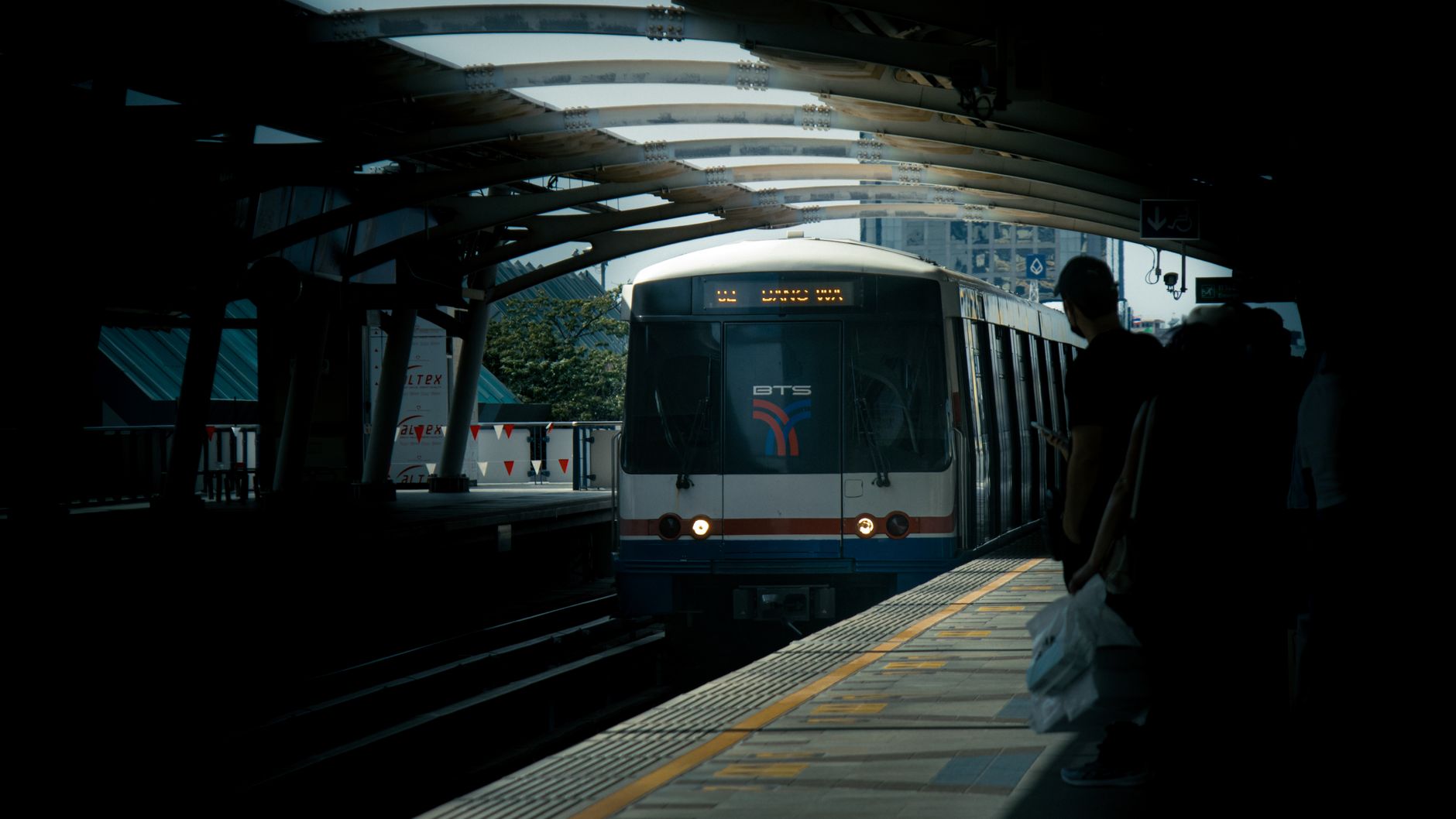 BTS Skytrain train arriving at an elevated station in central Bangkok
Every major tourist link mapped to the right transport mode, with real fares and honest limits on where the trains stop working.
Why no one rents a car here
Bangkok has 11 million vehicles for 10 million people and traffic that regularly averages 15 km/h in the afternoon. Parking at attractions is scarce and expensive, hotel valet is $8-15 a day, and international driving permits are enforced. Almost no visitor rents a car for the city itself — even locals with cars take the BTS for anything downtown. Rentals make sense only for day trips outside Bangkok (Kanchanaburi loop, coastal Rayong) where the alternative is a slow bus.
The good news: Bangkok has one of the better transit setups in Southeast Asia once you understand the four modes. BTS Skytrain (elevated), MRT (subway), Chao Phraya boats (river), and canal boats (Saen Saep khlong). Plus Grab and metered taxis for the last mile. Between them, 90% of tourist trips can be done without a private car. The remaining 10% is where you need to know the workarounds.
BTS Skytrain: the workhorse
Two lines, Sukhumvit (light green) and Silom (dark green), meeting at Siam. Runs 6am to midnight, trains every 3-6 minutes. Fares $0.50-2 depending on distance. Buy a Rabbit card for $6 (includes $3 credit) if staying more than three days; it saves the queue at ticket machines. Air-conditioned, elevated, and stations connect to malls via covered skywalks — this is how you avoid the heat and the rain.
BTS covers Sukhumvit end-to-end (Nana, Asok, Phrom Phong, Thonglor, Ekkamai), Silom, Chit Lom, Siam, and up to Mo Chit for Chatuchak. It does not cover the Old City, Chinatown proper, or the river beyond Saphan Taksin. For those you switch modes at Saphan Taksin (boat) or Sala Daeng (walk to MRT Si Lom).
MRT: fills in the gaps
The Blue Line loops through the city and crucially serves Chinatown (Wat Mangkon), Hua Lamphong, Silom (Si Lom), and the Old City edge (Sanam Chai for the Grand Palace area). Fares $0.50-1.30, same hours as BTS. Same Rabbit card does not work on MRT — you need a separate MRT card or single tickets. This is annoying and the two systems have promised integration for a decade.
For most tourists the MRT matters for exactly three trips: to Chinatown, to the Grand Palace (via Sanam Chai station, opened 2019 and underused), and to Chatuchak via Kamphaeng Phet which drops you inside the market rather than at the BTS end. Learn those three and you can do the whole Old City-Chinatown loop without a taxi.
Chao Phraya Express Boat: don’t skip it
The orange-flag boat runs Sathorn pier (Saphan Taksin BTS) to Nonthaburi north of the city, calling at every major tourist pier: Tha Tien for Wat Pho, Tha Chang for the Grand Palace, Phra Athit for Banglamphu, and Rachawongse for Chinatown. Fare a flat $0.50, runs 6am-7pm. It's faster than a taxi to the Old City in afternoon traffic and cheaper than the tourist blue-flag boat which charges $5 for the same route.
The blue-flag tourist boat has English commentary and a hop-on/hop-off day pass for $6. It runs less frequently and stops at fewer piers, but the commentary is useful on a first trip. Skip the dinner cruises unless you specifically want the experience — the food is mediocre and the river is prettier from a rooftop.
Grab and taxis: when trains don’t reach
Grab is the local Uber and works flawlessly. Download the app, register a card, and forget cash. Sukhumvit to the Old City is $6-9, airport runs $10-15 (Suvarnabhumi) or $8-12 (Don Mueang), Chatuchak to Silom $4-6. Surge pricing hits during rain and rush hour (7-9am, 4-7pm), often 1.5-2x. Metered taxis are 20-30% cheaper but require you to insist on the meter — many drivers quote a flat fare that runs double.
Motorbike taxis (orange vests) are the local secret for short trips: $1-2 for a one-mile hop, seven times faster than a car in stop-start traffic. Not recommended for visitors carrying luggage or wearing shorts, and helmets range from ceremonial to non-existent. Use them for a one-station backup when the BTS is packed.
The routes where transit fails
Three tourist trips genuinely don’t work by transit. First: Khlong Toei to the Grand Palace — no direct BTS/MRT link, boat is a long detour. Grab it, $5-7. Second: any trip after midnight, when BTS and MRT stop; Grab is your only option and surges hard. Third: Don Mueang airport, which has no train link at all despite being served by three lines that stop just short. Bus A1 to Chatuchak BTS runs $1 but takes 45-60 minutes; Grab is worth the $8-12.
Sukhumvit to Thonglor and Ekkamai is on the BTS but the sois themselves are long — a hotel address like 'Soi 55, section 12' can be 2km from the station. Check on Google Maps before you assume the BTS gets you to the door; often it's the BTS plus a $2 motorbike taxi from the mouth of the soi.
A day-by-day transit plan
Day one (Old City): MRT to Sanam Chai for Grand Palace, walk to Wat Pho, cross-ferry to Wat Arun. Return via Chao Phraya Express to Saphan Taksin BTS. Total transit cost: $2. Day two (Chatuchak and central): BTS to Mo Chit, MRT Kamphaeng Phet on the way out, back to Siam for shopping. Total: $3. Day three (Chinatown): MRT to Wat Mangkon, walk the shophouse alleys, Grab back to hotel late. Total: $6.
Across a full week most travellers spend $25-40 on transit total — less than one airport transfer in most cities. The Rabbit card and MRT card together are the only friction, and both refund the deposit when you leave. There is no city-wide integrated pass worth buying; the day passes save nothing at these fares.
Before you book
What people ask before booking Chatuchak.
Yes, until it closes at midnight. Stations are well-lit, staffed and monitored. The last train runs shortly before midnight from the terminus stations, closer to 11:30pm from central stations. After midnight you’ll need Grab; a female traveller alone in a Grab at 1am is standard and safe.
No. The Rabbit card as a stored-value option is enough; day passes save nothing at Bangkok's low fares unless you’re making 10+ trips a day, which you won’t. Airport Rail Link uses its own single tickets. Add $10-15 to the Rabbit card on arrival and top up if needed.
For short trips in daylight, yes, with these rules: only orange-vested drivers at registered stands, insist on a helmet, keep bags in front of you, don’t wear a skirt or loose scarf. Not safe for airport runs, not safe with young children, not safe at night in the rain. $1-2 per trip, one passenger only.
Reconsider the hotel. A 15-minute walk to the nearest station in 34°C at 90% humidity is not a 15-minute walk — it's a taxi. Every $10 saved on room rate you spend on daily Grab trips within three days. Book a hotel within 400 metres of Asok, Phrom Phong, Sala Daeng, Chit Lom, Nana or Sukhumvit stations.