A rainy day plan for Bangkok: what to do when the monsoon lands
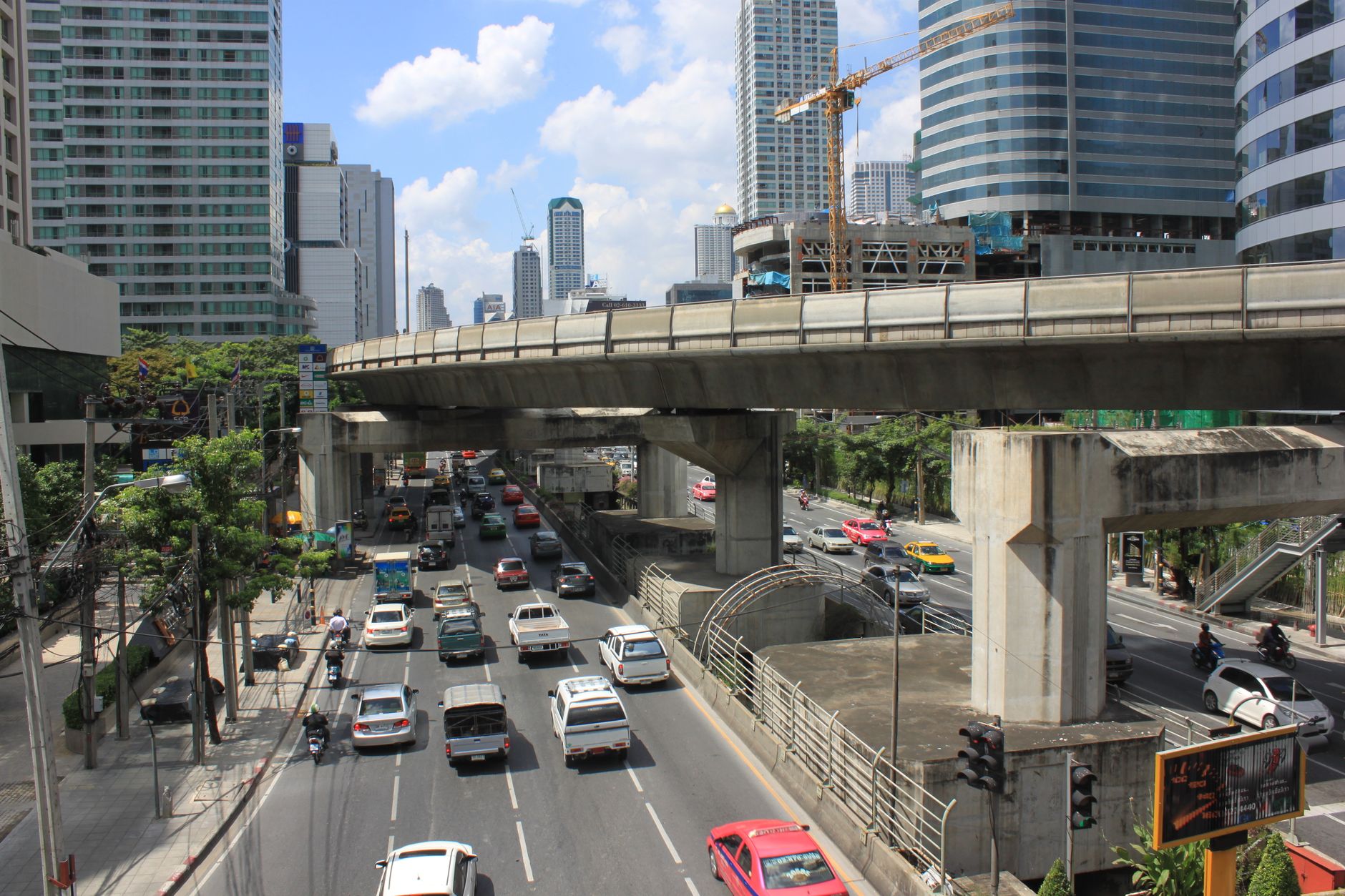 Rain sheeting off a covered Skytrain walkway in central Bangkok
Eight indoor stops linked by covered walkways and the MRT, tested against a real July storm that dropped 65mm in three hours.
What Bangkok rain is actually like
The southwest monsoon runs mid-May to mid-October, peaking in September. Rain almost never lasts all day — the pattern is a bright morning, cloud building from noon, a violent 60-90 minute storm between 2 and 5pm, then clearing. October storms are longer, occasionally all afternoon. Streets flood ankle-deep in Sukhumvit and knee-deep in the Old City within 20 minutes; the drainage cannot keep up. Taxis vanish, Grab surges to 3x, and the BTS stays open.
So the rainy-day plan is not about hiding for 12 hours. It's about staying dry between 1pm and 5pm and having a good time doing it. The chain below uses two malls, one museum, one covered market, one cinema, one spa, and one long lunch. All are linked by BTS, MRT or covered skywalks. Total walking outside in the rain: about six minutes.
Morning: get one outdoor thing done before noon
Storms rarely land before 1pm. Use the morning for something you cannot do indoors: the Grand Palace, Chatuchak, or a river boat. Start at 8am, be done by 12:30pm. Check the radar on the Thai Meteorological Department app around 11:30am — you’ll see the cell forming west of the city over the Gulf.
If the morning is already wet, skip outdoors entirely and start the indoor chain at 10am. Weekends open early; weekdays some museums don’t open until 10am so time it accordingly. Wear sandals you can rinse, not sneakers — wet canvas shoes on air conditioning is misery for the rest of the day.
Stop 1: lunch at a mall food hall
Head to Siam Paragon's Gourmet Market on the ground floor or EmQuartier's Helix food hall at Phrom Phong. Both are proper food halls, not court food: $5-9 for a bowl of khao soi, boat noodles, or Isaan sausage with sticky rice. Paragon has more variety and better dessert; Helix has better views and less noise.
Sit near a window and watch the storm hit around 2pm. This is the moment the plan justifies itself — 400 people outside sprinting for cover, you eating mango sticky rice for $4. Do not leave the mall until 4pm. Both connect by covered skywalk to the BTS.
Stop 2: MOCA or the Jim Thompson House
For the middle of the storm, pick a museum with a proper roof. The Museum of Contemporary Art (MOCA) on Vibhavadi-Rangsit is 20 minutes by taxi from Chatuchak and holds Thailand's best modern art collection ($5). Give it two hours. It's not on the BTS but the taxi from Mo Chit is $4-6.
Alternatively, the Jim Thompson House near BTS National Stadium is a preserved teak compound and silk museum ($10), fully covered walkways between the buildings. Ninety minutes. Both are the right size for a storm — long enough to outlast the weather, short enough not to feel like a hostage situation.
Stop 3: a proper Thai massage
By 4pm the rain is easing but the streets are still flooded. Book a two-hour Thai massage — $18-30 at a mid-range spa near Asok or Phrom Phong, $60-90 at a hotel spa if you want the full ritual. Health Land Asoke is the reliable mid-range option, cash only, walk-in usually works on a weekday.
Two hours of a proper massage is the correct answer to being trapped indoors. You emerge at 6pm to clean streets, cooler air, and no more storm. This is when Bangkok is at its best in the wet season — the light after the rain, everything washed, the shophouses opening up again.
Stop 4: dinner and a covered market
For dinner, target something with a real roof rather than an outdoor food street. Chinatown's Yaowarat is technically outdoor but the shophouse overhangs cover most of the pavement — a light drizzle is fine, a repeat storm is not. Better on a genuinely wet night: Baan Khanitha near Sathorn ($20-30 a head, traditional Thai in a restored house) or the food floor at Icon Siam mall on the river.
Icon Siam's SookSiam floor is a covered indoor recreation of a floating market — kitschy, but on a wet night it works: 100+ vendors, $3-6 dishes, and the free shuttle boat from Sathorn pier is enclosed. Skip it in good weather; use it when the sky is falling.
Stop 5: a cinema or a hotel bar
If it's still raining at 9pm, Bangkok's cinemas are excellent and cheap: $6-8 for a standard seat, $18-25 for a full recliner-and-food package at Paragon Cineplex or SF World at CentralWorld. English-language films screen in English with Thai subtitles. This is where locals go on wet nights.
Prefer a bar? Ground-floor hotel bars — Bamboo Bar at the Mandarin Oriental, the Writer's Bar at the Author's Wing — are the right call. Cocktails $16-22 but you are dry, the music is live jazz, and the taxi rank is inside the porte-cochere. Rooftops are closed in a storm; do not attempt one until you check with reception.
Where to sleep on a wet night
For a rain-heavy trip, book directly above a BTS or MRT station. Asok, Phrom Phong, Chit Lom, Sala Daeng and Sukhumvit stations all have hotels connected by covered walkway — you can leave your room and reach a train without a raindrop. Rates $70-140 for a four-star with pool and breakfast.
Avoid the riverside on a monsoon trip unless you’re specifically after the view; the shuttle boats to Saphan Taksin get choppy in a storm and you’ll take a taxi anyway. Avoid low-lying sois in Sukhumvit (Soi 39, Soi 55 mid-section) that flood first. Ask the hotel whether the entrance floods — the good ones will tell you honestly.
Before you book
What people ask before booking Siam.
No. Forecasts say rain on 25 of 30 days in September and it still only rains for two hours a day. Plan outdoor stops for mornings, indoor stops for afternoons, and check the radar at 11am. The forecast is directionally right and precisely wrong.
A $3 poncho from any 7-Eleven and sandals that dry fast. Umbrellas invert in monsoon wind and you can’t hold one while carrying a bag. Waterproof shoes are useless once you step in shin-deep water, which will happen. Accept wet feet and change socks at the hotel.
Ayutthaya trains and Kanchanaburi buses run in any weather. Floating markets still operate. The only realistic cancellation is a coastal speedboat to Ko Larn from Pattaya — those get called off in high seas, roughly 3-4 days a month in peak monsoon. Confirm the morning of.