Bangkok school holidays: when Thai families travel and what changes in the city
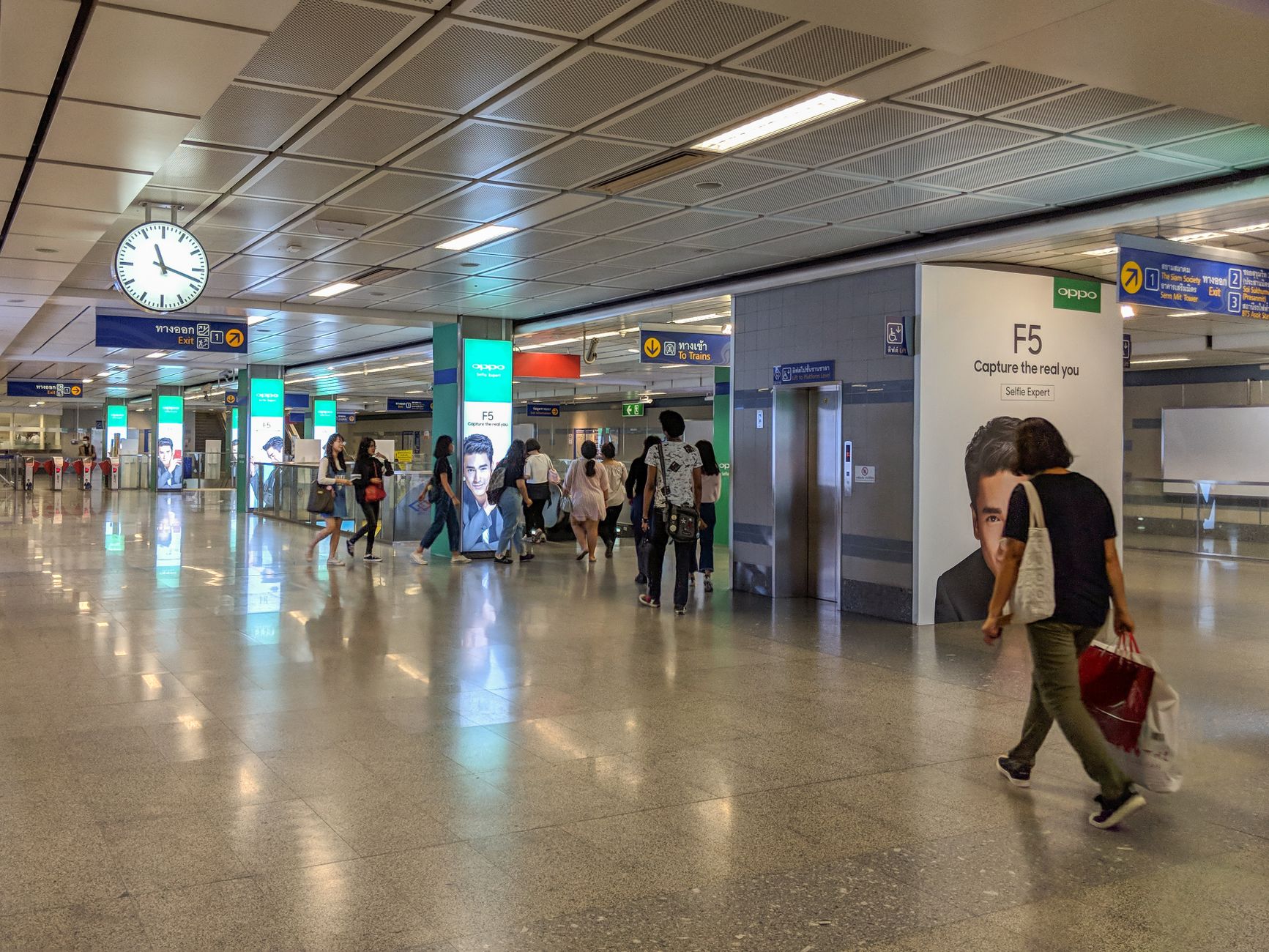 Thai families packing into a domestic terminal during school holidays
Thai school holidays run March-May and October, and they reshape the city — domestic flights double, malls fill, temples empty, and mid-week Bangkok hotel rates fall 20-30% while weekend rates in Hua Hin and Pattaya climb.
The Thai school calendar and why it matters
Thai schools run on a two-semester system that is offset from Western calendars: term one runs May to September, term two from November to February, with the long summer break from mid-March to mid-May and a shorter mid-year break in October. Universities follow a similar rhythm. This means the peak domestic travel weeks are late March, early April, all of October, and — crucially — the entire month leading up to Songkran (13-15 April), which is both a school holiday and a national holiday stacked together. About 3.5 million people leave Bangkok in Songkran week alone.
The traveller-relevant effect is simple: Bangkok itself gets slightly quieter mid-week during these breaks because families leave the city, while beach and mountain destinations fill up. Domestic flights from Suvarnabhumi and Don Mueang to Chiang Mai, Phuket, Krabi and Koh Samui double or triple in price in mid-March through mid-April, and every hotel in Hua Hin and Pattaya raises weekend rates by 40-60%. If your itinerary includes any Thai destination beyond Bangkok in these windows, book those legs first and slot Bangkok into whatever weekdays remain.
What Bangkok looks like when locals leave
The most obvious change is traffic. Bangkok's baseline gridlock eases noticeably during the March-April school break — the morning Sukhumvit crawl clears 15-20 minutes faster, taxi wait times drop, and the BTS at 8am is standing-room instead of crush-loaded. This is the best time of year to do the temple circuit if you can stand the heat: Wat Pho, the Grand Palace and Wat Arun all see 20-30% fewer domestic visitors even as international numbers hold, so queues shorten. School group visits, which usually add 200-300 uniformed children to Wat Pho on any morning, disappear entirely.
Malls, however, get busier, not quieter. Families who stay in the city spend their break at Iconsiam, Siam Paragon, EmSphere and CentralWorld — the food courts on weekends in early April are chaos, cinemas sell out for the school-holiday film releases, and the ice-skating rink at CentralWorld runs 90-minute waits. Restaurants with kids' menus fill by 6pm rather than the usual 7:30. This is worth knowing if you are dining as a couple: book adult-focused restaurants (the omakase spots on Sathorn, the rooftops on Sukhumvit) which stay easier to walk into during family-heavy weeks.
Hotel prices in Bangkok during Thai holidays
This is the counterintuitive piece: Bangkok hotel prices soften during Thai school holidays, especially mid-week, because the local weekend-staycation trade dries up when families leave for the coast. A four-star in Sukhumvit that runs $130 on a March Saturday drops to $95-110 on the Tuesday and Wednesday of the same week during school break. Serviced apartments in Ekkamai and Thonglor, which normally cater to expat families and short-term visitors, add 10-15% discounts for stays of five nights or more in April. Book direct on hotel sites — the third-party rates lag by 3-5 days behind these adjustments.
The exceptions are Chinese New Year (mid-January to mid-February depending on the year) and Songkran week itself, when Bangkok rates hold firm or climb for the reasons in the festival-specific posts. Outside those two windows, March 15 to April 10 is quietly one of the best value periods to be in Bangkok, weather aside. The hot-season heat is the trade-off — 36-39°C afternoons — but if you plan around the shade the price difference over January is $30-50 a night on the same room, sometimes more.
The beach destinations locals actually pick
When Bangkokians leave for the beach in April, they do not mostly go to Phuket. The pattern is: Hua Hin for a long weekend (2-3 hour drive, family-friendly, king's summer palace nearby), Pattaya for a shorter weekend if they cannot face the drive (90 minutes with traffic, more nightlife than family scene but there are family beaches), and Koh Samet for a 3-4 day trip because it is the closest proper island (ferry from Ban Phe, 3.5 hours total from Bangkok). Phuket and Krabi are the flying options, taken by families who can afford the domestic flight spike.
For a foreign traveller pairing Bangkok with a beach in April, the calculation shifts. Hua Hin on a Sunday-Wednesday is easier and cheaper than a Friday-Saturday; the same three-night stay costs $90-140 per night midweek versus $180-260 on the weekend at equivalent four-stars. Koh Samet is genuinely underrated — cheaper hotels, better beaches than Pattaya, and reachable overland — but is packed to bursting at Songkran itself. If Songkran week is unavoidable in your trip, Hua Hin midweek plus Bangkok on the water weekend is the pattern that beats the crowd.
October break: the sleeper school holiday
The mid-October school break gets much less attention than March-April but reshapes Bangkok in similar ways. It typically runs 10-25 October (dates shift by school), and it lands at the tail end of monsoon when the weather is turning. Domestic flights to Chiang Mai and the islands climb 30-50%, but not as sharply as April because it is not paired with a national holiday. Hua Hin and Pattaya fill on the middle weekend. Bangkok stays walkable and hotel prices sit at their monsoon-season lows — $75-100 for four-star Sukhumvit, weather forecast permitting.
October also carries the Vegetarian Festival (Tesagan Gin Je), a nine-day period usually in early to mid-October when the Chinese-Thai community eats strict vegan and Yaowarat's stalls hoist yellow flags to signal jay food. It is the easiest week of the year for vegetarians and vegans to eat street food. The festival is quieter and less spectacular than Chinese New Year but genuinely useful if dietary restrictions have shaped past trips. Book a hotel walking distance from Chinatown (the riverside Bang Rak side, at $80-120) and eat your way down Charoen Krung and Yaowarat for a week.
Bangkok during university breaks
Chulalongkorn, Thammasat and the other big Bangkok universities break for roughly the same windows as schools, which affects a specific set of neighbourhoods. Siam Square, MBK, Silom Complex and the areas around university gates go quieter during the March-May break — the queue at the famous Somtam Nua in Siam Square drops from 40 minutes to 10, the cheap eats around Chula's back gate on Soi Chula 22 keep opening but with half the normal crowd. This is the window to eat student-priced food in the tourist zone without the wait.
The nightlife adjusts too. RCA (Royal City Avenue), Bangkok's biggest local club strip, is majority Thai student clientele and dies down noticeably in mid-March through April as students go home to the provinces. Thonglor and Ekkamai — expat and older-Thai heavy — carry on as normal. If clubbing with locals is the point, October break and December-February (in-term) are better than the April window. Rooftop bars, jazz clubs and the Thonglor cocktail scene do not follow the school calendar and stay at their usual busy from Thursday through Saturday year-round.
Before you book
What people ask before booking Bangkok.
The main summer break runs from around 10 March to 15 May, with individual schools varying by a week either side. The mid-year break is early to mid-October, typically 10 days. Public schools follow this pattern; international schools in Bangkok often align with Western calendars instead, which is why some neighbourhoods (Sukhumvit around the international-school clusters) empty in July-August as well.
Museums and temples are less crowded by domestic visitors, yes — noticeably fewer school group tours and Thai family visits. International tourist numbers hold or climb, so the overall difference at the Grand Palace and Wat Pho is 15-25% fewer people, which is real but not dramatic. Wat Arun and the lesser-visited temples (Wat Suthat, Wat Ratchanatdaram) feel much emptier.
Only if you cannot tolerate either the water festival or the heat. Otherwise, the four days before Songkran (10-12 April) are one of the best-value windows in the year — hot but hotel rates 25-30% below January, city half-empty of locals, and the festival buildup atmospheric without the chaos of the main three days.
For Songkran week and the surrounding two weeks, 10-12 weeks ahead — prices double or worse and morning flights sell out first. For general March-April and October, 4-6 weeks is enough for reasonable prices. Both Suvarnabhumi and Don Mueang get chaotic on peak days; allow an extra 45 minutes at Don Mueang, where AirAsia and Nok Air run their family-heavy routes.