Hotels with kitchenettes in Bangkok for stays of a week or more
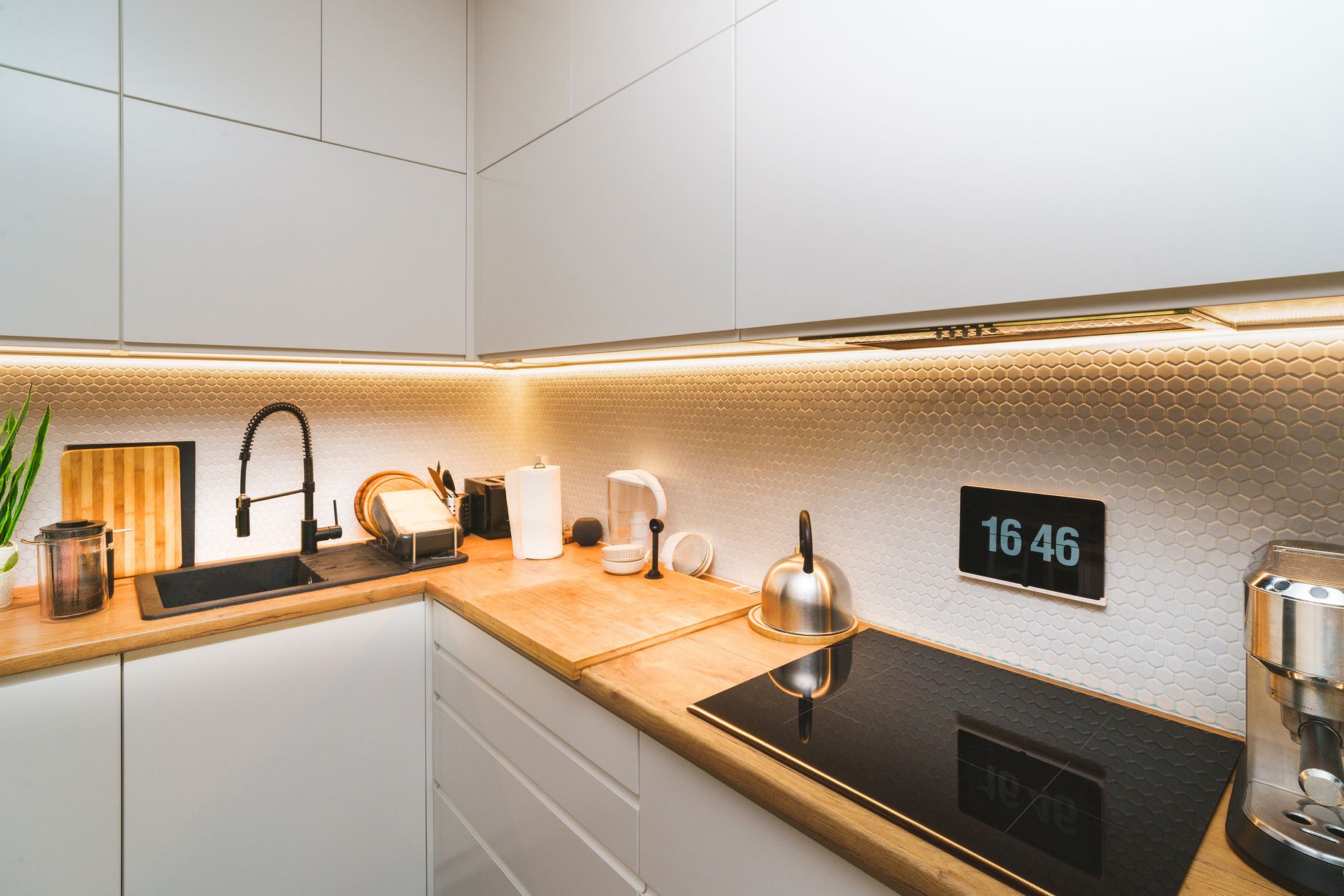 Compact serviced apartment kitchenette with induction hob, kettle and fresh produce on the counter
Eight kitchenette formats compared for one-to-four week Bangkok stays, with real weekly rates from $420 to $2,100 and honest notes on what you can and can’t actually cook.
Who actually needs a kitchenette in Bangkok
Bangkok is the world capital of cheap, excellent takeaway food — a full meal from a Sukhumvit soi vendor runs $2-4, and a mid-range restaurant lunch is $8-12. On paper, cooking your own dinner makes no economic sense. In practice, kitchenettes matter for four groups: families with young children who need reliable breakfast at 6.30am, dietary-restricted travellers (coeliac, severe nut allergy, strict vegan) who tire of translating labels, remote workers on 14-plus-day stays who want a functional morning routine, and repeat visitors who’ve already eaten every green curry on the block.
The trade-off is clear-eyed: a kitchenette room in Bangkok costs $15-40 a night more than an equivalent standard room, so you’re paying $105-280 a week for the option to cook. That pays back only if you use it four or more mornings a week or if the alternative is a $28 daily hotel breakfast for a family of four. For a solo one-week trip, skip the kitchenette; for a family two-weeker or a month-long remote-work stay, it's the highest-leverage upgrade on the site.
The genuine one-bedroom serviced apartment tier
The strongest category is the serviced-apartment buildings concentrated in Asok, Phrom Phong, Ekkamai and Sathorn, which rent full one-bedroom units with proper kitchens — two-burner induction hob, full-size fridge, microwave, oven or convection, kettle, toaster, and a real drawer of knives, chopping boards and pots. Weekly rates run $700-1,100 for a 45-60 sq m unit with a separate living room, and monthly rates drop to $1,800-2,600 with utilities included. Housekeeping is typically three times a week rather than daily.
This is what you book for a two-week family stay or a one-month working trip. The buildings have pools, gyms and often a small on-site convenience store, and every one of them is a five-minute walk to a BTS station. The honest catch is that the units are functional rather than boutique — expect neutral fabrics, corporate art and a slightly dated bathroom on properties more than five years old. If you want the room to be a highlight of the trip, book a hotel; if you want the room to be a working home, this is the tier.
The hotel-suite-with-kitchenette tier
Several four and five-star hotels sell suite categories with a partial kitchenette — a single induction plate, a small fridge, a microwave, a kettle, and enough drawer space for a week of basic groceries. Weekly rates land at $1,100-2,100, which is a significant premium over the serviced-apartment tier and only makes sense if you want full hotel service (daily housekeeping, room service, concierge) alongside the ability to make your own toast. Ovens and full hobs are rare in this category.
Book this if the trip is fundamentally a leisure or business stay with occasional cooking rather than a residential stay with occasional room service. The kitchenette here is honestly a snack station and a coffee corner, not a place you’d cook a proper dinner. If you plan to make a real evening meal more than twice a week, save $400-700 and take the serviced apartment instead — you’ll cook better food in a better-equipped kitchen and eat out in nicer restaurants with the difference.
The budget aparthotel tier — $60-90 a night
A tier of smaller, less polished aparthotels operates in Ratchathewi, upper Sukhumvit (Phra Khanong, On Nut) and around Ari, renting studios with kitchenette from $420-630 a week. The kitchen is minimal — one induction plate, a fridge you can just about fit a week's groceries in, a microwave, a kettle — but the rooms are 25-35 sq m, clean, and typically five to ten minutes from a BTS station. Housekeeping is often only twice a week and there's no daily turndown.
This is the right pick for a solo remote worker on a two-to-four-week stay who wants to spend under $100 a night and doesn’t need a pool. The trade-offs are honest: thinner walls than the premium serviced apartments, older lifts, and a front desk that closes overnight (you use a keypad after 10pm). Test the wifi in the first hour — the biggest variance in this tier is internet speed, and a slow line makes the whole point of a long stay collapse. If it's under 40 Mbps, ask to switch rooms or leave.
The Airbnb-style condo rental — legal grey zone
You’ll find hundreds of private condo listings across Bangkok with proper kitchens, weekly rates from $350-800, and better design than most aparthotels in the same price band. The legal issue is real: Thai law technically prohibits daily rental of condominium units for stays under 30 days, and building juristic offices in central Bangkok have become increasingly aggressive about enforcement — security may refuse to let you in, and evictions midway through a stay do happen. Rentals of 30-plus days are legal and unproblematic.
The workable strategy: for a stay of one month or longer, private condo rentals are the best value in the city, particularly in the Ratchathewi and Phaya Thai areas where new towers rent modern one-beds for $900-1,400 a month with pool, gym and BTS access. For a stay under 30 days, book a licensed serviced apartment or aparthotel instead — the small saving from a condo rental isn’t worth the small but real chance of being told to leave on night three.
What you can actually cook, and where to shop
With a two-burner hob and a microwave you can cook everything you’d cook at home: pasta, stir-fries, soups, eggs, grilled fish, rice-cooker meals. With a single induction plate you’re limited to one-pot meals, and without an oven you’re skipping anything roasted. Groceries are cheap and excellent — a Gourmet Market or Villa Market inside a mall stocks Western brands at 30-50% more than supermarket prices at home, while Tops and Big C stock the local equivalents at half the price. A week's groceries for two runs $60-90 at Tops, $120-160 at Villa Market.
The kitchenette dark art: bring your own good knife (an 18cm chef's knife in checked luggage), a small silicone spatula and a decent pepper grinder. Every serviced apartment supplies these items but the knives are blunt, the spatulas are worn plastic, and the pepper is dust. Three items, $60 total, transform what the kitchen can actually produce. And use the local wet markets — Or Tor Kor near Chatuchak has the best produce in the city, and Klong Toey market has fish and meat at a third of supermarket prices.
Which tier to book, by stay length
Under one week: skip the kitchenette entirely, book a standard four-star room and eat out for every meal. You’ll spend $8-15 a day on food and the extra $30 nightly for a kitchenette is wasted. One to two weeks: hotel suite with kitchenette if the trip is leisure-focused, budget aparthotel if it's working-focused. Two to four weeks: full serviced apartment in Asok, Phrom Phong or Sathorn — the extra space and proper kitchen change how the trip feels. One month plus: serviced apartment on a monthly rate, or a legal 30-plus-day condo rental if you want more design and don’t need daily housekeeping.
The single strongest predictor of whether a kitchenette pays back isn’t the length of the stay — it's whether you’d cook at home on a normal weeknight. If you order takeaway five nights a week at home, you won’t cook in Bangkok either, and the kitchenette becomes a $30-nightly place to store water bottles. If you cook four dinners a week at home, you’ll cook four dinners a week here too, and the tier above is the trip's best decision.
Before you book
What people ask before booking Bangkok.
Serviced apartments include full pots, pans, plates, cutlery, glasses and basic utensils as standard. Hotel suites with kitchenettes include a kettle, mugs and glasses but often not pots or knives — you may need to ask housekeeping. Budget aparthotels vary widely; confirm at booking, because a room with a hob but no pan is useless.
Only marginally, because eating out is so cheap. A home-cooked pasta dinner costs $4-6 for two versus $12-18 at a mid-range restaurant, so you save $8-12 a meal. Over a two-week stay with four home dinners a week, that's $60-90 saved — real money, but not the main reason to book a kitchenette.
Rentals of 30 days or longer are legal and unproblematic. Rentals under 30 days in condominium buildings are technically illegal under the Hotel Act and Condominium Act, and enforcement by building juristic offices has increased. For short stays, book a licensed serviced apartment or aparthotel instead.
On weekly and shorter bookings, yes — everything is included in the nightly rate. On monthly bookings, some buildings charge electricity separately at $30-80 a month depending on aircon use, while wifi and water are usually included. Confirm before signing a monthly contract, because bills for heavy aircon users can double.