The quietest hotels in Bangkok for light sleepers
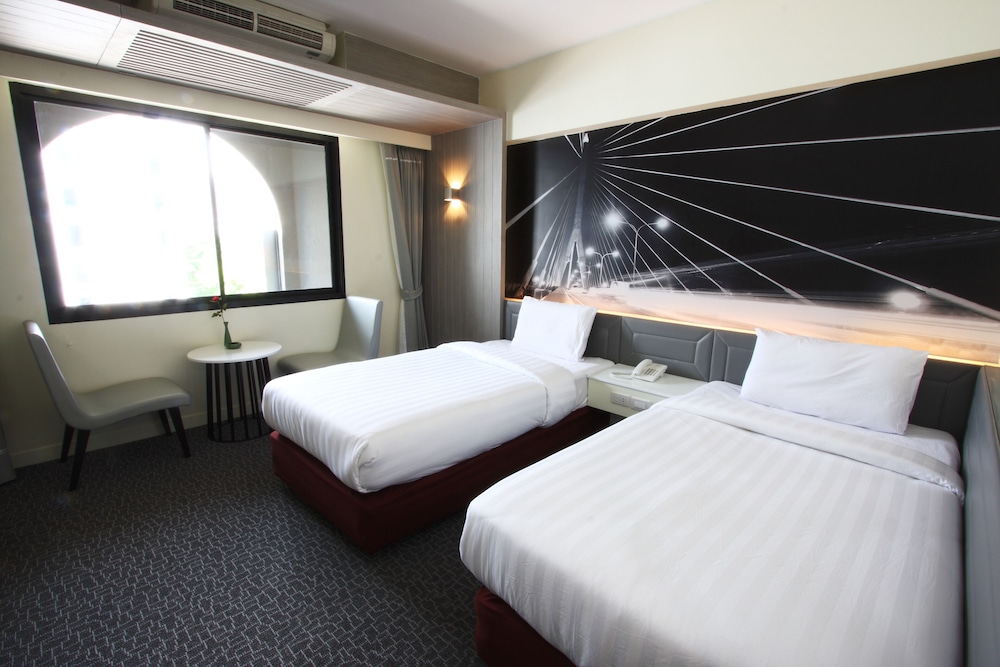
 Hotel bedroom with heavy curtains drawn, quiet reading light and street noise blocked by triple glazing
Eight quiet-hotel categories in Bangkok compared for real noise levels, from truly silent riverside setbacks at $180 a night to the loudest streets you should never book on.
Bangkok is loud — and it doesn’t have to be your problem
Bangkok has a specific noise problem that a first-time visitor doesn’t anticipate: it's not just traffic, it's the layered constant of construction, mall PA systems, temple loudspeakers at 6am, tuk-tuk two-strokes, aircon compressors on every wall, and the general 24-hour rumble of a city that never actually sleeps. Standard-glazed rooms on lower floors of Sukhumvit hotels register 55-65 decibels overnight — loud enough that light sleepers wake at 5am and never get back down.
The good news is that the quiet-hotel problem is soluble and cheaper than most travellers assume. It takes three things: the right neighbourhood (not the loudest sois), the right building type (setback from the street, on a high floor), and the right room specification (double or triple glazing, rooms facing away from the road). Get all three and you’ll sleep as well as in a country hotel. Get two and it's workable with earplugs. Get one and you’re in for a rough week.
The truly silent riverside category
The quietest hotels in Bangkok are the older riverside grand hotels between Saphan Taksin and Si Phraya piers, set back from Charoen Krung Road behind their own driveways and mature gardens. The setback distance (60-150 metres from the main road), the garden trees, and the river itself as a natural sound barrier combine to give rooms a genuine overnight noise floor around 35-40 decibels. Nightly rates run $180-450, and river-view rooms on higher floors are effectively silent.
This is my top pick for a light sleeper on a first Bangkok trip. The trade-off is location — you’re a $6-9 taxi from Sukhumvit nightlife and a 15-minute BTS connection via Saphan Taksin from most sights — but the quality of sleep more than justifies the extra transport time. The one warning: avoid the road-facing lower rooms in these same properties, which get truck noise from Charoen Krung starting at 5.30am. Ask specifically for a high-floor river-facing room at booking, and check the room orientation on arrival.
High floors of Sathorn business towers
The second quiet category is high floors of the modern business-hotel towers along Sathorn Road and around Chong Nonsi BTS. Rooms from the 25th floor upwards, particularly those facing away from Sathorn Road itself, run 40-45 decibels overnight because you’re physically above most of the traffic and the windows are triple-glazed as standard in these newer buildings. Rates match the property's normal room rate at $180-320, without a specific quiet premium.
This is the working traveller's pick. The neighbourhood empties on weekends, taxis to Sukhumvit or the river are $4-7, and the BTS interchange at Sala Daeng handles everywhere else. The catch is that the buildings are functional rather than atmospheric — you’re in a corporate tower with a hotel on the upper floors, not a boutique — and if you want the room to feel special beyond the quiet, this isn’t the category. Ask for a room ending in the higher digits (say floor 34-42 rather than 25-30) and facing the internal courtyard or the river, not the main road.
Ari and the northern side streets
Ari, north of Victory Monument, is the quiet-neighbourhood alternative to Sukhumvit. The main road (Phahon Yothin) is busy but the sois running off it are genuinely residential — low-rise, tree-lined, with 24-hour noise floors in the mid-40s. The boutique hotels here run $80-160, cheaper than any equivalent quiet option in central Bangkok, and the neighbourhood itself is a good enough evening in its own right that you don’t need to leave much.
Book Ari for a repeat-visitor Bangkok trip where you already know the sights and want to spend evenings in the cafes and small restaurants of the sois rather than the malls. The trade-off is transit time — Ari BTS is four stops north of Siam, adding 12-15 minutes to every sightseeing trip. For light sleepers who value the quiet more than sightseeing efficiency, this is the strongest single neighbourhood in the city. Rooms on the second or third floors of the boutiques are usually quieter than ground floors, which pick up soi walkers and dogs.
Hidden quiet in Sukhumvit: which sois actually work
Sukhumvit itself has quiet pockets if you know which sois to target. The odd-numbered sois in the mid-20s (Soi 23, 25, 27 running north from Sukhumvit near Asok) are residential once you’re 200 metres in, with noise floors under 50 decibels. Hotels set back on these sois — particularly boutique properties on Soi 23 and the mid-block section of Soi 27 — combine central location with sleep quality that main-road hotels can’t match. Rates run $110-190.
The sois to avoid at any price: Soi 4 (Nana), Soi 11 (bar strip), Soi 22 (mixed nightlife), and the whole stretch around Soi 5-7 which has 24-hour street food and a nightclub cluster. Even a hotel two blocks off these sois picks up drumbeat bass until 2am and the arrival hubbub of returning revellers until 3.30am. If a booking site shows a hotel on any of these sois marketed as 'central and lively,' translate that as 'you will not sleep before 2am.' Same rule for lower Silom near Patpong.
What the room spec actually needs to include
Beyond neighbourhood and floor, three room-level details determine whether the room is genuinely quiet: window glazing (double-glazing minimum, triple-glazing ideal), aircon type (individual unit compressors in older properties rattle; central VAV systems in newer buildings are silent), and internal door thickness (thin doors mean corridor noise from returning guests at 2am). Newer builds (post-2015) generally have all three right; older properties are a lottery.
The verification method: ask at booking for the year the property was built or last fully renovated, and confirm that rooms have double glazing and central aircon. Ask specifically to be placed away from lifts, ice machines, ballrooms and rooftop bars — every hotel has these but the noise-sensitive room categories should be pre-flagged. On arrival, if the room isn’t quiet, ask to move; this is a normal request that reception handles without fuss, particularly early in the stay. Don’t tough it out for three nights before complaining.
The earplugs-and-noise-machine strategy
Even in the quietest hotel, bring earplugs and a portable white-noise machine (or a phone app). A pair of good silicone earplugs (Mack's or Loop) reduces the perceived noise floor by another 15-25 decibels, which turns a 45-decibel room into effectively silent. A small white-noise machine or a fan set on low masks the frequency spectrum that earplugs can’t fully block — particularly the low rumble of aircon compressors and the distant thump of a nightclub two blocks away.
This is the routine that works: quiet neighbourhood, high floor, road-averse room orientation, earplugs, white noise. On top of this, blackout curtains matter more in Bangkok than most cities — the city glow is bright and 5.30am dawn light in April is aggressive. Every four-star and above has proper blackout curtains as standard, but budget hotels and older boutiques sometimes don’t; a $12 sleep mask in the luggage covers this gap. Get all of this right and Bangkok is as sleepable as any city on earth.
Before you book
What people ask before booking Bangkok.
Generally yes above the 20th floor, because you’re above most street-level traffic noise. But high floors can pick up rooftop-bar bass on their own building and construction noise from neighbouring towers. Ask for a high floor facing away from the main road and away from your own hotel's rooftop venue. Floor number alone isn’t the whole picture.
For daytime work and calls, yes. For sleeping, most people find them uncomfortable to wear all night. Silicone earplugs are the better sleep solution — they block similar frequencies with none of the wear discomfort. Bose or Sony over-ear cancellers are worth packing for the flight and the daytime, but not as a nightly sleep aid.
Usually but not always. Interior courtyards can amplify sound bouncing off surrounding walls, and hotel restaurants or pool decks in the courtyard produce their own late-evening noise. Ask specifically which direction the room faces and what's below it. A high-floor room facing a quiet side soi is often quieter than a mid-floor courtyard room.
Only near active temple compounds — the Old City and specific pockets of the Thonburi side. Sukhumvit, Sathorn, Silom and Ari are not affected. If you’re booking near Wat Pho, Wat Arun or Wat Suthat, expect a 5.30-6am chant call. Modern rooms with double glazing block this to a low background, but light sleepers still notice it.