Wheelchair-accessible hotels in Bangkok: an honest guide
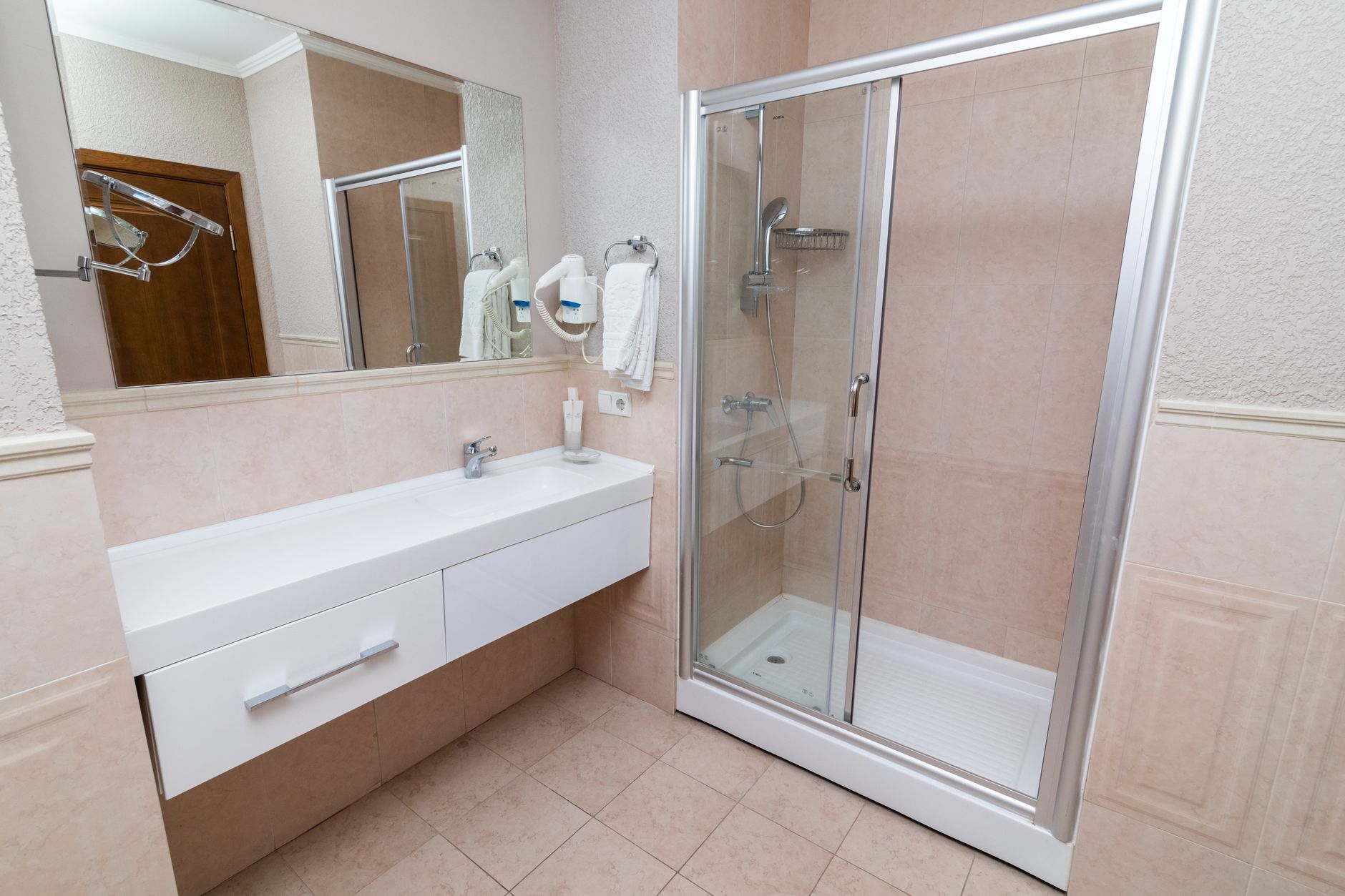 Accessible hotel bathroom with roll-in shower, grab rails and lowered vanity
A frank assessment of accessibility in eight Bangkok hotel categories, from truly step-free international five-stars at $220 a night to boutiques that shouldn’t be marketing as accessible at all.
The honest baseline: Bangkok is not an accessible city
Any accessibility guide to Bangkok has to start with the ground truth. The city's pavements are broken, sloped, blocked by parked motorbikes and food stalls, and interrupted by kerbs without cuts every 20 metres. BTS stations built before 2010 often have only a single lift on one side of the tracks, and several have no lift at all — you cross by staircase or you don’t cross. Taxis are almost entirely standard sedans; wheelchair-accessible vehicles exist but must be pre-booked days ahead, typically at $50-80 per journey rather than the $5-12 of a regular taxi.
This doesn’t mean a wheelchair-user trip is impossible — it means the hotel choice does more work here than in almost any other city. A properly accessible international five-star with in-house accessible transport arrangements transforms the trip. A 'wheelchair accessible' boutique with three steps at the entrance and a bathroom you can’t turn around in makes the trip miserable. This guide is written to help distinguish honestly between the two, because the marketing categories in Bangkok do not.
The genuinely step-free international five-stars
The strongest category is the international chain five-stars built or fully renovated after 2015, concentrated along Sathorn and Sukhumvit near Asok, Phrom Phong and Chit Lom. These properties have entrance ramps or level thresholds, wide corridors, lifts to every floor, and dedicated accessible rooms with roll-in showers (not step-in bath-showers), grab rails, lowered switches, wardrobe rails and vanities, and enough turning space for a full manual or standard powered chair. Nightly rates run $220-450.
The good ones also handle the airport transfer properly: a pre-booked accessible van from Suvarnabhumi runs $70-90 through the hotel, arranged at booking time. Staff training is generally strong at this tier — the concierge desks know which nearby restaurants have step-free entrances and which BTS stations have working lifts on both sides. Book this tier if the trip includes anyone who uses a wheelchair full-time. The premium over a standard four-star is $80-150 a night, and it buys the difference between a workable trip and a stressful one.
The four-star chains: variable and worth verifying
Below the flagship five-stars, the four-star international chains (Sukhumvit business hotels, Silom conference hotels) technically offer accessible rooms but the quality varies sharply property to property. Rates run $110-190. The common failures: bathrooms with a 5cm shower lip that a chair can’t roll over, doorways at 78cm rather than the 90cm actually needed, and entrance ramps at gradients that require a helper to push. Room descriptions rarely mention any of this — the label 'accessible' is used loosely.
The verification approach that works: email the hotel directly (not the aggregator) asking three specific questions — the width of the room and bathroom doorways in centimetres, whether the shower is roll-in with no lip, and whether the room has a ceiling hoist or transfer bench available. A hotel that answers all three with confidence is genuinely accessible; one that responds vaguely is not, regardless of what the booking site says. Ask for a photograph of the accessible room's bathroom before confirming.
Boutiques and design hotels: mostly avoid
The boutique and design-hotel sector in Thonglor, Ari, the Old City and along Charoen Krung is almost uniformly inaccessible, and the honesty problem is that many market themselves as accessible on the strength of a ramped entrance and a large ground-floor bathroom. In practice: entrances often have three or four steps with a portable ramp available on request, rooms are on upper floors reached by staircase or a single small lift, and bathrooms are compact wet-rooms with no grab rails and doorways at 70cm.
There are two or three genuine exceptions — new-build boutiques in Sathorn that were designed with accessibility from the ground up rather than retrofitted — but they charge five-star rates ($260-400) for a boutique product. If atmosphere matters more than perfect accessibility and you have a companion who can help with transfers and small steps, a well-chosen boutique can work; if you’re travelling solo or need consistent step-free access, book the international chain instead.
Serviced apartments for long stays
For stays of a week or more, several serviced-apartment buildings in Asok and Phrom Phong have genuine accessible units — usually one or two per building, so book early. Weekly rates run $850-1,400 for a one-bedroom with roll-in shower, wide doorways, and a kitchenette designed with under-counter clearance and lowered work surfaces. The buildings themselves are consistently accessible: covered driveways, large lifts, level thresholds throughout.
The value proposition for longer stays is meaningful. Rather than paying $250 a night for a fully accessible hotel room, $120 a night gets you a proper apartment with more space to move, a kitchen you can actually use, and staff who know you by day three and hold the lift when you approach. The trade-off is that the buildings are less proactively helpful with external logistics — you’ll arrange your own accessible taxis and restaurant bookings, whereas a five-star concierge does that for you. Worth it for independent travellers, harder for those who need more support.
Location: which BTS stations actually work
If BTS travel is part of the plan, staying near a station with confirmed working lifts on both sides of the platform is essential. The reliably accessible stations are Siam, Asok, Phrom Phong, Sala Daeng, Chit Lom, Chong Nonsi and Phaya Thai. Several other stations have lifts on only one side, meaning you can enter but not exit at your destination without a long detour. And a handful — mostly older Sukhumvit line stops — have no lift at all.
Even at fully accessible stations, the gap between train and platform is 5-8cm and requires either a ramp deployed by staff (available on request but adds a five-minute wait) or a companion push. For many wheelchair users, accessible taxis and pre-booked private transfers are more practical than BTS for the whole trip, and the hotel choice matters more than the BTS proximity. Book near the sights you want to see, not near the stations.
What to book, and what to build into the trip
The clearest recommendation: for a first Bangkok trip with a full-time wheelchair user, book a post-2015 international five-star on Sathorn or lower Sukhumvit at $250-350 a night, pre-book accessible airport transfers through the hotel, and use accessible taxis via the hotel concierge rather than trying to use BTS or hail-in-the-street taxis. Budget $60-90 a day for accessible transport on top of the room. This is significantly more than a standard trip costs, but it's the version of the trip that actually works.
For repeat visitors or travellers with more independent mobility (occasional wheelchair use, walking with a stick, ambulant with rests), the four-star chains and long-stay serviced apartments open up. Verify every accessibility claim in writing before booking, budget more time between activities than you would elsewhere, and build one recovery day into every four days of sightseeing — the heat and the pavement conditions are genuinely more tiring than a European or North American city, and pacing is the difference between a good trip and an exhausting one.
Before you book
What people ask before booking Bangkok.
Not reliably on demand. A handful of operators run wheelchair-accessible vans that require pre-booking, typically 24 hours ahead, at $50-80 per journey. Standard taxis and Grab cars are sedans that require a transfer from chair to seat. Hotel concierges at five-stars are the most reliable route to book accessible transport.
Partially. The Grand Palace has some paved paths but many temple platforms are reached by steps. Wat Pho is more accessible than Wat Arun. The major shopping malls, Chatuchak's newer sections, and Jim Thompson's House have ramps and lifts. Assume every major sight will involve some staircase you can’t cross without help.
The post-2015 international chain flagships on Sathorn and lower Sukhumvit are the most reliable — properties that have been fully renovated or newly built with accessibility standards from the outset. Older properties from the same chains often have only nominally accessible rooms. Booking date of last renovation matters more than the brand name.
Roughly 40-60% more than a standard trip. The main additions are the hotel-tier premium ($80-150 per night above a standard four-star), accessible transport at $60-90 a day versus $20-30 for standard taxis, and slightly higher restaurant costs because street-food stalls are largely inaccessible and you’ll eat in mall restaurants and hotel dining rooms.