Money, tipping, and prices in Bangkok
Bangkok runs on a strange mix of $1 street bowls of noodles and $15 rooftop cocktails, and the same restaurant sometimes charges both. Here is how to read the price map without getting stung.
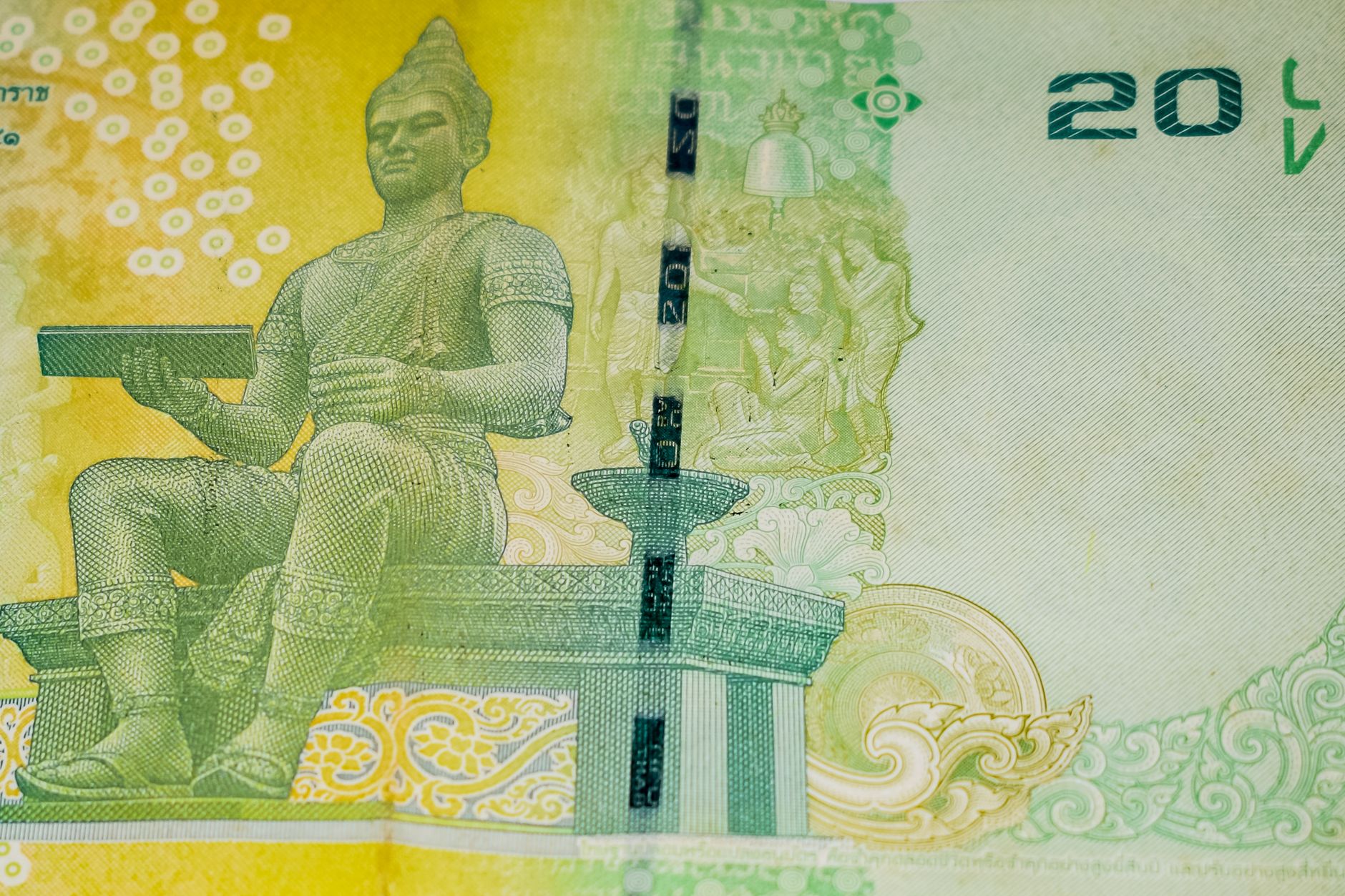 Thai baht banknotes fanned out on a wooden table
Cash, cards, and ATMs
Thailand uses the baht, but for the purposes of this article every price is in US dollars — expect roughly 34 to 36 baht per dollar. ATMs are everywhere, with a mandatory foreign-card fee of about $6 per withdrawal on top of your home bank's fees. That flat fee makes small pulls expensive: take out $250 to $300 at a time and stash the rest in the hotel safe. Krungsri and AEON ATMs sometimes waive part of the fee — check the notice on the screen before you accept.
Credit cards work at hotels, malls, chain restaurants, and mid-range independent restaurants. Street food, small taxis, tuk-tuks, canal boats, temple donations, motorbike taxis, and most 7-Elevens outside central Sukhumvit are cash only. Carry $20 in small bills — $1 and $3 notes especially — for daily use. Break big bills at 7-Eleven early in the day. Most ATMs dispense $30 notes which are annoying at street stalls; ask the machine for a mix.
Tipping conventions
Thailand is not a tipping culture in the US sense, but service tips are appreciated in specific contexts. Sit-down restaurants: leave the coins from the change, or 20 to 60 baht ($0.60 to $2) at a mid-range place. If a 10 percent service charge appears on the bill (marked SC or Service), no additional tip is expected. Street food and food courts: no tip. Bars: 20 baht per round is generous, not required.
Hotels: $1 per bag for porters, $1 to $2 per night for housekeeping left in an envelope. Taxis: round up to the nearest 10 baht (about $0.30). Massage: 50 to 100 baht ($1.50 to $3) at a $10 hour-long neighborhood shop, more at spas where it is often specifically encouraged. Tour guides: $10 to $15 per person per day for a private guide, $3 to $5 for a group tour. Tipping in dollars or euros is polite but locals will need to change them and lose some value.
What things actually cost
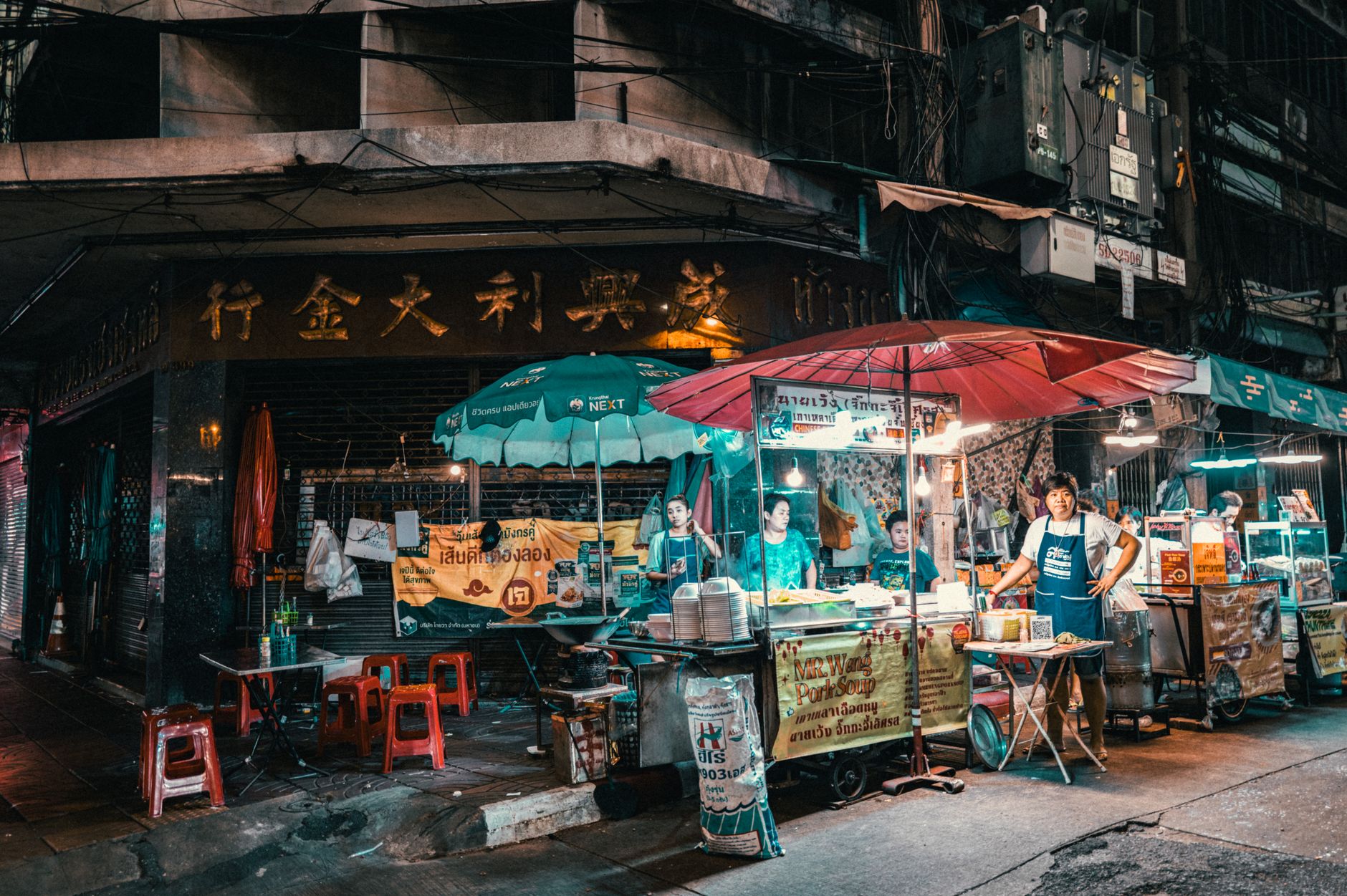
Street pad thai or noodle soup: $1.50 to $3. Food court meal at a mall: $3 to $6. Mid-range Thai restaurant main course: $6 to $12. Nice dinner with wine at a place like Bo.lan or Baan Tepa: $60 to $100 per person. Tasting menu at a top restaurant like Le Du or Sorn: $150 to $220. A large Chang or Singha beer at 7-Eleven: $2; at a bar: $4 to $6; at a rooftop like Vertigo: $12 to $18.
BTS ride: $0.50 to $1.90. Metered taxi across town: $3 to $6. Grab or Bolt: $4 to $8 for the same trip. Chao Phraya river boat: $0.50 to $5 depending on flag color. Grand Palace entry: $15. Wat Pho: $6. Wat Arun: $3. Chatuchak weekend market: free entry, expect to spend $20 to $50 on lunch and small souvenirs. Standard 1-hour Thai massage in a neighborhood shop: $8 to $12; at a hotel spa: $50 to $90.
Bargaining, when and where
Bargain at Chatuchak Market, Khao San Road stalls, MBK Center's small shops, and with tuk-tuks. Start at 50 to 60 percent of the asking price and expect to close at 65 to 75 percent. Bargaining is friendly, not aggressive; if a vendor holds firm and you like the price, buy it or walk. Walking away often produces a final counter-offer.
Do not bargain at food stalls, 7-Eleven, malls, department stores, taxis on the meter, or spa menus. The price is the price. Grand Palace entry, temples, museums — fixed. Restaurants with printed menus in English — fixed. Trying to bargain in these contexts marks you as either clueless or rude. Massage places and tailors sit in a gray zone: the first quote is negotiable but only by 10 to 20 percent.
The dual pricing question
Some tourist sites — the Grand Palace, national parks, some museums — charge foreigners several times the Thai rate. The Grand Palace is $15 for foreigners, free for Thais. This is legal and openly done; do not argue about it at the ticket window. Most temples and everyday sights charge one price to everyone. Restaurants and shops in tourist areas may have menus in English that are 10 to 20 percent higher than the Thai menu on the wall — worth checking if you read Thai numerals.
The real dual-pricing risk is in transport. A taxi driver who refuses the meter, a tuk-tuk quoting a flat rate for a short hop, a boat operator on the Chao Phraya offering a private long-tail tour — these are all opportunities to overpay by 200 to 400 percent. Standard defense: know the metered fare or the app price roughly before you engage, and walk away from bad offers. Someone else will take the meter.
Scams to know about
The Grand Palace closed today scam: a well-dressed local outside the entrance tells you the palace is closed for a ceremony and offers a tuk-tuk tour of other temples instead. The palace is almost never closed. Walk past and buy your ticket. The gem shop tour: a friendly tuk-tuk driver offers a $1 city tour that includes a gemstone factory stop. The stop is 40 minutes of high-pressure sales. Skip.
The airport taxi negotiation: drivers who approach you inside arrivals with a fixed price are always more expensive than the official queue outside. The bird food or garland: someone hands you feed for pigeons or a flower garland then demands $10. Do not accept anything handed to you at temples or the Grand Palace. Fake tourist police: legitimate tourist police wear uniforms and carry ID; anyone in plain clothes claiming to be tourist police is not.
Frequently asked questions
What people ask before they set off on this one.
Bring $100 to $200 in your home currency for initial expenses and exchange at SuperRich or Vasu Exchange in central Bangkok — both offer rates within 1 percent of the mid-market. Airport exchange booths are 3 to 5 percent worse. ATMs give a good rate but charge a $6 flat fee per withdrawal, so pull large amounts. Do not exchange more than a day's cash at the hotel.
Bangkok is meaningfully cheaper than Singapore, Hong Kong, or Tokyo for hotels, food, and transport. It is roughly comparable to Kuala Lumpur, slightly more than Hanoi or Jakarta. Street food and public transport are among the cheapest in the region. High-end dining, cocktails, and imported wine are more expensive than you would expect — the taxes on imported alcohol are steep.
No. Food courts run on prepaid card systems where you top up, order, and the balance is returned when you leave — there is no place for a tip in the transaction. Street stalls charge a fixed price and hand you change; no tip expected. Save tipping for sit-down restaurants with table service and for spa/massage staff.
In malls, chain restaurants, hotels, and BTS/MRT gates, yes. Visa and Mastercard contactless work almost everywhere; Amex is patchier. Apple Pay and Google Pay work wherever contactless is accepted. PromptPay (the local QR system) is universal but requires a Thai bank account. Bring a card with no foreign transaction fees. Expect to use cash for at least 30 percent of your daily spending.
Standard neighborhood shops charge $8 to $12 for a 1-hour traditional Thai massage or foot massage. Mid-range spas with air-conditioning and uniforms charge $18 to $30. Hotel spas run $50 to $120 per hour, and top wellness spas like Divana or Panpuri go higher. Tip $1.50 to $3 at neighborhood shops, 10 to 15 percent at spas. Prices roughly double for 2-hour sessions with oil.
Hotels in Bangkok
More guides to Bangkok
All guides Itineraries · 8 min read
48 hours in Bangkok
Itineraries · 8 min read
48 hours in Bangkok
Two days is enough to nail the temples, one great market and a proper rooftop — if you sleep in the right neighborhood. This itinerary keeps transfers under 20 minutes and dinners under $15.
 Itineraries · 10 min read
One week in Bangkok
Itineraries · 10 min read
One week in Bangkok
Seven days is the sweet spot: temples, two day trips, real neighborhoods, and enough downtime to eat properly. Here's how we’d split a week if we were doing it again tomorrow, hotel by hotel.
 Itineraries · 8 min read
Bangkok in 3 days on a budget
Itineraries · 8 min read
Bangkok in 3 days on a budget
Three days in Bangkok on under $60 a day is genuinely doable — hostels at $12, meals under $3, and every temple within reach on public transport. Here's the honest plan.
Real photos, real prices, and one tonne of carbon removed with every booking — at the same rate you would pay anywhere else.