A food-themed route through Bangkok: 4 regions of Thailand in one day
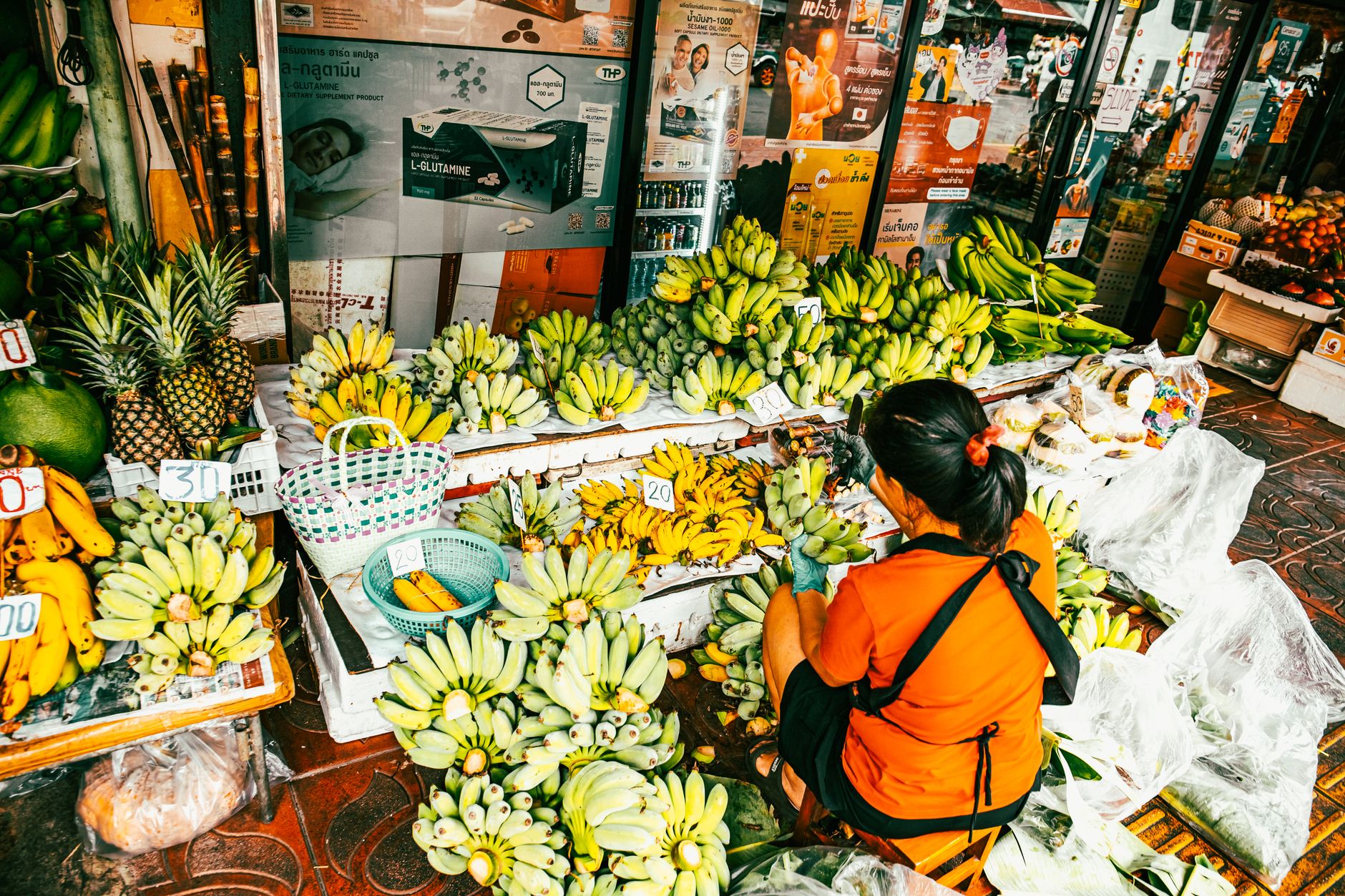 Regional Thai dishes lined up at a Bangkok market
One walking-and-BTS day that eats northern, northeastern, central and southern Thai food at 8 stops, total spend under $50 a person.
Why this route exists
Bangkok is where all four regional Thai cuisines converge because everyone from every province eventually moves here for work — the northern khao soi cooks from Chiang Mai, the Isaan somtam vendors from Udon, the southern curry cooks from Trang and the central-Thai boat-noodle families from Ayutthaya. A visitor with three days often eats the same central-Thai pad thai and green curry at every meal without realising that they’re getting one quarter of the country's food. This route fixes that in one day.
Rules: eight stops, one dish per stop, small portions so you don’t tap out at stop three. Cost per person $40-55 including drinks. Total walking 6km, BTS or MRT for the longer hops. Start hungry, wear elastic-waist trousers, bring cash — most street stalls don’t take card and the ones that do add a 3% fee. Book nothing; queues at these stalls move fast and reservations aren’t a thing outside sit-down restaurants.
09:00 — Ari: northern breakfast (khao soi)
Start at Ari BTS station, walk 5 minutes north on Phahonyothin Soi 7 to Khao Soi Lam Duan or one of the northern-Thai shophouses along Soi Ari — northern breakfast is a substantial thing and khao soi (curry noodle soup with chicken leg, crispy egg noodles, pickled mustard greens and shallot) is the flagship dish of Chiang Mai reimagined for a Bangkok morning. A big bowl runs $3-4. Add a side of northern sai ua sausage ($2) — grilled pork with lemongrass, kaffir lime and turmeric.
Ari is Bangkok's coffee neighbourhood and after the khao soi it makes sense to walk 6 minutes to Roots or Roast8ry for a flat white ($4). This is the only coffee stop of the route — the rest of the day is iced tea, Thai iced coffee from carts, and one beer at stop seven. Fluid discipline matters at 33°C and eight food stops.
10:30 — Chatuchak: Isaan grilled chicken and som tam (weekends only)
BTS south from Ari to Mo Chit, walk 5 minutes to Chatuchak Weekend Market's food section (Saturdays and Sundays only). If it's a weekday, MRT to Huai Khwang instead and eat the Isaan food along Pracha Rat Bamphen Road, which has the best weekday Isaan strip in the city. Order gai yang (grilled chicken) with sticky rice and som tam thai (green papaya salad — specify 'pet nit noi' for mild, 'mai pet' for no chilli, and the vendor will still probably make it hotter than you asked).
Gai yang half a bird $4, sticky rice $0.60, som tam $2. Isaan food is northeastern Thai — the region bordering Laos — and is the food that most 'authentic Thai' restaurants abroad don’t touch because it involves fermented fish sauce (pla ra) that non-Thais find challenging. Ask for the version without pla ra on your first try; work up. A bottle of Chang beer for the table ($2.50) is period-correct here even at 11:00.
12:00 — Yaowarat: southern-Thai roti and Muslim curry
MRT to Wat Mangkon (Chinatown), walk 8 minutes to the Chinese-Muslim end of Charoen Krung near the Soi Nana intersection. Southern Thai food is influenced heavily by Malaysia, Indonesia and Muslim trading communities — coconut-heavy curries, turmeric-yellow rice, seafood, roti bread. Eat khao mok gai (Thai chicken biryani, yellow rice and stewed chicken, $3.50) at one of the Muslim stalls, or gaeng tai pla — southern fish-stomach curry — at Ran Jay Fai's neighbours ($5, brutally spicy).
For a gentler entry to southern flavours, order gaeng massaman with beef ($5) — the Persian-influenced curry with peanuts and cardamom that was voted the world's best dish by CNN readers in 2011 and hasn’t shut up about it since. It's central-Thai-adjacent but the southern-Muslim roots are visible. Roti with condensed milk ($1) from any Yaowarat street cart is dessert.
14:00 — Bang Rak: central Thai boat noodles
MRT and BTS south to Saphan Taksin, walk 6 minutes to Boat Noodle Alley on Charoen Krung Soi 44 or take the express boat to Ratchawongse and walk. Boat noodles (kuay teow reua) are the central-Thai river dish — small bowls of dark, intensely flavoured pork or beef broth with rice noodles, morning glory, pork blood and coriander, served in bowls the size of a coffee cup for $1 each. The rule: you don’t eat one bowl, you eat five or six until you’ve had enough.
The dish is called 'boat noodles' because they were originally sold from small boats on the klongs; the small bowls come from the difficulty of passing a big bowl from a boat to a customer on a jetty without spilling. Central Thai food is the cuisine most Westerners recognise as 'Thai' — pad thai, green curry, tom yum — and boat noodles are its most concentrated form. Four bowls, one iced Thai tea, $6 total.
15:30 — Silom: a proper sit-down for central-Thai royal cuisine
BTS one stop to Sala Daeng and walk 5 minutes to a sit-down restaurant doing Central Thai royal (rachawang) cuisine — the elaborate court dishes with edible carvings, folded pandan-leaf packets and delicate portions. The regional theme continues but the format shifts: this is the sit-down that anchors the middle of the day and gives you an air-conditioned break. Order khao chae (chilled jasmine rice in floral water with condiment plates, seasonal March-May, $12), or mieng kham (a leaf-wrap of ginger, lime, dried shrimp, peanut and palm sugar, $6).
This stop is the most expensive of the day at $15-25 per person — it's the sit-down with tablecloths and the food that took a chef 40 minutes to plate. Portion sizes are small. If you’re stuffed, order one dish for the table and share; the point is to see the top-end version of central-Thai cooking, not to eat another full meal. Leave hungry-ish.
17:30 — Or Tor Kor: dessert and fruit run
MRT to Kamphaeng Phet and enter Or Tor Kor market — the upmarket cousin to Chatuchak, open every day, covered, clean, and stocked with the country's best regional produce. This is dessert stop. Mango sticky rice ($3.50), coconut ice cream with peanuts and sticky rice in a coconut shell ($2), khanom krok (coconut-milk pancakes cooked in a cast-iron dimpled pan, $2 for six), Thai custard cake ($1.50). Buy a bag of mangosteens ($3), lychees or rambutan for the taxi home tomorrow.
Or Tor Kor is where you understand how good Thai fruit is — the mangoes at $2 a kilo in April-May shame anything a European supermarket sells for four times the price. Vendors will let you try before buying. Ninety minutes in this market with a slow wander is the right dose after five savoury stops.
19:30 — Ekkamai or Thonglor: modern-Thai closer
BTS to Ekkamai or Thonglor for the final stop: a modern Bangkok chef doing regional Thai with restaurant-food techniques — chef-driven takes on Isaan curries, southern crab, northern larb, without the shophouse plastic stools. Expect $25-40 a head with a drink. This isn’t a food-tour stop in the street-food sense; it's the closer that shows where Thai cooking is going, and if you’ve been eating at stalls all day it's the right cocktail-and-tasting-plate way to end.
Order small: a $7 nam prik ong with pork rind crackers, a $9 southern crab curry, a $6 grilled fish, a $10 cocktail using local ingredients (galangal, lemongrass, tamarind). By 21:30 you’re done. BTS home from Ekkamai or Thonglor and the day closes at $45-55 including all eight stops, two beers, one cocktail and one taxi to the hotel if you’re not on the BTS line.
Where to sleep for a food-themed weekend
Base yourself in Sukhumvit between Nana and Thonglor for a food-focused trip: you’re one stop from Ari's morning coffee scene, four stops from Mo Chit, six stops from Sala Daeng and directly on the Thonglor-Ekkamai closer. Hotels in this stretch run $70-160 for mid-range, $180-280 for the four-star hotels along Sukhumvit Soi 55. Ekkamai and Thonglor themselves have the best breakfast neighbourhoods in the city if you want to walk to your first meal.
Skip Rattanakosin and Khao San for a food-heavy trip — Chinatown is close but the rest of the country's cuisines are on the BTS, not in the Old City. Silom-Sathorn works as a compromise base if you also want river access. Book hotels with a fridge if you plan to buy fruit at Or Tor Kor; a bag of mangoes in a hotel room at 30°C without refrigeration is a mistake made once.
Before you book
What people ask before booking Ari.
Say 'mai pet' (not spicy) or 'pet nit noi' (a little spicy). Isaan and southern food will still register hotter than you asked — the baseline is different. Central Thai and northern dishes are gentler by default. Massaman, khao soi, boat noodles and mango sticky rice are the safe bets. Som tam thai and southern curries are the ones to approach cautiously.
Yes — plenty of guided food tours cover 4-6 stops in a similar shape for $60-90 per person including all food. The guide adds cultural context and vendor introductions; the DIY version costs half and lets you skip stops when you’re full. If it's your first day in Bangkok, take the guided version; if it's your third, do this.
Partly. Northern khao soi has vegetarian versions at bigger shops; som tam without dried shrimp works; boat noodles are meat-only in traditional form. Substitute the Bang Rak boat-noodle stop for a Chinese-Buddhist vegetarian shophouse in Chinatown (jay food, marked with yellow flags especially during the October festival) and you keep the regional structure.