Bangkok's Vegetarian Festival: nine days of Jae food in October
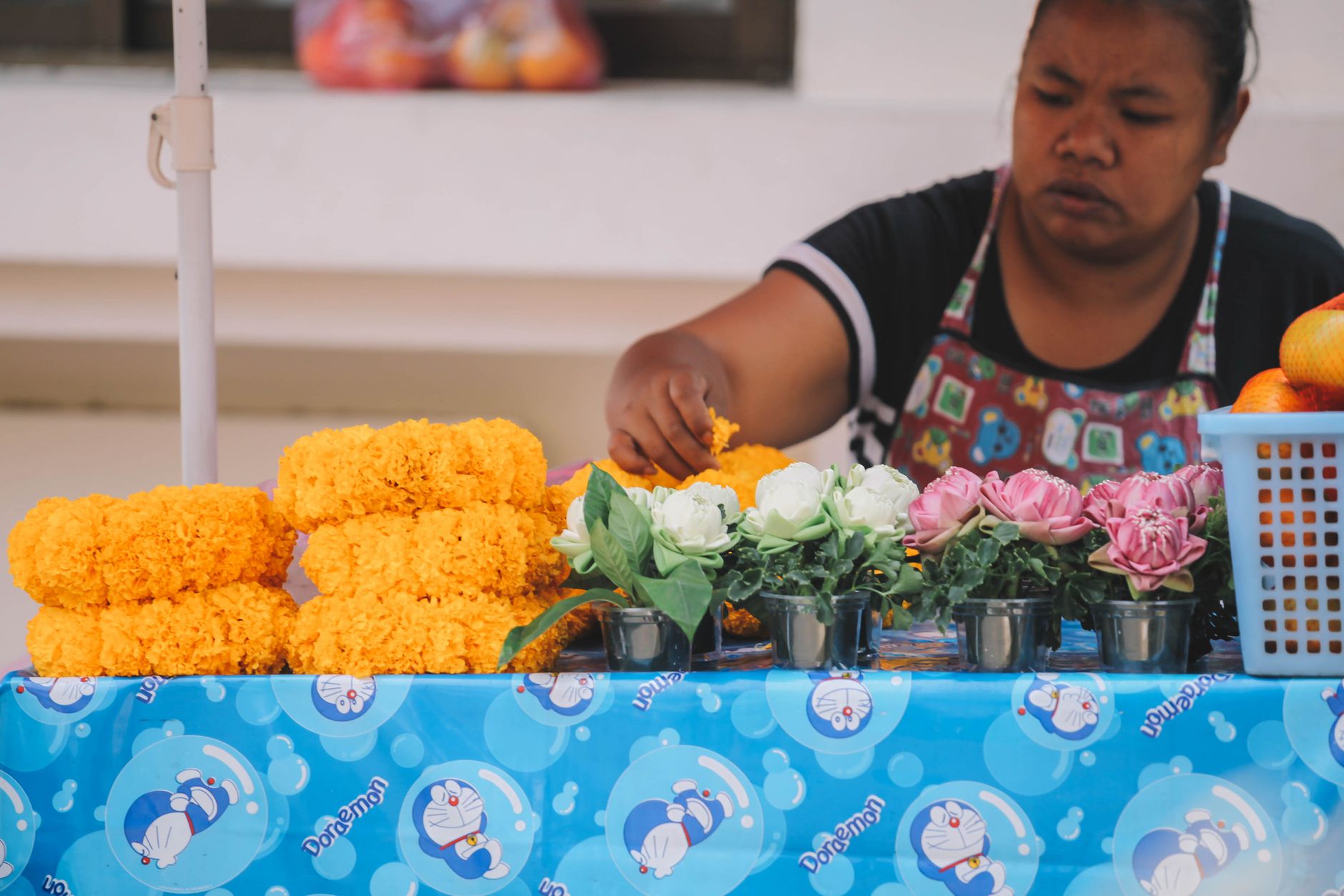 Yellow flags marking vegetarian festival stalls in Bangkok
For nine days each October, Yaowarat and half of Bangkok goes strictly vegan — 300+ dedicated stalls, yellow flags everywhere, and a different way to eat the city.
What Jae actually means
The Vegetarian Festival (Tetsakan Kin Jae) runs for nine days on the ninth lunar month of the Chinese calendar, which in 2026 falls October 11-19. It is a Chinese-Thai Taoist observance in which participants abstain not just from meat but from all animal products, garlic, onion, chives and strong-flavoured vegetables believed to inflame the passions. The result is what the West would call strict vegan cooking, marked everywhere by yellow flags with red Chinese characters reading Jae. When you see the yellow flag, the food from that stall is fully Jae-compliant for the duration of the festival.
This is not a marginal observance. Roughly 15-20% of Bangkok's population participates to some degree — the strictly observant for all nine days, the moderately observant for the first three days, and many others by eating Jae for lunch during the week. Hundreds of restaurants convert their entire menu; food courts in every mall run dedicated Jae counters; convenience stores stock Jae ready meals under yellow labels. For a foreign visitor, especially one who is vegetarian or vegan, this is the best week of the year to eat in Bangkok.
Where to eat: Yaowarat is the epicentre
Chinatown transforms. Charoen Krung, Yaowarat Road, Soi Nana, Sampeng Lane and the cross-sois all fill with pop-up Jae stalls flying yellow flags. The Tang Toh Kang gold shop's junction becomes a food-market intersection with 30+ vendors within 100m. Prices are cheap — $1-2 for a rice-and-topping plate, $2-3 for a noodle bowl, $0.50-1 for Jae dumplings and buns. The mock-meat game in Bangkok is decades ahead of the West; the vegan roast duck, char siu pork, and fish sold at Jae stalls are convincing enough that carnivore visitors sometimes do not realise until told.
Beyond Chinatown, the best Jae eating happens at three spots: the food court at CentralWorld's B floor (dedicated Jae counters open all nine days, $2-4 per dish), the Or Tor Kor market next to Chatuchak (upmarket Jae, $3-6 per dish, less crowded than Yaowarat), and around Wat Mangkon MRT where the temple itself hosts a Jae kitchen serving free meals to observants (donations welcome, generally $1-3). Silom Complex food court and Terminal 21 food courts also run Jae stalls. Sukhumvit's boutique vegan restaurants (Broccoli Revolution, May Veggie Home, Rasayana Retreat) benefit from festival attention and get busier but their menus are Jae-compliant year-round.
The processions and religious side
Bangkok's festival is calmer than Phuket's — no face-piercing and body-modification rituals here — but Chinese-Thai temples still run daily processions, chanting sessions and merit-making ceremonies. Wat Mangkon Kamalawat on Charoen Krung is the primary temple; ceremonies run morning and evening, and the temple stays open until 10pm during the festival. Firecrackers and drums announce processions along Yaowarat Road on most afternoons. Devotees dressed in white walk to make merit; you are welcome to observe from the edges but should not photograph individuals up close without permission.
Dress code for temple visits during the festival is stricter than usual — shoulders and knees covered, no bright colours, ideally white or muted tones. Women in short skirts or shorts are politely turned away. Shoes off before entering the main halls. If you want to participate in the merit-making, buy incense and lotus flowers from the vendors at the temple gate for $1-2, follow the queue, and copy what the person in front of you does. Nobody minds respectful foreign participation; disrespect (loud phones, pushing, close-range photography) is quickly called out.
Weather and hotel rates in October
October is late monsoon — expect afternoon rain 15-20 days of the month, average temperatures of 88°F day and 75°F night, and humidity around 80%. The festival often runs partly through the tail of monsoon and partly into the drier transition weeks; the second half of the festival is usually noticeably drier than the first. This is not weather that will ruin a Jae food crawl; carry a $3 poncho and eat under the temporary awnings that stall-holders erect over their tables.
Hotel rates in October are among Bangkok's lowest of the year — a four-star that runs $140 in January lists at $90-105 in October, and the festival itself does not push prices up because it is a food-and-religion event rather than a tourism-marketed one. Chinatown hotels see a small mid-week bump from Chinese-Thai families visiting from upcountry (rates up 10-15%) but no dramatic surge. This is genuinely one of the cheapest weeks to be in Bangkok, and the food scene is at its most interesting.
What non-vegetarians should know
You do not need to eat Jae to enjoy the festival. Every non-participating restaurant stays open and serves normal menus; the whole city has not gone vegan, just a substantial minority of it. But the food-crawl energy of the festival is concentrated at the Jae stalls, and skipping them means missing the atmosphere. The mock-meat cooking is impressive on its own terms — think of it as a curiosity food week rather than a dietary restriction. A carnivore who spends two evenings eating only Jae food across Yaowarat will not feel deprived and will have eaten something they cannot easily eat anywhere else in the world.
The one adjustment: normal street food you rely on may be off-menu at your usual stall. If your favourite kuay teow lady is a festival participant, her cart will only have Jae noodles for the nine days, or may not open at all. Restaurants with mixed menus mark Jae items with a yellow tag. Ordering an off-Jae dish from a stall flying the yellow flag is not just refused but taken as slightly rude — go to a stall without the flag if you want meat. Alcohol is also frowned on at Jae stalls (though not banned as with Buddhist holidays).
Practical Jae eating tips
Carry small notes — most Jae stalls are cash-only, and prices under $2 mean 20 and 50 baht notes get you further than 1000s. Portions are single-serving; a proper meal is three or four dishes plus rice for around $5-7 total, which is cheaper than a mall food court. Try to eat at 11am-1pm or 5-7pm rather than 8-10pm; the good stuff sells out by mid-evening and stallholders start packing up by 9pm. The vegan fish balls, curry puffs, mock roast duck rice and coconut ice cream are the standout items across most stalls.
For dietary allergies within Jae, be aware: gluten is heavy in mock-meats (seitan base), soy is universal, and peanuts appear in many sauces. Nuts are generally not in the dishes themselves but are common as toppings. English is limited at street stalls but visible ingredients and pointing work fine; a translated allergen card in Thai from your hotel concierge is worth carrying if allergies are serious. The Chinatown restaurants Chua Kim Heng, Hua Seng Hong and Canton House all run full Jae menus with English staff during the festival and are the safe-choice option for anyone nervous about street food.
Combining with the rest of an October trip
Nine days is longer than most people spend in Bangkok, so most visitors overlap two or three days of the festival with the rest of an October itinerary. The natural pairing is a Bangkok-plus-islands trip — three or four days in Bangkok for the festival, then flights to the Gulf coast (Koh Samui, Koh Phangan) where October weather is better than Andaman and Thai school holidays create a lively resort scene. Alternatively, three days in Bangkok then the overnight train to Chiang Mai, which runs its own smaller vegetarian festival simultaneously and has excellent Jae street food around the North Gate market.
Within Bangkok itself, plan the itinerary so festival food is the evening centrepiece: Grand Palace and Wat Pho in the morning (dry hours), a spa or cooking class or mall afternoon (through the rain), then Yaowarat 6pm-9pm for the Jae food crawl. Do this three nights in a row and you have covered the festival properly, seen the temples in their most active period of the year, and eaten better than any of the food tours would take you. Total food spend across three evenings: $30-45 per person.
Before you book
What people ask before booking Bangkok.
Almost always — it follows the ninth lunar month of the Chinese calendar, which usually maps to late September or early-to-mid October. Occasionally the lunar drift pushes it into late September. Check the specific year's dates before booking; the Thai Tourism Authority publishes them by January of the same year.
Different events. Phuket's is famous for extreme body-piercing rituals and is more of a spectacle. Bangkok's is bigger in terms of food-participant volume and easier for a food-focused visitor. If you want the wild religious spectacle, go Phuket; if you want the best Jae food scene in Thailand, Bangkok delivers.
Not necessarily. Deep-fried mock meats, coconut cream curries and sugar-heavy desserts feature heavily. It is animal-product-free rather than low-calorie or low-fat. A steamed-vegetable Jae plate is genuinely healthy; a fried mock-duck rice bowl with sweet sauce is not, despite being vegan.