The 7 best temples in Bangkok, ranked
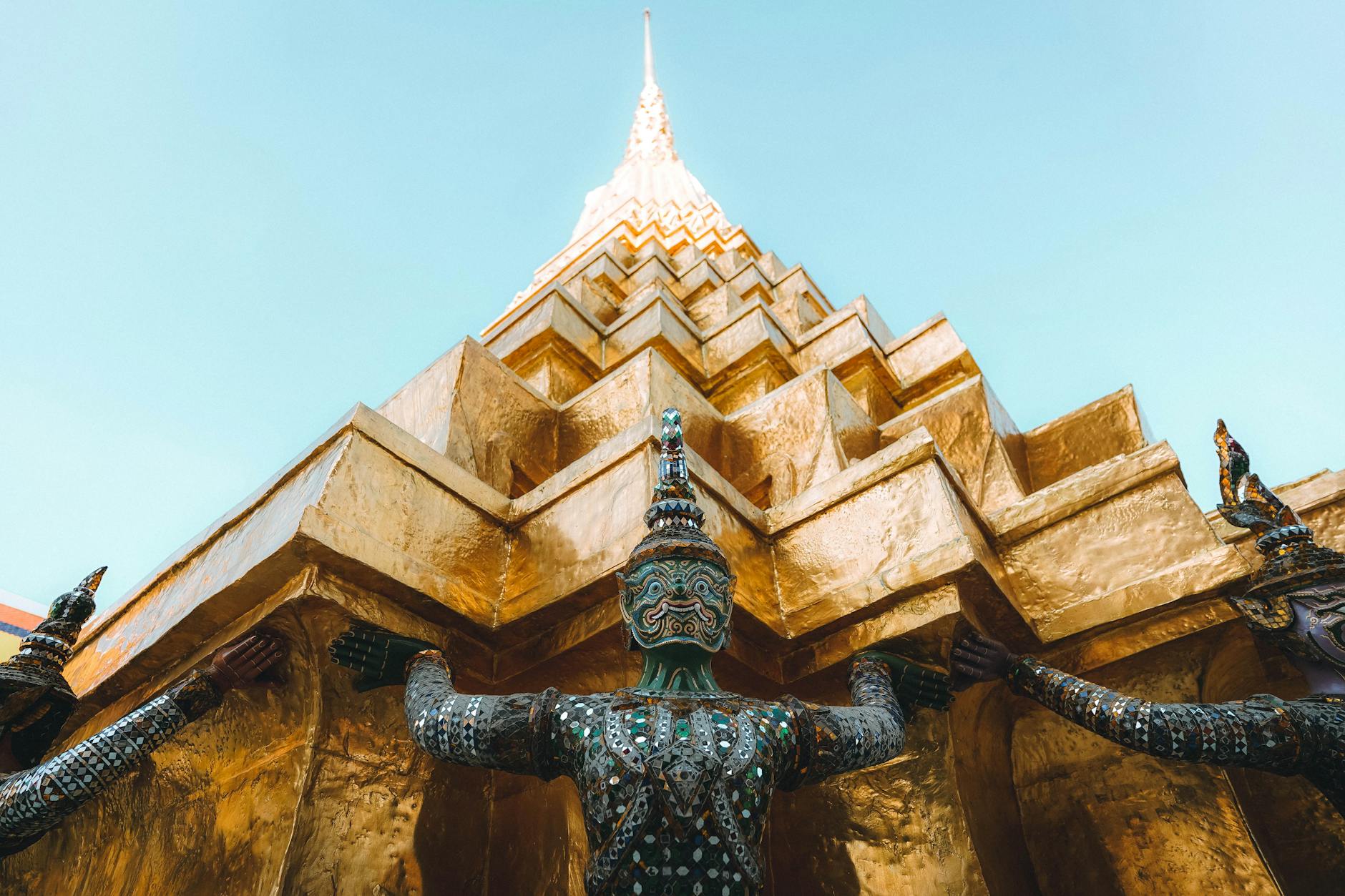 Golden chedi of a Bangkok temple against blue sky
Not all wats deserve your morning — here are the 7 that do, ranked by what you’ll actually remember a year later.
1. Wat Pho — the reclining Buddha and the massage school
The 46-metre gold-leaf reclining Buddha is the single most photographed object in Bangkok's Old City, and it earns the top spot because the shock of scale doesn’t fade with familiarity — the feet alone are 5 metres tall, inlaid with mother-of-pearl scenes from the Ramayana. Entry $6, open 8:30 am-6:30 pm. Come at opening; by 10 am the hall is a slow-moving queue and photographs become other people's heads.
It also ranks first because Wat Pho is a working monastic complex with 91 chedis, a massage school on-site (traditional hour massage $12, book in person on arrival), and dozens of quiet courtyards most visitors skip. Give it two hours minimum. Combine with Wat Arun across the river via the 5-baht ferry from Tha Tien pier. Skip if your itinerary already has three temples — Wat Pho alone is worth more than a rushed trio.
2. Wat Arun — the Temple of Dawn from Thonburi bank
The 70-metre central prang encrusted in broken porcelain, on the Thonburi side of the river, ranks second because the climb up its steep steps is one of the few temple experiences in the city that involves actual physical presence rather than viewing. Halfway up, you’re eye-level with mosaics of flowers made from Chinese trade ceramics dumped as ballast in the 19th century. Entry $4, open 8 am-6 pm. Cross from Tha Tien pier for 5 baht (about $0.15).
The name means Temple of Dawn but the honest advice is to visit at 4 pm and stay for sunset — the prang faces east, so morning light hits the back. From 5:30 the tuk-tuks queue at the far bank waiting for the golden-hour crowds. The best photograph is actually from the Wat Pho side after dark when the temple is floodlit; the rooftop bars along the Chao Phraya frame it perfectly.
3. Wat Phra Kaew and the Grand Palace
The Emerald Buddha, 66 cm of carved jade, sits high on a gold throne inside a hall of gilded columns — you can’t photograph it and you can’t get within 20 metres, and it still dominates the ranking's third slot. The complex around it is the ceremonial heart of Thai monarchy: the Grand Palace, murals of the Ramakien running 2 kilometres around the cloister, and enough gilt to numb the eye. Entry $16, open 8:30 am-3:30 pm.
Third rather than first because the crowds are unmanageable after 10 am — tour buses arrive from 9 — and the strict dress code (covered shoulders, long trousers or skirts to the ankle; wraps for sale at the gate for $4) turns the entrance into a bottleneck. Go on a Tuesday at 8:30 am opening. Two hours is enough. Skip completely if you have only one temple day and you’d rather see Wat Pho in peace.
4. Wat Suthat and the Giant Swing
Central Rattanakosin, on Bamrung Muang Road, and one of the six highest-grade royal temples in Thailand — yet on a weekday morning you may have the vast wihan almost to yourself. The 8-metre Buddha (Phra Sri Sakyamuni) sits under murals restored across the 19th century, and the red teak Giant Swing (Sao Ching Cha) outside is a leftover of a Brahmin ceremony banned in 1935. Entry $3, open 8:30 am-9 pm.
Fourth because it's the best big-temple experience without the tour groups, and the surrounding street sells Buddhist ceremonial supplies — monk robes, alms bowls, temple bells — which makes the whole block feel like a working religious quarter rather than a tourist stop. Walk here from the Democracy Monument in 8 minutes. Combine with a lunch at one of the old shophouses on Ratchabophit Road. Skip if you’ve done three temples already and are wat-fatigued.
5. Wat Saket and the Golden Mount
An artificial hill 58 metres high in Pom Prap, topped by a golden chedi you climb 344 steps to reach. The stairs spiral around the mount past prayer bells and small shrines; halfway up, the noise of the city drops away and you’re in an unexpected pocket of quiet. From the top, the 360-degree view takes in Rattanakosin's temple roofs to the west and the modern skyline to the east — the only place in the Old City where you get both. Entry $3, open 7:30 am-7 pm.
Fifth because the climb is the point and the view is genuinely better than most rooftop bars for a small fraction of the price. Come at 5:30 pm for sunset and stay for the temple's floodlights. The November temple fair (around Loi Krathong) is worth timing a visit for — the mount is wrapped in a red cloth and the surrounding lanes fill with food stalls. Not wheelchair-accessible.
6. Wat Traimit — the golden Buddha in Chinatown
A 5.5-tonne solid gold Buddha, cast in the 13th century, hidden under plaster for centuries and only revealed in 1955 when a crane dropped the statue and cracked the coating. That story is the reason to come. The Buddha itself is smaller than you expect (3 metres tall) but the mass of pure gold is genuinely staggering to stand near. Entry $4 for the statue hall, $2 more for the museum on the lower floors. Open 8 am-5 pm.
Sixth on the ranking because it's a single-object visit rather than a compound to wander, and you’re in and out in 40 minutes. Perfect as the anchor of a Chinatown afternoon — walk out onto Yaowarat Road for lunch and street food, which the temple sits at the western edge of. The museum layer about the Chinese-Thai community in Bangkok is more interesting than most temple museums.
7. Wat Benchamabophit — the marble temple
Late Rattanakosin, built 1899 out of Carrara marble shipped from Italy, and completely unlike any other temple in the city — pale, restrained, almost European in proportion. The main hall is flanked by a cloister housing 52 Buddha images from across Southeast Asia, effectively a survey of Buddhist iconography in one loop. Entry $2, open 6 am-6 pm. It's in Dusit, a $4 taxi from Rattanakosin.
Seventh because it's off the tourist circuit — you may see more monks than visitors on a weekday morning — and because the pale marble photographs beautifully against the tropical sky in a way the gilded temples don’t. Combine with Dusit Palace's gardens and the old European quarter around it for a slower morning. Skip if you’re only in Bangkok for two days; this is a third-visit temple.
Before you book
What people ask before booking Bangkok.
Three is enough for a first visit — Wat Pho, Wat Arun and either the Grand Palace or Wat Saket, spread across two mornings. Doing more than four in a week induces genuine fatigue and everything starts blending. If you’re deeply interested, add Wat Suthat and Wat Traimit on separate days rather than back-to-back.
Shoulders and knees covered for both men and women — no sleeveless tops, no shorts above the knee, no ripped jeans. Slip-on shoes save time since you remove them at every hall. The Grand Palace enforces most strictly and rents wraps for $4 at the gate; other temples are more lenient but you’ll be turned away from main halls in swimwear or beachwear.
Wat Saket (the Golden Mount) for a wide skyline view from the top of the 344-step climb — come at 5:30 pm for the light and stay for the floodlights. Wat Arun looks best from across the river at Wat Pho's bank around 6-6:30 pm when the prang is lit against the sky. Both beat any indoor sunset in the city.
Not for Wat Pho, Wat Arun or Wat Traimit — signage is decent in English and the objects speak for themselves. A guide adds real value at the Grand Palace, where the Ramakien murals and royal history are otherwise opaque; expect $40-60 for a half-day licensed guide arranged through your hotel or booked online in advance.