Best walks in Bangkok, ranked
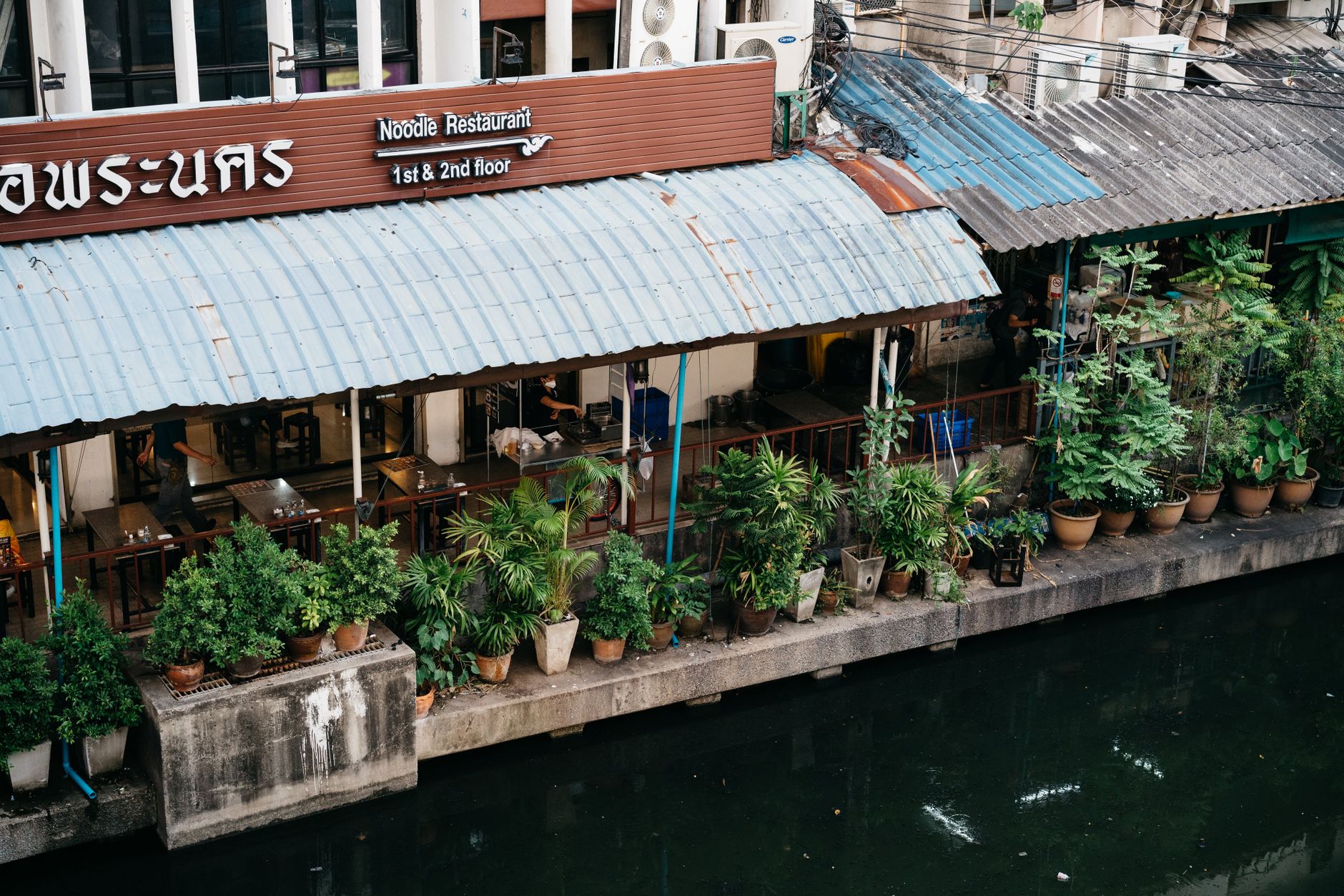 Narrow lane in a Bangkok neighbourhood with shophouses and greenery
Bangkok isn’t a walking city, they say — but these 7 routes prove that wrong, ranked by what you’ll actually see on foot.
1. Rattanakosin loop: Grand Palace to Golden Mount
A 4-kilometre morning walk starting at Sanam Luang, past the Grand Palace's outer walls, south to Wat Pho, back north through the old amulet market to Wat Suthat and the Giant Swing, ending at the top of Wat Saket's Golden Mount for the view. Ranks first because every 200 metres reveals another temple wall, another spirit house, another shophouse row from the 1900s — the density of things worth photographing is the highest in the city.
Do it 7 am-11 am to beat the heat and the tour groups. Wear covered shoes — the pavements are uneven and monitor lizards occasionally cross from the canals. Break for coffee at one of the shophouse cafes on Tanao Road. Total walking time about 2.5 hours with temple stops. Skip in April-May when the pavement radiates heat by 10 am; November-February is the sweet spot.
2. Talat Noi and the river to Chinatown
Start at Marine Department pier off the Chao Phraya, walk east through Talat Noi's mechanic-district lanes — where vintage engines double as street sculpture and every wall is layered with murals — then north through the goldsmith blocks into Yaowarat itself. About 3 kilometres, 90 minutes at a wandering pace. Ranks second because it's the most photogenic urban walk in central Bangkok, and the ratio of things you didn’t expect to things you did is high.
Best at 4-6 pm when the Chinatown food stalls set up but the crowds haven’t arrived, ending with dinner on Yaowarat Road around 7. Watch traffic — the lanes are shared with motorbikes moving fast. The San Chao Rong Kueak shrine on Talat Noi's central lane is worth the detour. Skip on Sundays when Yaowarat compresses to standing-room crowds after 7 pm.
3. Green Lung: Bang Kachao by bike or on foot
Technically across the river in Samut Prakan, but 15 minutes by taxi from Sukhumvit — a peninsula formed by a bend of the Chao Phraya, largely undeveloped, with elevated concrete paths through mangroves and coconut plantations. Ranks third because it's the only walk within the Bangkok orbit that feels rural — you’ll see hornbills, monitor lizards, and possibly no other tourists for an hour.
Take a taxi to Klong Toei pier, cross by longtail boat ($1), and either walk the paths or rent a bike near the landing ($3 a day). About 6 kilometres of path if you loop it; give it a half day including lunch at Bang Nam Phueng floating market (Saturday-Sunday only). No shops on the interior paths — bring water. Skip in monsoon; the paths flood.
4. Ari to Phahonyothin: the cafe walk
Ari district has become Bangkok's densest concentration of independent cafes, coffee roasters, and design shops, and the walk from BTS Ari down Soi Ari 1 and 4 and back up the parallel sois covers about 3 km with 20+ stops. Ranks fourth because it's the walk that shows contemporary middle-class Bangkok — the audience is Thai first, tourist second — and the coffee is genuinely good. Flat whites $4, specialty single-origin filters $6.
Do it 9 am-noon on a weekday for the calmest experience — cafes fill on weekends with a domestic crowd. Some sois are shaded by mature rain trees, which makes this the most comfortable Bangkok walk in hot months. Lunch at one of the small Thai-Japanese fusion places near BTS Saphan Khwai. Skip if you don’t drink coffee; the walk needs its stops to work.
5. Lumpini Park perimeter and inside loop
Central Bangkok's biggest park, 57 hectares between Sathorn, Silom and Wireless Roads. Ranks fifth because the perimeter loop (about 2.5 km) plus the interior lake path (another 1.5 km) gives you the closest thing Bangkok has to an urban nature experience — monitor lizards up to 2 metres long slide out of the ponds, and the mass evening exercise groups from 5-7 pm are a spectacle in themselves. Free, open 4:30 am-9 pm.
Best 6-7:30 am for the morning tai chi and calm lake, or 5-6:30 pm for the evening running crowd. Avoid midday (11 am-3 pm) — no shade on parts of the loop and temperatures brutal. MRT Silom or Lumphini exit at either park corner. Combine with a cheap noodle lunch at the food court on the Silom side.
6. Sukhumvit soi walking: Soi 11 to Soi 55 back streets
Not the main Sukhumvit avenue (loud, hot, exhaust-fumed) but the parallel back sois — Soi 23, Soi 33, Soi 39 — which run past low-rise apartments, embassy compounds, hidden restaurants and older residential streets. Ranks sixth because it's the walk that shows how Sukhumvit residents actually live, away from the tourist strip. About 4 km if you weave north-south between Asok and Thong Lo BTS stations.
Do it 8-10 am before heat, or 5-7 pm as the evening cools. Stops naturally at coffee shops, wine bars, and small hotel bars along the way. Sois flood readily in monsoon — an inch of rain closes some entirely — so check the sky. Skip if you want photographic set-pieces; this walk is textured rather than scenic.
7. Bang Rak riverfront: Sathorn pier to Portuguese quarter
Along the Chao Phraya from Sathorn pier northwest through the old customs house and Assumption Cathedral, into the pocket of Bang Rak that was the Portuguese, French and British trading district in the 19th century. Ranks seventh because it's the most architecturally coherent walk in the city — colonial-era shophouses, warehouses, and religious buildings within a 1.5 km stretch — and yet it's largely unvisited.
Best at 4 pm for the light on the river, ending at the O.P. Place or the Mandarin Oriental's riverside garden for a drink. Combine with a river-boat return trip. Wear covered shoes; some of the lanes near the cathedral are unpaved. Skip if you want temples; this is the walk for architectural history and the old international city.
Before you book
What people ask before booking Bangkok.
In pockets, yes — Rattanakosin, Chinatown, Ari and the back sois of Sukhumvit are all genuinely walkable for 2-4 kilometres at a stretch. Between neighbourhoods, no — distances are big, pavements disappear, and heat makes anything over 30 minutes in midday miserable. Plan walks within a single district and use BTS or MRT to hop between.
7-10 am and 4:30-7 pm year-round. Midday (10 am-3 pm) is genuinely too hot from March to October, with pavement temperatures over 40°C. In cool season (November-February), midday is tolerable but still not comfortable for long distances. Evening walks after sunset avoid heat but need attention to uneven pavements.
Uneven, broken tiles, occasional open drain covers, and shared with motorbikes on many sois — Bangkok pavements require attention. Wear closed shoes with real soles, not sandals. Cross at pedestrian crossings only where drivers stop (rare); otherwise cross with a group or use pedestrian bridges. Watch for delivery scooters using pavements as shortcuts.
For Rattanakosin and Chinatown, a licensed guide (around $50-80 for half a day) adds real value — the history is dense and easy to miss. For Ari, Lumpini, Sukhumvit back sois and the riverfront, no; those are self-guided by nature. Free walking tours run from Sanam Luang most mornings if you want a middle option; tip $10-15.