Dusit area guide: royal Bangkok with almost no tourists
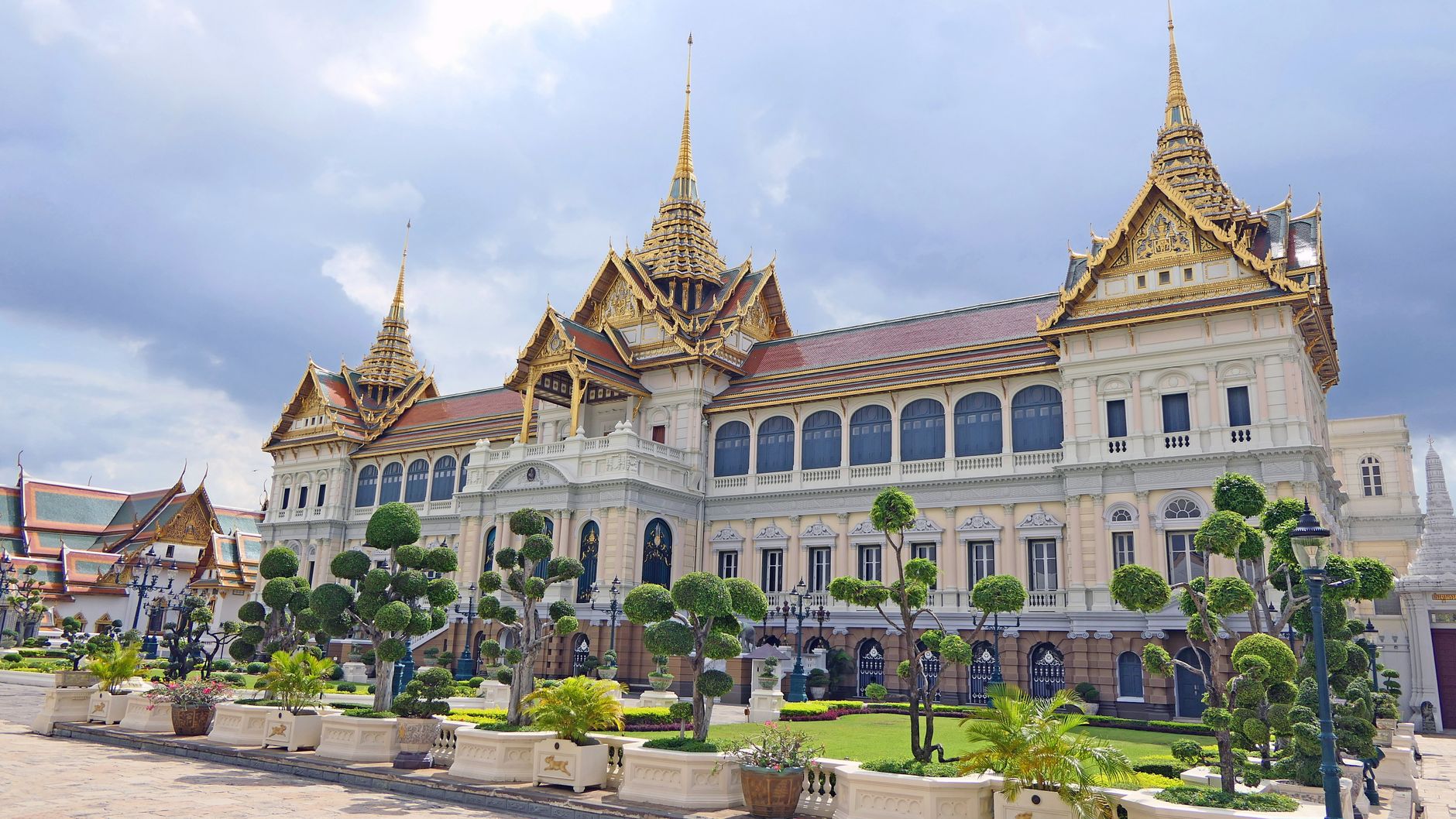 Dusit district with wide avenues and royal-era architecture
Dusit is Bangkok's royal government district with 10 sights, three hotels worth staying in, and rooms at $40-120.
What Dusit is
Dusit is the district immediately north of Phra Nakhon, built by King Rama V in the 1890s as a European-style royal quarter to complement the Chinese-and-Thai character of the old city. The centrepiece is Dusit Palace and the surrounding royal gardens, plus the Ananta Samakhom Throne Hall, Vimanmek Mansion (the largest teak building in the world when built), Wat Benchamabophit (the marble temple), Chitralada Palace (still a royal residence), and about a kilometre of grand avenues that would look at home in Vienna or St Petersburg.
The district was designed for the monarchy and the state, and today it is still dominated by government ministries, army headquarters, embassies, the parliament complex, Chitralada School and Dusit Zoo. Residents are civil servants, military families and the small commercial community serving them. Tourists come for a half-day of sights and leave. Almost nobody sleeps here. This is what makes it interesting.
Who Dusit suits
Dusit suits a very specific traveller: someone on a return trip to Bangkok who has done the Grand Palace and Chinatown and wants a quiet, dignified neighbourhood with genuine 1900s architecture and almost no tourist volume. It suits history-minded travellers who will spend a morning at the Throne Hall and an afternoon at Wat Benchamabophit and think that was a good day. It suits business travellers with meetings at the ministries or the parliament complex.
It does not suit first-time visitors — Dusit's sights, while genuinely impressive, are second-tier compared to the Grand Palace and Wat Pho, and the district's atmosphere is quiet enough that first-timers feel they have wandered somewhere they shouldn’t be. It does not suit budget travellers looking for a hostel scene; there isn’t one. It does not suit anyone whose plan is nightlife, shopping or restaurant-hopping — Dusit has no bars worth mentioning and closes early.
What a night costs
Dusit's hotel supply is small — maybe 15-20 properties that a foreign traveller would consider. Mid-range business hotels near Ratchawithi Road: $40-80. A handful of small heritage guesthouses: $60-100. The upper end is the Royal Princess Larn Luang and one or two similar four-stars at $90-130. There is no five-star; the nearest is the InterContinental in Pratunam, 15 minutes by taxi.
Compared to central Sukhumvit or Silom: Dusit is 30-40% cheaper for a similar business-hotel standard. You are paying less because demand is thin. The hotels are aimed at Thai domestic travellers, government contractors and visiting officials, not tourists. Rooms are clean and functional; character is limited. For character, you want the mid-range guesthouses on the small sois behind the Throne Hall, of which there are three or four worth booking.
What is walkable
From central Dusit around Ratchawithi and U Thong Nai roads: Ananta Samakhom Throne Hall (5 minutes), Vimanmek Mansion and the Dusit Palace grounds (10 minutes), Wat Benchamabophit (15 minutes), Chitralada Palace exterior views (10 minutes), Dusit Zoo (currently closed for redevelopment, expected reopening 2026-27), the Royal Elephant Museum (15 minutes), and the Ratchadamnoen Nok Avenue approach to the palace (5 minutes). A half-day sightseeing loop entirely on foot.
Beyond Dusit: Khao San and Banglamphu are a 20-minute walk south. Chinatown is 30 minutes by taxi. The Grand Palace is 25 minutes on foot down Ratchadamnoen or 10 by taxi. The nearest MRT station is Bang Sue or Tao Poon on the northern edge, both 15-20 minutes by taxi. Dusit is one of the least transit-connected central districts, which is part of why it has stayed so quiet.
The sights, honestly ranked
Ananta Samakhom Throne Hall (currently closed for restoration until further notice — check before you plan): a Renaissance-revival marble building that was the parliament until 1974, extraordinary from the outside even when the interior is off-limits. Wat Benchamabophit: the marble temple, arguably the most photogenic wat in Bangkok, best at 7am with monks receiving alms on the front steps. $2 entry. Worth an hour.
Vimanmek Mansion: the world's largest teak building when built in 1900, currently closed for renovation with a partial reopening expected. Dusit Palace grounds: still partially closed, but the Ananta Samakhom exterior and the surrounding royal-avenue walks are worth an afternoon in themselves. The Royal Thai Army Museum, the Royal Elephant Museum and half a dozen smaller sights fill a second day for anyone interested. Overall, Dusit's sights work best when you are not rushing them — a slow morning and a slow afternoon over two days.
Food in Dusit
Dusit's food is genuine, unpretentious Thai-Chinese, aimed at civil servants on lunch breaks. The market at Nakhon Chai Si Road has been serving the same neighbourhood for fifty years, with $2 boat noodles and $3 khao mun kai. The row of shophouse restaurants along Ratchawithi Road opposite the Throne Hall does classic Thai at $4-6 a dish. Krua Apsorn (technically Phra Nakhon but 5 minutes from Dusit's southern edge) is the district's best sit-down Thai meal at $10-20 a head.
What Dusit does not have: rooftop bars, natural wine, specialty coffee (there are one or two decent cafés, no more), international restaurants beyond a couple of Japanese places aimed at embassy staff, or nightlife of any kind. The district closes early. If a night out with cocktails is part of your trip, plan to taxi to Ari (15 minutes) or Sukhumvit (25 minutes) and come back. Or accept that Dusit is a quiet-evenings kind of stay, which for the right traveller is the point.
Dusit versus Banglamphu, and versus Ari
Against Banglamphu just south: Banglamphu has more accommodation, better food density, easier onward transport, more atmosphere. Dusit has grander architecture, more space, more silence, and fewer tourists. If you want a base for Old City sightseeing, book Banglamphu. If you want to actually live in the royal district for a few nights and see somewhere most visitors miss, book Dusit.
Against Ari four BTS stops north (but not connected to Dusit by BTS): different eras and different reasons. Ari is café-and-nightlife residential; Dusit is government-district heritage. Ari is easier to spend a week in; Dusit is better for two or three focused nights. On a longer trip I would consider two nights in Dusit early — before the pace of Sukhumvit — as a quiet, atmospheric start to the visit.
Before you book
What people ask before booking Dusit.
Probably not. First trips should be based in Banglamphu, Sukhumvit or Silom for transport and food convenience. Dusit is worth a half-day visit from any of those — take a taxi in, walk between the Throne Hall and Wat Benchamabophit, taxi out. Save the sleep-here option for a second trip when you want somewhere quieter and unfamiliar.
Taxi from Banglamphu is $2-3 and 10 minutes. Taxi from Sukhumvit or Silom is $5-8 and 20-30 minutes depending on traffic. There is no direct BTS or MRT. Ride to Wat Benchamabophit first, walk the loop past the Throne Hall and Vimanmek, and taxi back. The whole visit takes 3-5 hours including photography.
Both have been intermittently closed for restoration for several years and the schedule keeps shifting. Check the current status before you plan — a Dusit trip built around a closed Throne Hall is disappointing. Wat Benchamabophit is always open, and the exterior architecture and gardens of the closed sites are still worth seeing even when interiors are off-limits.