Getting around Bangkok: the transport that actually exists
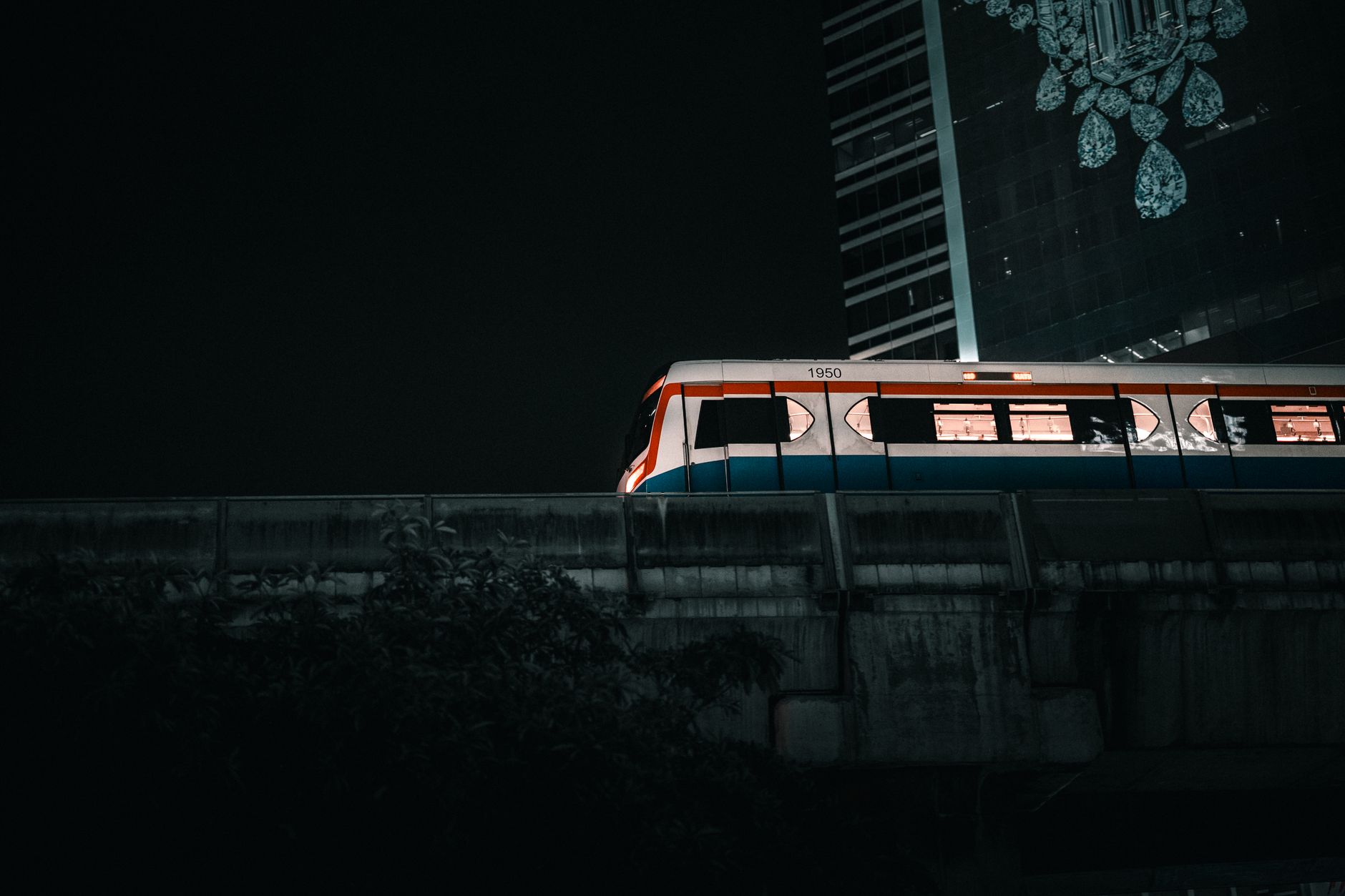 BTS Skytrain platform above a busy Bangkok street at dusk
The honest list of what moves in Bangkok, with 7 modes ranked by when each one is the right call.
BTS Skytrain: the default for most tourist trips
The BTS Skytrain is the answer to about 70% of tourist trips in central Bangkok, and it should be your first thought before you open a ride-hailing app. Two lines matter: the Sukhumvit line runs from Kheha in the southeast up through Asok, Nana, Siam, Mo Chit and out to Khu Khot, and the Silom line runs from Bang Wa across the river through Saphan Taksin, Sala Daeng and Siam. Trains run roughly 6am to midnight, every 3-6 minutes, and single fares sit around $0.50-$2 depending on distance.
The catch is coverage: the BTS does not reach the Old City, Khao San, Chinatown proper, or most of Thonburi's temples. If your hotel is in Sukhumvit, Silom, Sathorn, Siam, Ari or Ekkamai you will use it daily and love it. If you are staying in Rattanakosin or Banglamphu it is almost useless. Buy a Rabbit Card at any station for $3 deposit plus top-up if you are staying more than three days; fumbling for coins at rush hour with a queue behind you is the small daily tax on not buying one.
MRT Blue Line: the one that reaches Chinatown
The MRT Blue Line is the underground metro, and it is the reason you can now reach Chinatown (Yaowarat station), Wat Mangkon and Sanam Chai (for the Grand Palace) without a taxi. It loops from Tha Phra through Hua Lamphong, Silom, Sukhumvit, Phahon Yothin and back across the river, connecting to the BTS at Asok/Sukhumvit, Sala Daeng/Silom, Mo Chit/Chatuchak and Bang Wa. Fares run $0.50-$1.50, trains run 6am to midnight, and stations are cleaner and cooler than the BTS.
The MRT uses a separate ticket system from the BTS — your Rabbit Card does not work here, and you buy a plastic token from the machine each ride or get an MRT card for $5 deposit. That interchange friction is the honest downside: at Asok you tap out of the BTS, walk down through a shopping mall, and tap into the MRT with a different card. For a week's visit, most people just buy tokens. For anything longer, get both cards and stop thinking about it.
Taxis and ride-hailing: Grab and Bolt, not the meter
Use Grab or Bolt, not a flagged-down taxi, and you will save yourself the single most common tourist argument in Bangkok. A metered taxi from Sukhumvit to the Grand Palace should cost $4-6; the driver who refuses the meter and quotes $15 flat is the reason the apps exist. Grab shows the fare before you book, the driver cannot renegotiate, and the app has your route on record. Bolt is usually 10-20% cheaper for the same car. Both accept card payment linked to your account, so you never touch cash.
Traffic is the real variable. A 4km trip that takes 12 minutes at 10am takes 45 minutes at 5.30pm on a weekday, and no app can fix that. If you have a flight or a dinner booking, either leave two hours early or take the BTS to the nearest station and hail from there. Motorbike taxis (the orange vests at every soi mouth) solve the last-mile problem for $1-2 and are genuinely faster than any car in gridlock — helmets are provided, and yes, you should wear it.
Chao Phraya boats: cheap, scenic, actually useful
The Chao Phraya Express Boat is public transport dressed up as a tourist attraction, and it is the fastest way from Saphan Taksin (BTS Silom line) up to Tha Tien for Wat Pho, Tha Chang for the Grand Palace, or Phra Arthit for Khao San. Fares are $0.50-$1 for the orange flag line (locals, most stops), $1.50 for the green flag (fewer stops, faster), and around $5 for the blue flag tourist boat with English announcements. Orange is fine — just watch the pier signs, which are numbered and in English.
Skip the longtail canal tours sold at every riverside pier for $30-60 an hour unless you specifically want to see the Thonburi klongs; the express boat gives you 80% of the same river views for a few dollars. The one boat that is worth its money is the free hotel shuttle from Sathorn pier to the Icon Siam mall and back, which runs 9am-11pm and connects nicely to a sunset drink on the west bank.
Tuk-tuks: a ride, not a transport option
Tuk-tuks are a photograph and a novelty, not a way to get around, and treating them as transport is the most expensive mistake tourists make. A driver at a tourist rank will quote $8-15 for a trip a metered taxi does for $3, and the ones who quote $2 are running the gem-shop or tailor-shop scam where you get driven to three commission stops before your actual destination. Say no, walk to the corner, and use Grab.
If you do want the experience, do it once, at night, for a short hop — Khao San to Chinatown, say — and agree the price before you get in. $5-7 for a 15-minute ride is reasonable for the novelty. Do not take one from the airport, do not take one for a 'temple tour', and do not accept the 'today is a special day, everything is 20 baht' opener from a friendly stranger at Wat Pho. That sentence has been the opening line of the same scam since 1998.
Buses and songthaews: only if you have time to burn
Bangkok's public buses are dense, cheap ($0.20-$0.60), and almost entirely in Thai — route numbers on the front, destinations written in Thai script on the side, and no English announcements. Google Maps does route them correctly now, which is a genuine improvement over five years ago, but you still need to flag the bus down and know when to press the buzzer. For a two-week trip, the payoff is not worth the learning curve when a BTS-plus-Grab combination costs $5 a day.
Songthaews (converted pickup trucks with two benches in the back) barely exist in central Bangkok — you see them in Pattaya, Chiang Mai and the suburbs, but not on Sukhumvit. If you end up in Nonthaburi, Samut Prakan or out towards Chatuchak's back sois you might use one; the flat fare is usually $0.30-$0.60, you press a buzzer to get off, and you pay the driver through the cab window. Assume nobody speaks English and have your destination written in Thai on your phone.
The Airport Rail Link and getting in from Suvarnabhumi
The Airport Rail Link runs from Suvarnabhumi (BKK) to Phaya Thai in about 26 minutes for $1.50, and it is the right call if your hotel is anywhere near Phaya Thai, Ratchaprarop, Makkasan or a BTS interchange. Trains run 6am to midnight every 10-15 minutes. From Phaya Thai you cross to the BTS on the same elevated walkway. It is not the right call if you have three suitcases, if you land after midnight, or if your hotel is in the Old City — for those, a metered taxi from the official rank on level 1 is $10-15 plus $2 airport surcharge and $2 tolls.
Don Mueang (DMK), the second airport, has no rail link at all despite years of promises. A Grab from DMK to central Bangkok is $12-18 depending on traffic and takes 40-90 minutes. The A1 bus to Mo Chit BTS is $0.90 and takes about 30 minutes off-peak; from Mo Chit the BTS finishes the job. If you are budget-focused and travelling light, the bus-plus-BTS combo from DMK is genuinely the smart move.
Before you book
What people ask before booking Bangkok.
You need both if you are staying more than four days, because the BTS Skytrain and MRT metro run separate ticketing systems that do not interchange. Deposits are $3 and $5, top-ups start at $3, and both are refundable at any station. For shorter trips, single tokens are fine.
No, Uber pulled out of Southeast Asia in 2018. The equivalent apps are Grab (dominant, works exactly like Uber) and Bolt (usually 10-20% cheaper but slightly thinner driver coverage). Both let you pay by card, both show the fare upfront, and both are how locals get around when the BTS does not go there.
Sometimes, badly. Pavements are broken, motorbikes use them, and the heat between 11am and 4pm makes anything over 800m genuinely unpleasant. Sukhumvit's elevated walkways from Chit Lom to Asok are the exception and are actually pleasant. Everywhere else, plan to walk 400-600m tops between transport hops.
Yes, and it matters. Cross-river ferries are the tiny boats that shuttle passengers directly across the Chao Phraya between paired piers for about $0.15 — you use these to reach Wat Arun from Tha Tien. The Express Boat runs up and down the river between numbered piers. Both are useful, both are cheap, and both operate roughly 6am-7pm.