Best Bangkok hotels near major BTS and MRT interchanges
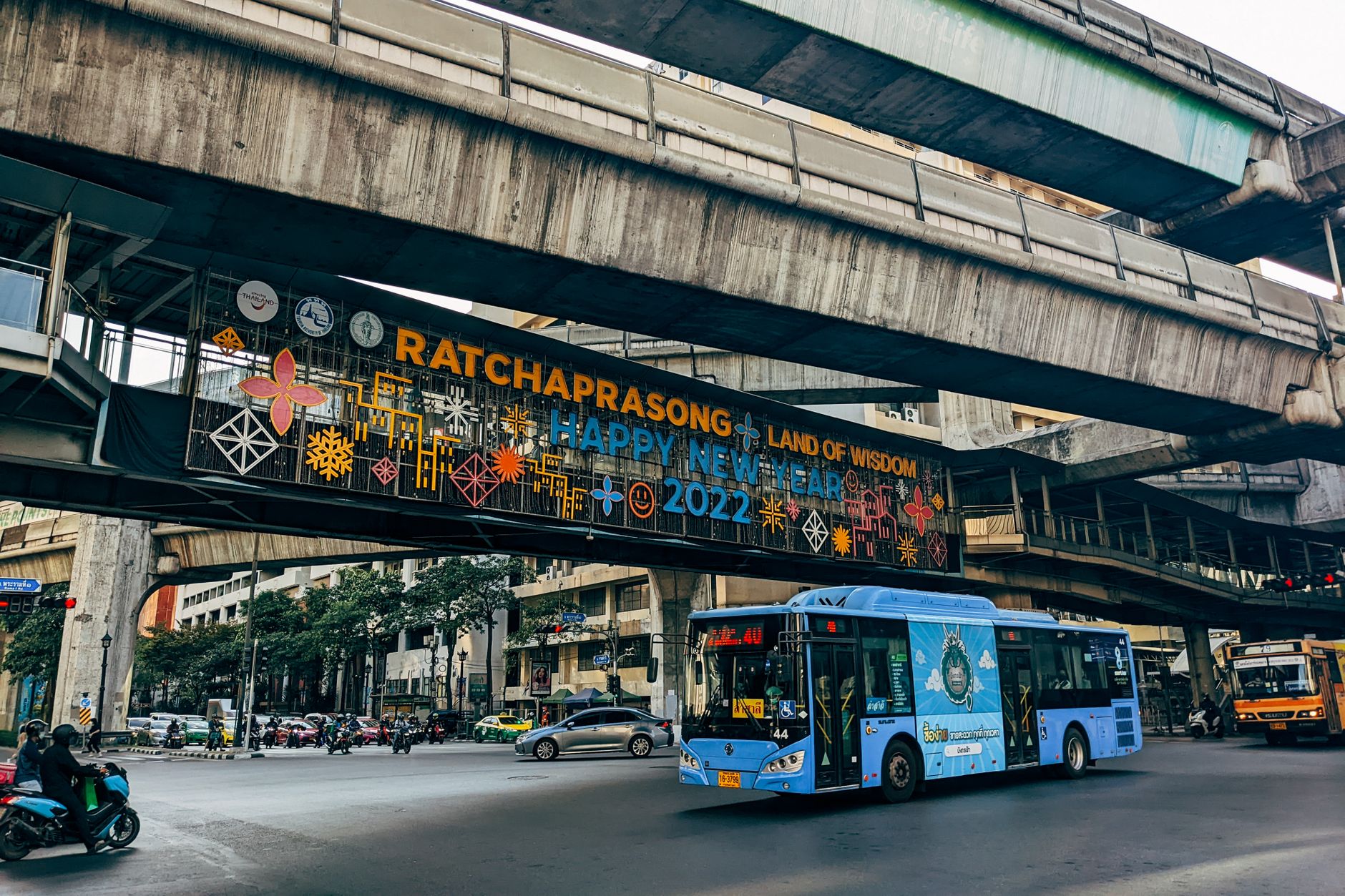 BTS Skytrain platform above a busy Bangkok intersection at rush hour
Nine transport-first Bangkok neighbourhoods compared on interchange access, walk distances to platforms, night-time noise and which one saves you the most on taxis over a five-day trip.
Why interchange proximity beats "BTS access" in Bangkok
Bangkok's rail network is now dense enough that "near a BTS station" is no longer specific advice. There are 62 BTS stations, 38 MRT stations, and the network has more than doubled since 2015. The metric that actually matters for a tourist is proximity to an interchange — a station where two lines meet — because the interchange decides how many taxi trips you take. A hotel one stop from an interchange means every trip involves either a change or a taxi at the far end; a hotel at the interchange itself means you step onto whichever line you need directly.
The four main interchanges for tourists are Siam (BTS Silom and Sukhumvit lines), Asok/Sukhumvit (BTS and MRT Blue), Silom/Sala Daeng (BTS and MRT), and Mo Chit/Chatuchak (BTS and MRT). A hotel within a 300-metre walk of any of these puts the entire tourist Bangkok inside a 25-minute rail journey. A hotel 500 to 800 metres from any of them adds either a taxi at each end of the day or a hot, humid walk that turns into a taxi anyway. The 200-metre difference in booking is the whole logistics difference.
Siam interchange: the shopping and transit sweet spot
The Siam interchange sits at the physical centre of tourist Bangkok, on top of the Siam Paragon and Siam Center malls, with the BTS Silom line and BTS Sukhumvit line crossing here. Hotels within 300 metres — a cluster of four- and five-stars along Rama I Road and Phayathai Road — put you into the mall system without touching a street, and onto any BTS destination in under 20 minutes. Room rates run $110 to $340. This is the correct base for a first Bangkok trip focused on shopping, day trips and evening dining.
The trade-off is that Siam is a shopping district first and a residential district a distant second. Streets are quiet after 10pm because the malls close, restaurants outside the malls are limited, and there is no neighbourhood character in the sense that Sukhumvit or Chinatown have. You commute out for dinner and back for sleep. The night-time atmosphere is dead; if you want a hotel with a lively street outside at 11pm, book Sukhumvit instead. Book Siam for pure transit convenience.
Asok/Sukhumvit: BTS meets MRT with the best nightlife
The Asok BTS station and Sukhumvit MRT station form the same interchange, on top of the Terminal 21 mall in the middle of Sukhumvit's most active nightlife district. Hotels within 300 metres — a cluster along Sukhumvit Soi 15, Soi 19 and the main road itself — put you onto both the BTS Sukhumvit line east or west and the MRT Blue line for the Old City, Chinatown and Chatuchak. Rates run $95 to $290. This is the correct base if the trip is Sukhumvit-focused and you want easy access to the Old City too.
The trade-off is street noise. The Asok intersection is one of the loudest in Bangkok, motorbike traffic runs until 2am, and even a 15th-floor room with the window closed catches traffic hum. Ask for a room facing away from the main road, ideally on Soi 15 or Soi 19 rather than Sukhumvit itself. The other trade-off is that the immediate area is heavily commercial rather than characterful; walk five minutes to Soi 11 or Soi 33 for the neighbourhood feel.
Silom/Sala Daeng: the business-and-nightlife combined base
Silom BTS (Sala Daeng) and MRT Silom form an interchange at the Rama IV end of Silom Road, minutes from Patpong Night Market, Lumphini Park and the Sathorn business towers. This is the correct base for a mixed business-and-leisure trip: BTS to Chatuchak in 20 minutes, MRT to Hua Lamphong for old-town access in 12 minutes, walkable to Lumphini for morning runs and to Silom's late-night hawker scene for dinner. Rates run $85 to $260, with the four-star tier particularly well priced.
The trade-off is that Silom is more business than tourist, and the atmosphere flips completely between weekdays and weekends. Monday to Friday it is suited office workers and expense-account dinners; Saturday and Sunday it is quiet enough to feel empty. Book this base if half your trip is meetings or if you want the Lumphini Park proximity for morning exercise. Skip it if the whole trip is leisure and you want a lively neighbourhood on Sunday evening.
Mo Chit/Chatuchak: weekend market convenience at a lower price
Mo Chit BTS and Chatuchak MRT form an interchange at the north end of the BTS Sukhumvit line, directly next to Chatuchak Weekend Market and Chatuchak Park. Room rates in the cluster of three- and four-star hotels here run $55 to $140 — significantly cheaper than the central interchanges — and the rail time to Siam is 18 minutes, to Asok 22 minutes. This is a legitimate base for a budget-conscious trip that will still spend most days in central Bangkok.
The trade-off is that the immediate area lacks tourist infrastructure. Restaurants are locals-focused rather than tourist-friendly, English is less common, and the neighbourhood feels distinctly outer-Bangkok compared with Sukhumvit. On weekends the whole area transforms because of Chatuchak Market, which is either a bonus (you are 200 metres from the biggest market in Southeast Asia) or a problem (crowds until 6pm). For weekend market shoppers, this is the smartest base in Bangkok. For general tourism, book central instead.
Phaya Thai and the Airport Rail Link factor
Phaya Thai is a BTS station on the Sukhumvit line that is also the Airport Rail Link (ARL) terminus for Suvarnabhumi. Hotels within 300 metres — a mix of three- and four-star towers along Phaya Thai Road and around the Victory Monument area — put you 30 minutes from Suvarnabhumi at $1.30 rail fare rather than a $10 to $18 taxi ride. For a trip with early flights or a lot of day trips through Suvarnabhumi, this interchange convenience is worth $20 to $50 in taxi savings across the stay.
The trade-off is that Phaya Thai is not a central tourist neighbourhood. Restaurants are locals-focused, the tourist infrastructure is thinner than Siam or Sukhumvit, and the immediate area around Victory Monument has heavy motorbike-taxi traffic that makes street-level navigation harder than expected. Book Phaya Thai if the airport journey is the trip's biggest logistics variable; otherwise stay central and take the ARL from a connecting station.
The honest ranking of interchange bases
For a first Bangkok trip of three to five nights, book Siam interchange at $110 to $220 for the four-star tier. It is the most-connected base in the city, the mall proximity is genuinely useful for the inevitable rainy afternoon, and the transit maths beats every other neighbourhood. For a return visit or a nightlife-focused trip, book Asok/Sukhumvit at $95 to $200 for the same tier — the walk to Soi 11 and Thonglor makes it work as a base rather than just a transit point.
For a longer stay of a week or more, or a trip on a tighter budget, book Silom/Sala Daeng if you want business-district calm, or Mo Chit/Chatuchak if you want $55 to $140 rates and do not mind the 20-minute rail commute to the centre. Skip Phaya Thai unless the airport transit is the decisive factor. And skip "near a BTS station" as a search filter entirely — the distinction between near-a-station and at-an-interchange is 10 to 20 minutes per journey, every journey, for the whole trip.
Before you book
What people ask before booking Sukhumvit.
A typical tourist takes 6 to 10 journeys a day between the hotel, attractions and dinner. BTS/MRT fares average $0.80 to $1.60 per journey; equivalent taxi fares run $3 to $8 per journey in traffic. Over five days that is $60 to $200 in savings by staying at an interchange rather than a stand-alone station. The maths favours the interchange every time.
BTS platforms are open-air but the trains are strongly air-conditioned; MRT is fully underground and air-conditioned throughout including platforms. In the April-May hot season the MRT is meaningfully more comfortable for longer journeys. In the November-February cool season the difference matters less.
Both systems close around midnight and reopen at 6am, which does not match Bangkok's late nightlife schedule. Plan on a taxi or Grab home after 11.30pm; taxi availability at Asok, Silom and Siam is very good until 2am. Fares from central Bangkok back to the same interchange run $3 to $7 depending on distance.