Where to stay in Chinatown (Yaowarat), Bangkok
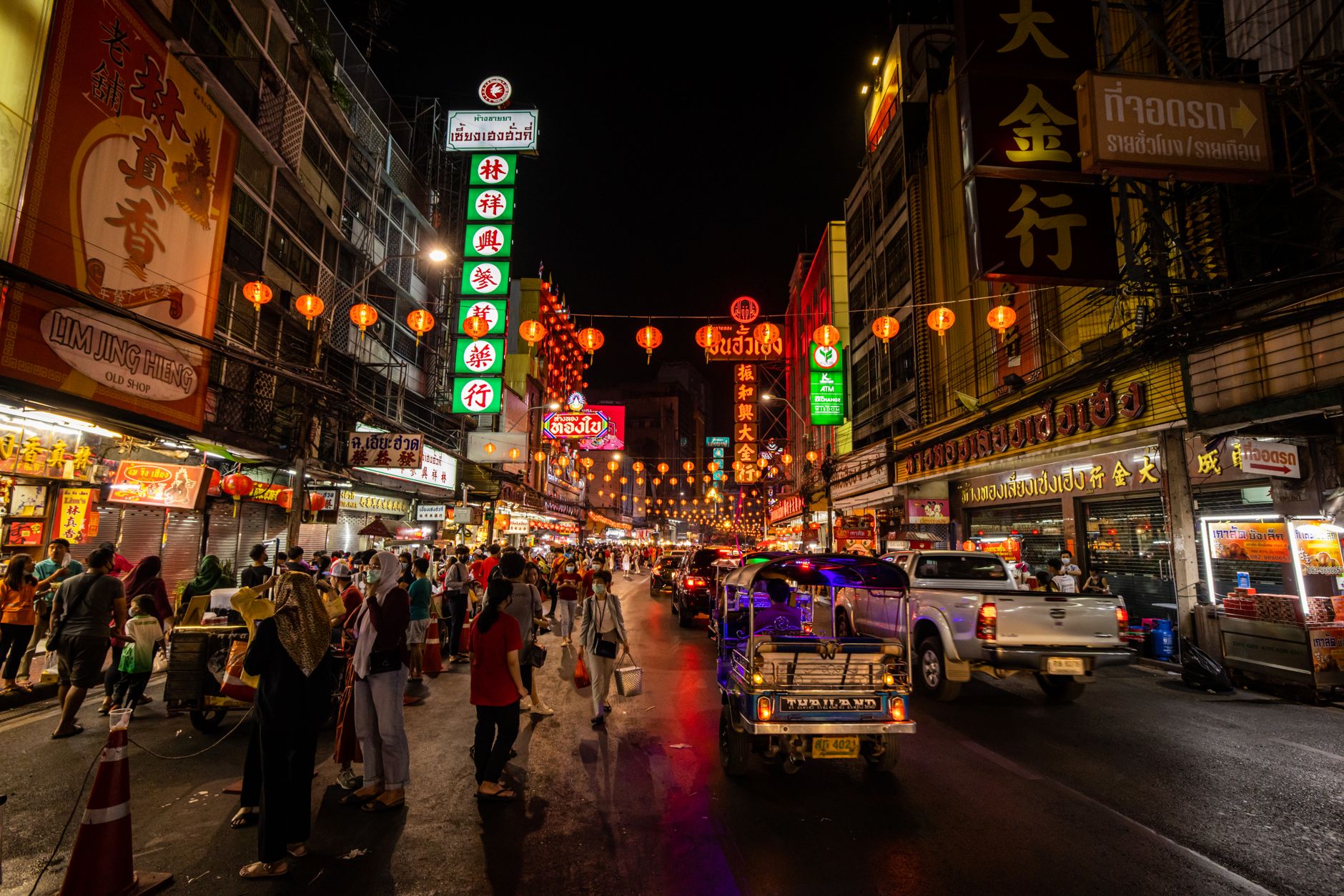 Yaowarat Road in Chinatown at night with neon signs and street food stalls
Chinatown is Bangkok's best street-food strip in a district where hotel rooms undercut Silom by 25% — book here if dinner is why you came.
Who Chinatown is for
Chinatown suits the traveller who came to Bangkok for the food, who wants to be inside an old Thai-Chinese working district rather than a glass-tower business district, and who's happy to trade the polished five-star pool for a shophouse room above a noodle stall. Repeat visitors who’ve done the Sukhumvit trip land here on their second or third visit; food-focused travellers put it at the top of the list; anyone spending a night before flying north to Chiang Mai finds Hua Lamphong station on the doorstep and treats Chinatown as a natural stopover.
It's the wrong area for luxury seekers (the five-star product is thin here — a couple of newer conversions and that's it), for travellers with mobility issues (the pavements are narrow, uneven, and packed with food stalls after 5pm), and for families with small children who need space and quiet. First-time visitors focused on the Grand Palace and Wat Pho will find Chinatown workable but not ideal — Rattanakosin is closer to those temples, though 15 minutes down Charoen Krung Road puts you at Chinatown's dinner tables.
What a night costs
Chinatown runs 20-25% cheaper than Silom for comparable rooms, and the market is genuinely wide. Hostel dorms cluster at $10-16 with a heavy concentration around Soi Nana (the Chinatown Soi Nana, not the Sukhumvit one), and private rooms in shophouse guesthouses run $28-45. Mid-range hotels — the recent wave of boutique conversions of old Sino-Portuguese buildings — sit at $60-105 a night, and they’re some of the best-value character rooms in the city.
The top end is thin but real. The newer luxury conversion hotels (including the well-known five-star at the Hua Lamphong end of Chinatown) charge $180-320, and there are a few polished four-star towers along Charoen Krung Road at $130-200. Chinatown pricing is steadier through the year than Sukhumvit's — the Chinese New Year window (late January or February) spikes 30% and books out weeks ahead; other months move within a 10-15% band.
What's within walking distance
Chinatown's walking radius is dense and packed. Yaowarat Road is the spine — the main street of hawker stalls, gold shops and old restaurants — and the sois running north and south of it (Soi Nana, Soi Texas, Song Wat Road, Sampeng Lane) are all in play. Wat Traimit (the Golden Buddha) sits at the east end near Hua Lamphong. Wat Mangkon Kamalawat, the main Chinese temple, is 5 minutes north of Yaowarat. Pak Khlong Talat, the 24-hour flower market, is 15 minutes west along the river.
The Grand Palace and Wat Pho are 20-25 minutes' walk west, or 10 minutes by taxi. The river is 5 minutes' walk south to Ratchawongse pier. MRT Wat Mangkon (Blue Line) is at the north edge of Chinatown and connects to Silom and Sukhumvit in 10-15 minutes. Hua Lamphong station (the old main train station) is at the east edge — most long-distance trains have moved to Bang Sue, but Hua Lamphong is still a functional MRT hub and a Bangkok landmark.
Yaowarat vs Song Wat vs Talat Noi
Three sub-neighbourhoods sit inside Chinatown and they’re not the same experience. Yaowarat proper (the main road) is where the food tourism happens — after 5pm the pavements fill with hawker stalls, and the pak fun stir-fry, oyster omelettes, boat noodles and satay skewers all draw crowds. Book here if food is the trip. Song Wat, the river-side old warehouse strip, is quieter, arty-er, with a cluster of independent cafes and design-focused boutique hotels — book here if you want the character without the crowd.
Talat Noi, at the west end near the river, is the small-scale mechanic-shop-and-graffiti district that's turned into the city's most photographed heritage lane. A handful of small hotels and cafe-hotels have moved in and rooms are $50-90, but the district is small and the choice is limited. For a first Chinatown stay, book on Yaowarat itself for the food access; for a second visit, try Song Wat for the calm.
Getting around from Chinatown
MRT Wat Mangkon and MRT Hua Lamphong are the two Chinatown stations, both on the Blue Line, and together they connect you to Sukhumvit (change at Sukhumvit for BTS Asok, 20 minutes), Silom (Silom station, 12 minutes), and Chatuchak (25 minutes to Chatuchak MRT). The BTS is a change away — you’ll need to transfer at Silom-Sala Daeng or at Asok-Sukhumvit — but the network is functional.
The Chao Phraya Express Boat from Ratchawongse pier is the best way to reach the Grand Palace, Wat Arun, and the Old City — 10-15 minutes upriver, $0.50-1.20 depending on the boat. For Suvarnabhumi airport, take the MRT to Phetchaburi and transfer to the Airport Rail Link (about 55 minutes total) or a taxi ($13-17, 40-60 minutes). Don Mueang is 45-70 minutes and $15-19 by taxi; there's no direct rail.
Eating: the actual reason to stay here
Chinatown's food scene runs from 6am (the dim sum and jok congee places open early) through 2am (the last stir-fry stalls on Yaowarat's pavements). The essentials: T&K Seafood at the corner of Phadungdao doing charcoal-grilled prawns and stir-fried crab at $12-18 for two; the pork satay stall at Soi Texas; Guay Jub Ouan Pochana for the peppery rolled noodle soup at $3-4; the mango sticky rice at Bua Loi Yaowarat for $3; and the dim sum places along Charoen Krung open all day at $1-2 per basket.
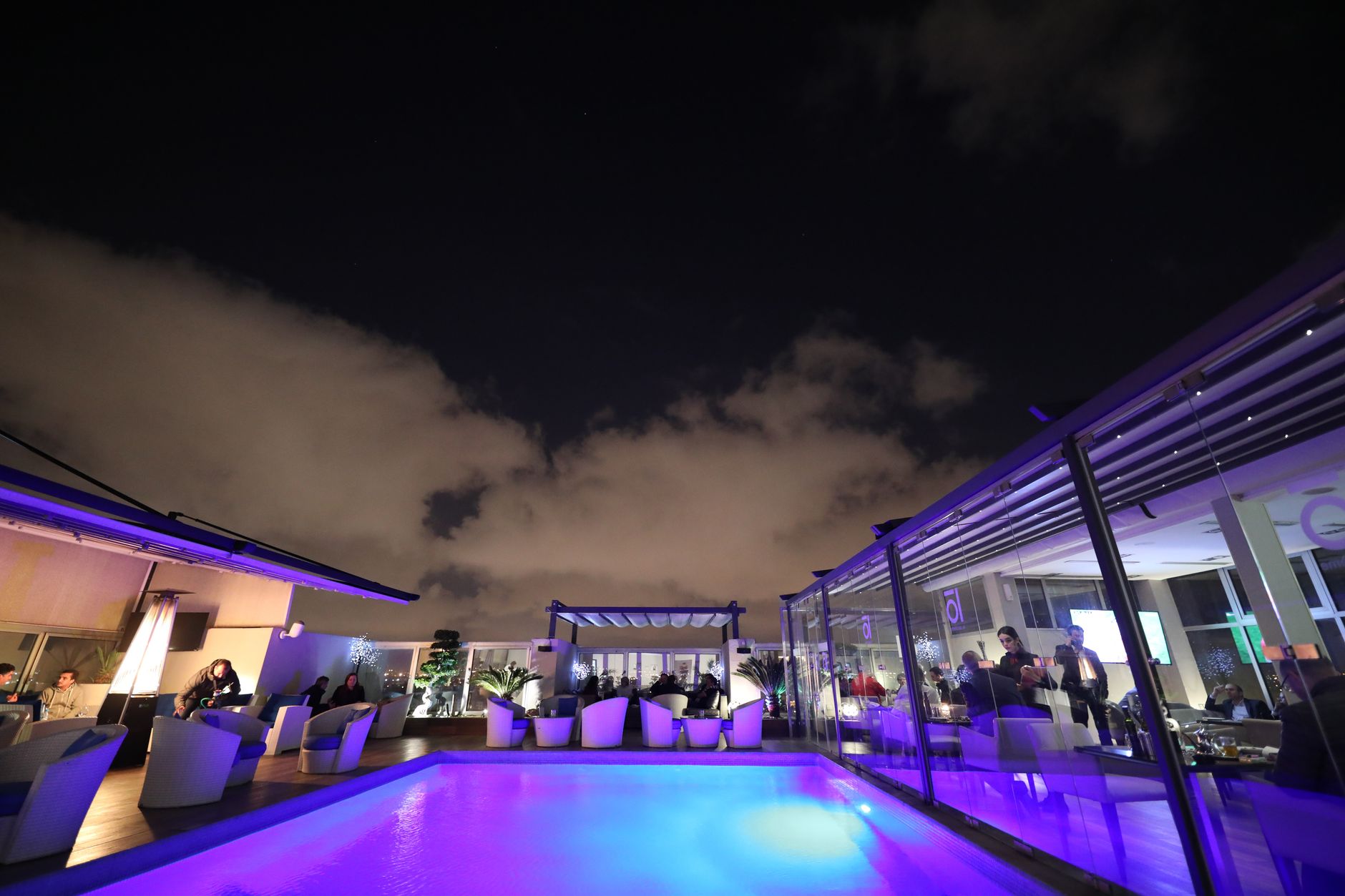
For sit-down, the well-known crab restaurants along Charoen Krung Road (Somboon Seafood has a Chinatown branch, and Lek and Rut on Phadungdao is the pavement classic) run $15-25 a head. Michelin-listed street-food stall Jay Fai is a 10-minute taxi ride north — the queue is 3-5 hours, the crab omelette is $30, and you need to decide if that's the trip. The rooftop bar scene is thin here — the couple of options at the newer hotels along Charoen Krung deliver decent views at $10-15 a cocktail.
The honest catch
Chinatown's biggest problem is the sensory overload. The pavements on Yaowarat between 6pm and midnight are shoulder-to-shoulder, the traffic doesn’t stop, the smoke from the stalls hangs in the air, and there's no quiet space to retreat to unless you booked a hotel a couple of sois in from the main road. Travellers who love it come back every trip; travellers who wanted a calmer Bangkok base find it exhausting by night three.
The other catch is the walking distances to other tourist highlights. The Grand Palace is 25 minutes on foot from most Chinatown hotels, and Sukhumvit's restaurants and rooftop bars are 20-30 minutes by MRT. If your trip is heavy on the palaces and light on the food, Rattanakosin is a better base. If it's heavy on the food, Chinatown is genuinely the correct pick — no other Bangkok district touches it for street eating.
Before you book
What people ask before booking Sukhumvit.
Depends where. Hotels directly on Yaowarat get real noise until 1-2am — traffic, hawker stalls, crowds. Hotels one soi in (Soi Nana, Song Wat) are noticeably quieter. Pay $10-15 more for a higher floor or an inside room facing a courtyard. Read reviews for 'street noise' before booking anything under $50.
Three ways. Walk (25-30 minutes along Yaowarat and Charoen Krung, doable in cool morning but hot by 10am). Taxi ($3-4, 10-15 minutes, watch the meter). Or walk 5 minutes to Ratchawongse pier and take the Chao Phraya Express Boat to Tha Chang, 10 minutes upriver for $1. The boat is the best option — cheap, fast, cool.
For a food-focused trip, yes. For a temple-focused trip, Rattanakosin is closer to the Grand Palace and Wat Pho. For a shopping-focused trip, Siam is better. Chinatown works well as a middle three nights of a longer trip, or as a specific destination if street eating is high on your list.