Nakhon Pathom area guide: is it worth staying overnight?
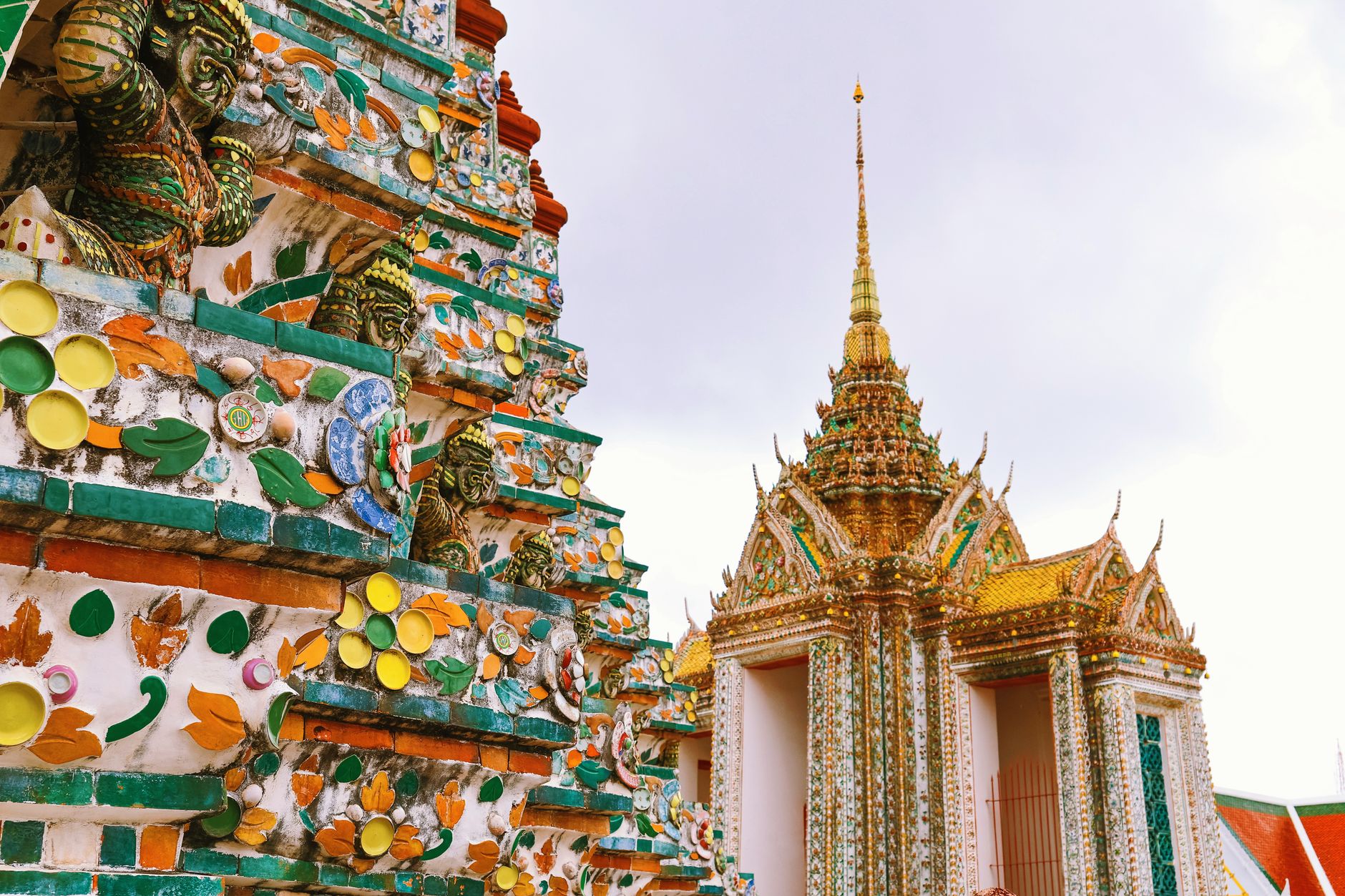 Phra Pathom Chedi, the tallest stupa in Thailand, dominating central Nakhon Pathom
Nakhon Pathom is 56 km west of Bangkok, home to the tallest stupa in Thailand, and hotel rooms run $20-45 — here is the honest case for and against sleeping here.
The one-line pitch
Nakhon Pathom is a small provincial capital 56 km west of Bangkok, best known for Phra Pathom Chedi — at 120 metres, the tallest stupa in Thailand and one of the oldest Buddhist monuments in Southeast Asia. The town also sits near two of the biggest floating and railway markets that day-trippers from Bangkok flock to: Damnoen Saduak (in adjacent Ratchaburi province, 35 minutes) and Maeklong Railway Market (in Samut Songkhram, 45 minutes). Sanam Chandra Palace, a wooden royal residence from the Rama VI era, sits five minutes from the chedi.
The pitch is the classic secondary-city trade-off: quiet, cheap, real Thailand, but very little to do beyond a half-day of sightseeing. A three-star hotel in central Nakhon Pathom runs $22-42 a night versus $50-80 for the equivalent in Bangkok. If you are combining a Damnoen Saduak morning with a Maeklong afternoon and want to skip the Bangkok commute on both ends, a night in Nakhon Pathom is a legitimate move. Otherwise, day-trip.
Who should book here
Travellers who want to see the floating and railway markets without the 4.30am Bangkok wake-up. Damnoen Saduak is a two-hour drive from central Bangkok, which is why day-trip tours leave at 6am and arrive at the market when it is already at peak tourist chaos. Sleep in Nakhon Pathom the night before and you leave the hotel at 7am, arrive at 7.45am while the vendors are still setting up, and see the market as an actual market rather than a floating photo op. Same logic for Maeklong.
Anyone with a specific interest in Dvaravati-period Buddhism or early Thai history should also stay. Phra Pathom Chedi and the surrounding museum, plus the older Chedi Chulapathon nearby, are the most significant Dvaravati sites in the country. The Phra Pathom Chedi National Museum, though small, holds a good collection of 7th to 11th century Buddha images and inscriptions. This is a specialist reason to stay, but for the right traveller it is a full day.
Who should skip it
Most first-time visitors. Nakhon Pathom does not sit on the standard Thailand circuit and its main sight — Phra Pathom Chedi — is a comfortable half-day from Bangkok as a stopover on the way to Kanchanaburi, which is where most people are actually heading. The town itself, while pleasant, offers little in the way of food scene, nightlife or extended sightseeing to justify a dedicated night unless you are combining it with the markets or continuing west.
Anyone wanting to combine the western markets with Bangkok sightseeing should also skip. A day-trip from Bangkok that hits Damnoen Saduak and Maeklong via a booked tour is $30-50 per person and gets you back to central Bangkok by 5pm — more efficient than routing through Nakhon Pathom in most cases. The overnight only wins if you are self-driving, on a motorbike trip, or explicitly want to slow the pace down.
What a night actually costs
Budget hotels near the train station and the chedi run $15-28 for a double with air-conditioning — old-school Thai provincial hotels with tile floors and decent bathrooms. Mid-range business hotels in the newer part of town, catering mainly to Silpakorn University visitors and domestic travellers, sit at $28-50. There are one or two three-and-a-half-star places pushing $60-85 near Sanam Chandra Palace, but the top of the market here is genuinely modest.
Compared to Bangkok, that is a saving of $25-45 a night in the mid-range. Compared to Kanchanaburi (which most travellers would continue to anyway), it is roughly similar or slightly cheaper. The finish is Thai provincial rather than international: expect small pools if any, breakfast that is a two-choice Thai plate rather than a buffet, and reception English that is functional rather than fluent. Book directly or via Thai booking sites for the best rates — international OTAs sometimes do not list the smaller Nakhon Pathom properties at all.
What is within walking distance
From a hotel in central Nakhon Pathom near the train station you can walk to Phra Pathom Chedi (5-10 minutes), the small market around its base, the Phra Pathom Chedi National Museum (5 minutes), Sanam Chandra Palace (15-20 minutes on foot or a $1 tuk-tuk), the town's main food street around the station, and the sprawling Nakhon Pathom Market for produce, sweets and the town's famous pomelo. The whole central district is comfortably walkable in an afternoon.
Silpakorn University's Nakhon Pathom campus is a 10-minute ride out of town and worth a wander if you like Thai student architecture and campus food. The floating markets and railway market are 30-50 minutes by car or songthaew — not walkable. Anyone continuing to Kanchanaburi will find the train station well-positioned for the westbound service, and buses to Damnoen Saduak leave from the bus terminal 10 minutes east of the chedi.
Nakhon Pathom versus a Bangkok day trip to the markets
The Bangkok day-trip approach: book a $35-50 organised tour that leaves at 6am, hits Damnoen Saduak from 8-10am, drives to Maeklong for the 11.10am train pass, does Phra Pathom Chedi on the way back, and returns to central Bangkok by 5pm. This packs all three sights into a single long day. It is efficient, exhausting, and every stop is at peak tourist crush.
The Nakhon Pathom overnight approach: take the morning train from Bangkok Thonburi (75 minutes, $2), see the chedi and museum in the afternoon, sleep in Nakhon Pathom, hire a driver or take the local bus to Damnoen Saduak at 7am the next morning to catch the market before the tour groups arrive, continue to Maeklong for the 11am train pass, and either return to Bangkok that evening or continue west to Kanchanaburi. This costs more in time and slightly less in money, but it delivers the markets at a much better hour. For anyone who cares about photography or authenticity, it is the honest better answer.
Getting in and out
From Bangkok: train from Bangkok Thonburi Station (Wongwian Yai side of the river) takes 60-75 minutes and costs $1-2 — the classic route, but Bangkok Thonburi is awkward to reach from Sukhumvit. Alternatively, minivans from the Southern Bus Terminal (Sai Tai Mai) run every 30 minutes and take 60-80 minutes for around $2. A private taxi is $30-45 and 60-90 minutes. Trains from the main Bangkok Hua Lamphong / Bang Sue system to Nakhon Pathom exist but are slower and less frequent.
Onward: westbound trains from Nakhon Pathom continue to Kanchanaburi (2-3 hours, $2-3) and the terminus at Nam Tok on the Death Railway, one of the classic slow-train journeys in Southeast Asia. Buses and songthaews go to Damnoen Saduak (35-45 minutes) and Maeklong (45-60 minutes). If you are continuing west and want the train experience, staying in Nakhon Pathom lets you board the Death Railway service closer to its source and grab a window seat before it fills up in Kanchanaburi.
Before you book
What people ask before booking Bangkok.
For most travellers, no — it is worth a two-hour stopover on the way to Kanchanaburi. For anyone specifically interested in Buddhist monument architecture, early Thai history or Dvaravati art, it is a genuine destination and deserves a full day with the museum. The chedi itself is enormous and visually striking, but the surrounding town does not carry sightseeing beyond it.
Yes, and Nakhon Pathom is the geographical hinge for it. A workable three-day loop: Bangkok to Nakhon Pathom by train, chedi and Sanam Chandra in the afternoon, night in Nakhon Pathom, early morning to Damnoen Saduak and Maeklong, afternoon train onward to Kanchanaburi, two nights on the River Kwai, return to Bangkok.
Nakhon Pathom is known for khao lam (sticky rice steamed in bamboo), pomelo (the local variety is genuinely excellent), and Thai-Chinese noodle shops around the train station. There is one strong central market and a decent night market around the chedi in the evening. It is not a food destination on the scale of Chiang Mai or Bangkok, but eating is honest, cheap and specific to the province.