Where to stay in Phra Nakhon: the historic district explained
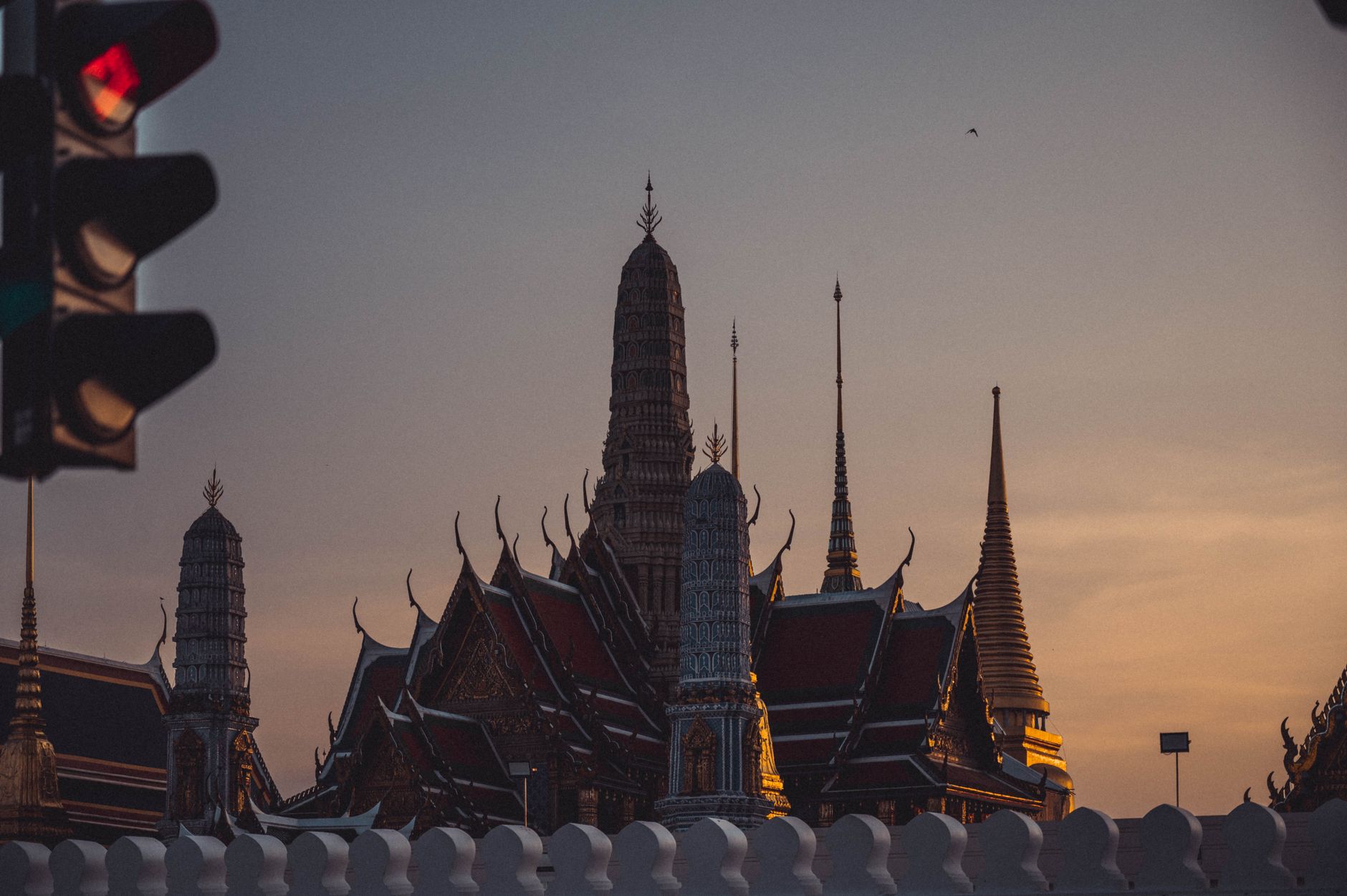 Phra Nakhon streets with temple spires and shophouse architecture
Phra Nakhon is Bangkok's original heart, covering the palaces, Khao San and Chinatown's edge, with rooms from $20 to $500.
What Phra Nakhon actually is
Phra Nakhon is one of Bangkok's fifty administrative districts, and it covers the historic core of the city — the entire island bounded by the Chao Phraya to the west and the Ong Ang and Banglamphu canals to the east. Inside its 5.5 square kilometres sit the Grand Palace, Wat Pho, Wat Phra Kaew, the National Museum, the Golden Mount at Wat Saket, Democracy Monument, the old print district on Bamrung Muang Road, all of Rattanakosin, all of Banglamphu, all of Khao San, and the northern edge of Chinatown around Sam Yot MRT.
Because 'Phra Nakhon' covers all of these separately famous sub-neighbourhoods, saying you are staying 'in Phra Nakhon' does not tell anyone much. It is a district on official maps, not a village atmosphere. For this guide, I treat Phra Nakhon as the middle and southern parts of the district — the temple island of Rattanakosin, the Bamrung Muang and Sao Chingcha area east of the palace, and the Sam Yot fringe where the district meets Chinatown. Khao San and Banglamphu, though technically Phra Nakhon, have their own guides.
Who this area suits
Phra Nakhon suits travellers whose main reason for coming to Bangkok is the heritage — temples, palaces, museums, historic streets. If your itinerary is Wat Pho at dawn, the Grand Palace at 9am, the National Museum in the afternoon and the Golden Mount at sunset, you want to sleep inside this district. The walking distances are short, the atmosphere at 7am and 7pm is dramatically better than midday, and staying here means you can be first through the temple gates.
It does not suit travellers whose priority is shopping, malls, nightlife or high-end restaurants — those are in Siam, Sukhumvit and Silom. It does not suit business travellers because the transport connections are the weakest of any central district. And it does not suit families with strollers; the sidewalks are old and uneven, and the streets between the palace and the canal are set up for pedestrians, motorbikes and stray dogs, in that order.
What a night costs
Phra Nakhon has the widest price range of any Bangkok district. Backpacker guesthouses on the Khao San end: $12-30. Mid-range boutique guesthouses in restored shophouses along Bamrung Muang, Tanao and Din So: $50-100. Small heritage hotels near the palace: $80-180. The genuinely luxury options — Sala Rattanakosin, Aurum the River Place, Arun Residence, Riva Arun — sit at $130-260 for river-view rooms with 5-15 rooms each.
The one thing Phra Nakhon does not really have is the international five-star chain in the $300-500 range with a rooftop pool and 400 rooms. The historic-district zoning caps building heights and the district's largest hotels are boutique in scale. If you want a full-service five-star, cross to Silom or Sathorn riverside, or to Thonburi's Iconsiam cluster — you get the same river view for the same money and a proper hotel operation.
What is walkable and what is not
Wat Pho, the Grand Palace, Wat Phra Kaew and the Museum of Siam form a tight cluster you can walk between in five to ten minutes each. The National Museum is 15 minutes north of the palace on Na Phra That Road. Wat Arun is a 5-minute cross-river ferry from Tha Tien pier. The Golden Mount at Wat Saket is 20 minutes east of the palace along Bamrung Muang. Chinatown's Sampeng market entry is 20 minutes south. This is the best walking district in Bangkok.
What is not walkable from Phra Nakhon: the BTS Skytrain (nearest station a 20-minute taxi), Chatuchak Market, Sukhumvit, Silom nightlife. The MRT Blue Line stops at Sanam Chai (Wat Pho) and Sam Yot (Chinatown edge) which improved the district's connection to the rest of the city dramatically after 2019. From Sanam Chai you can now reach Silom in 12 minutes and Chatuchak in 25. Before the MRT extension, Phra Nakhon was genuinely isolated; now it is only inconvenient.
The best sub-areas within Phra Nakhon
Riverside near Tha Tien pier is the most atmospheric — Sala Rattanakosin, Arun Residence, Aurum, plus a handful of small guesthouses. Rooftop bars with a Wat Arun view, 5-minute walk to Wat Pho, 10 minutes to the Grand Palace. Rooms $130-260. This is where I would book if the money is available and the temples are the point.
Bamrung Muang and Sao Chingcha (the Giant Swing) east of the palace is the second-best option. Restored shophouses, less tourist traffic, some of the best casual Thai food in the district at Krua Apsorn and the surrounding stalls, and a 10-minute walk to the palace. Rooms $50-120. Sam Yot at the southern edge is where Phra Nakhon meets Chinatown and has cheaper guesthouses at $30-70 with immediate MRT access. Skip the strip along Ratchadamnoen Klang between Democracy Monument and Khao San — it is a wide avenue with poor pedestrian character.
Food in Phra Nakhon
The district has some of the best casual Thai food in Bangkok because it has been a residential neighbourhood for two centuries. Krua Apsorn on Din So Road for southern Thai crab omelette at $6-8. Jay Fai on Maha Chai Road for the (extremely expensive, extremely hyped) $60 crab omelette — Michelin-starred, three-hour queue, decide for yourself. Chote Chitr for old-recipe Thai. Nuttaporn on Praeng Phuthon for 1945-recipe coconut ice cream at $2.
Street-food stalls concentrate around Sao Chingcha, the print district, and the fringes of Khao San. Boat noodles at $1.50, pad see ew at $2, mango sticky rice at $3, everything genuinely aimed at Thai residents rather than tourists. This is one of the best eating districts in the city for the money. The one thing Phra Nakhon lacks is polished mid-market restaurants — for $30-a-head dining, cross to Silom or Thonglor.
Phra Nakhon versus its neighbours
Against Khao San/Banglamphu (also Phra Nakhon technically): the southern half of the district is quieter, closer to the palace, and better for over-thirties. The northern half around Khao San is louder, cheaper, and better for backpackers. Different trips.
Against Chinatown one MRT stop south: Chinatown has better food density and more atmosphere at night, Phra Nakhon has better proximity to the palaces and museums. Book Chinatown for food and evening walks, Phra Nakhon for heritage sights. Against Silom riverside across the water: Silom has full-scale luxury hotels with pools and immediate BTS access, Phra Nakhon has heritage character and immediate access to the sights themselves. Choose based on whether you want a hotel holiday or a heritage holiday.
Before you book
What people ask before booking Phra Nakhon.
Phra Nakhon is the administrative district. Rattanakosin is the historic royal core inside it — the temple island itself. Old City is a loose tourist term that usually means Phra Nakhon plus adjacent bits of Chinatown. When a hotel says it is in Rattanakosin, it means directly around the palaces. When it says Phra Nakhon, it could be anywhere in a 5.5 sq km district.
Yes, easily. The Khao San end has dorms from $10 and private rooms from $20. The Sam Yot end near Chinatown has clean guesthouses at $30-50. Even the mid-range at $60-90 gets you into a restored-shophouse boutique. This is one of the cheaper central districts in Bangkok for genuine mid-range.
Suvarnabhumi is 45-70 minutes by taxi at $14-18. There is no direct rail — the MRT Blue Line to Phetchaburi then Airport Rail Link to the airport is 60-80 minutes with transfers. For Don Mueang, a taxi is $10-14 in 30-50 minutes, or the A4 airport bus runs directly from Khao San in 60-90 minutes for $1.50.