Signature dishes of Thailand in Bangkok
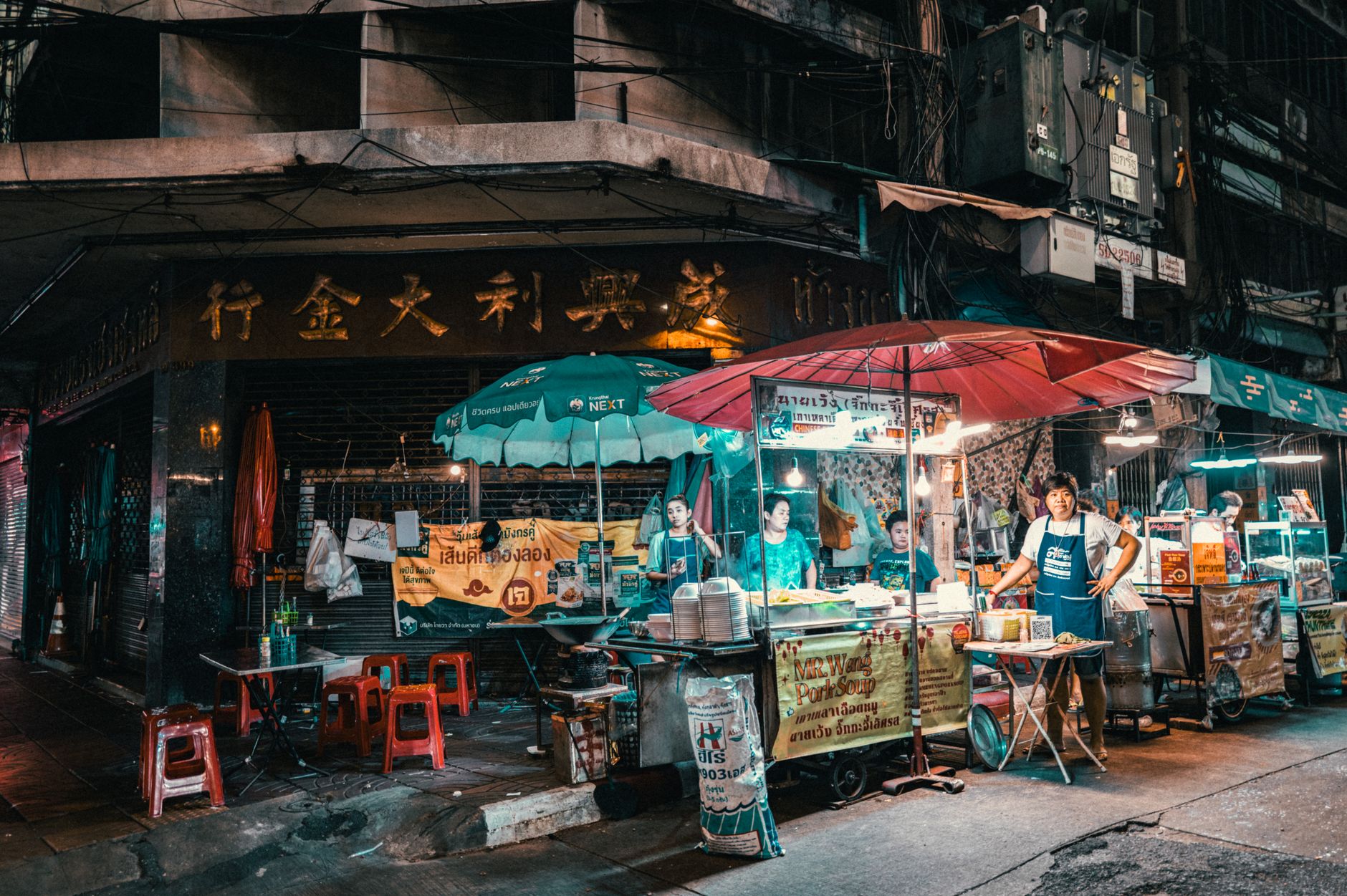
Every Thai dish has a hundred versions and Bangkok has 30 of the best of each. Here are the 12 you should actually eat, with named restaurants to eat them at and honest prices.
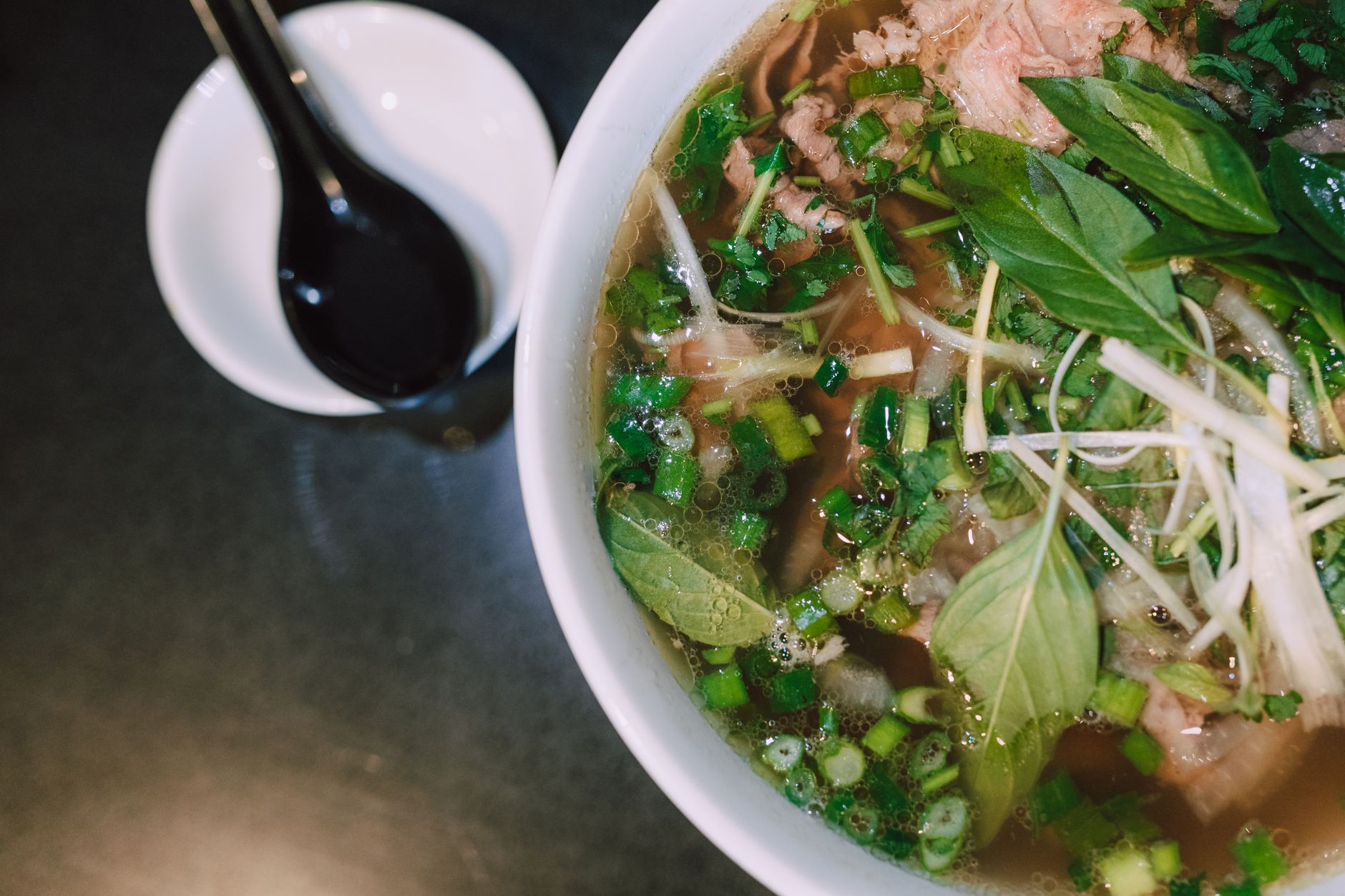 Bowl of boat noodles with beef and pork rinds
Pad Thai and the noodle canon
Pad Thai is genuinely worth eating in Bangkok even though you have had it a hundred times at home. Thip Samai on Maha Chai Road in the Old Town has been serving it since 1966 — the pad thai wrapped in a thin egg omelet is the signature, $3 to $5, with a queue of 45 minutes on weekend nights. Skip if you cannot wait; go on a Tuesday at 6pm. Pad Thai Fai Ta Lu, a spinoff of Thip Samai in Chinatown, is nearly as good with shorter queues.
Boat noodles (kuay teow ruea) are the other must-eat noodle: rich beef or pork broth with blood, herbs, and tiny bowls historically sold from boats. Boat Noodle Alley next to Victory Monument BTS has 6 stalls selling identical bowls for $0.80 each — locals stack 8 to 10 empty bowls in front of them. Wattana Panich on Ekkamai Soi 18 serves a beef noodle broth that has been simmering continuously for 45 years; $3 a bowl.
Tom yum and the soup problem
Tom yum goong (spicy shrimp soup with lemongrass, galangal, kaffir lime) exists in two versions: clear (nam sai) and creamy with coconut milk (nam khon). Both are correct; ask which you want. Jeh O Chula on Charoen Rat in Samyan is the tom yum destination — the mama noodle version comes in a hotpot with pork, eggs, and cheese, $12 for a huge portion feeding two, and the queue starts at 5pm.
Kuay Jab Uan Pochana in Chinatown does the peppery pork soup (kuay jab) with rolled rice noodles and crispy pork belly for $3, open 6pm to 3am. For tom kha gai (coconut chicken soup, milder), Krua Apsorn near Democracy Monument serves an excellent version at $6 alongside its signature crab omelet. Most tom yum on tourist menus is dumbed down; asking for it Thai-spicy (phet phet) is the only way to get the real version.
Curries: green, red, massaman, khao soi
Green curry (kaeng khiao wan) is the most familiar; the version at Krua Apsorn or Baan Padthai is properly fragrant with basil and small green eggplants, $6 to $9 with rice. Massaman curry — mild, sweet, with peanuts and cinnamon — was voted world's best dish by CNN a decade ago and holds up. Try it with beef at Baan Ice on Sukhumvit Soi 55, $8. The one to seek out is khao soi, the northern Thai curry noodle soup with crispy noodles on top; Khao Soi Mae Sai in the Ari district serves it at $4 a bowl.
For serious curry heads, Sorn (a two Michelin star southern Thai restaurant) treats crab curry with turmeric rice as a $220 tasting menu experience. On the other end of the price scale, any Muslim restaurant in the Silom area does massaman lamb or beef at $5 to $7 with roti. The best casual curry restaurant in central Bangkok is arguably Charmgang in Charoenkrung, $12 to $18 mains, opened by Le Du alumni and does a superb pork jungle curry.
Salads and the papaya problem
Som tam (green papaya salad) is the national obsession — shredded raw papaya pounded in a clay mortar with lime, fish sauce, palm sugar, chilies, and dried shrimp or salted crab. Somtum Der on Sala Daeng Soi 1 does the definitive Isaan version, $4 to $6, and now has branches in New York. Ask for it Thai-spicy at your own risk; a 4-chili som tam will genuinely make you sweat. The crab version (som tam poo) uses fermented salted crab and is a stronger flavor.
Larb (minced meat salad with roasted rice powder, mint, and chilies) and nam tok (grilled beef or pork sliced thin with the same herbs) are the other Isaan classics. Order them together with som tam and sticky rice for the full northeastern set — this combination costs $10 to $15 for two people at neighborhood shops. Baan Somtum on Silom is the reliable central Bangkok option. Larb ped (duck) is worth seeking out specifically.
Rice and grilled dishes
Khao man gai (Hainanese chicken rice) is the national comfort dish. Go-Ang Pratunam on Petchburi Road is the best-known, $3.50 a plate, cash only, expect a queue at lunch. The green sauce is what matters. Khao mu daeng (red char siu pork over rice) and khao ka mu (stewed pork leg over rice) are the other rice bowl classics; Charoen Saeng Silom does the stewed pork leg for $4 with braised egg and pickled greens.
Moo krob (crispy pork belly), moo ping (grilled pork skewers with sticky rice for $0.50 each from any morning cart), and gai yang (grilled Isaan chicken) are the grill essentials. Polo Fried Chicken on Soi Polo does the definitive gai tod (Thai fried chicken with crispy garlic) at $8 for a half bird. For steak-adjacent Thai, try nua yang jim jaew — grilled beef with tamarind chili dip — at any Isaan restaurant.
Sweets and drinks
Mango sticky rice (khao niaow ma muang) is only worth eating in Thai mango season (March to June); off-season versions use frozen mango and disappoint. Mae Varee on Sukhumvit Soi 55 does the Bangkok reference version at $4 to $6, open 5am to midnight. Coconut ice cream in a fresh coconut with sticky rice and peanuts at Chatuchak Market is a $2 weekend classic.
Thai iced tea (cha yen) at $1 from any street stall is a sugar bomb; ask for less sweet (wan noi). Thai iced coffee (o-liang) is stronger and better. Cha manao (lime tea) is the underrated pick. For beer, Chang and Singha are the local lagers at $2 in 7-Eleven; Leo is the cheaper third option. Craft beer has arrived in Bangkok — Mikkeller Bangkok on Ekkamai Soi 10 has 30 taps at $6 to $10 a glass.
How to order without embarrassment
At street stalls, point at what someone else is eating or at the picture menu. Say phet noi (a little spicy) for foreigners' spice tolerance, phet phet for real Thai heat, or mai phet (not spicy) if you cannot handle chili. Kap khun kha (thank you, female speaker) or kap khun krap (male speaker) closes any transaction politely. Prices are almost always fixed at proper stalls; if there is no price posted and no menu, ask before ordering.
At mid-range restaurants, Thai meals are shared: order 3 to 4 dishes for 2 people, including 1 curry, 1 stir-fry, 1 salad or soup, and rice. Do not order a starter and main course each — you will end up with double the food. Rice is often ordered separately at $0.50 per portion. Sticky rice is the northeastern norm with Isaan dishes. Fish sauce, chili flakes, and vinegar chilies on the table are for you to adjust the seasoning yourself.
Frequently asked questions
What people ask before they set off on this one.
If forced to pick one, boat noodles at Wattana Panich on Ekkamai Soi 18 or the pad thai at Thip Samai in the Old Town. Both are $3 to $5 experiences that show you what these dishes actually are versus the versions you know. Add a bowl of the coconut ice cream at Chatuchak on the weekend and you have the essential trio for $10 total.
Different, not better. The best pad thai and boat noodles come from streetside stalls that have been doing one dish for 30 years. The best curries, complex salads, and multi-dish meals come from proper restaurants. A good Bangkok food day combines both: street breakfast, food court or sit-down lunch, night market snacks, then a nice dinner at a mid-range restaurant like Baan Ice or Krua Apsorn.
Genuine Thai spicing is significantly hotter than the tourist versions served on English menus. A som tam ordered Thai-spicy contains 3 to 6 bird's eye chilies and will make most non-Thai eaters sweat and cough. Order phet noi (a little spicy) as a starting point, or specify a number of chilies for som tam and larb. Curries and stir-fries are milder than salads. Rice, coconut, and cucumber neutralize heat; water does not.
Yes for anything Michelin-starred or well-known: Le Du, Sorn, Gaggan Anand, 80/20, Nusara all need 3 to 4 weeks. Popular mid-range places like Somtum Der, Jeh O Chula, and Charmgang take walk-ins but expect 30 to 60 minute waits at peak times. Street food and food courts never take reservations. Weekday lunches are the easy time; weekend dinners after 7pm are the hard time.
Food courts (Terminal 21, Emquartier, Icon Siam) are air-conditioned collections of vendors, some of whom are branches of famous street operations. Quality varies; prices run $3 to $6 per dish, roughly double street prices. Best for hot afternoons and rainy days. Street food is cash only, no seating or basic plastic stools, and the best versions of specific dishes. Both are worth experiencing on any Bangkok trip.
Hotels in Bangkok
More guides to Bangkok
All guides Itineraries · 8 min read
48 hours in Bangkok
Itineraries · 8 min read
48 hours in Bangkok
Two days is enough to nail the temples, one great market and a proper rooftop — if you sleep in the right neighborhood. This itinerary keeps transfers under 20 minutes and dinners under $15.
 Itineraries · 10 min read
One week in Bangkok
Itineraries · 10 min read
One week in Bangkok
Seven days is the sweet spot: temples, two day trips, real neighborhoods, and enough downtime to eat properly. Here's how we’d split a week if we were doing it again tomorrow, hotel by hotel.
 Itineraries · 8 min read
Bangkok in 3 days on a budget
Itineraries · 8 min read
Bangkok in 3 days on a budget
Three days in Bangkok on under $60 a day is genuinely doable — hostels at $12, meals under $3, and every temple within reach on public transport. Here's the honest plan.
Real photos, real prices, and one tonne of carbon removed with every booking — at the same rate you would pay anywhere else.