When to visit Bangkok
Bangkok has 3 seasons — cool, hot, and wet — and the difference between them is roughly 8 degrees and 200 mm of rain a month. Timing matters more than most people think.
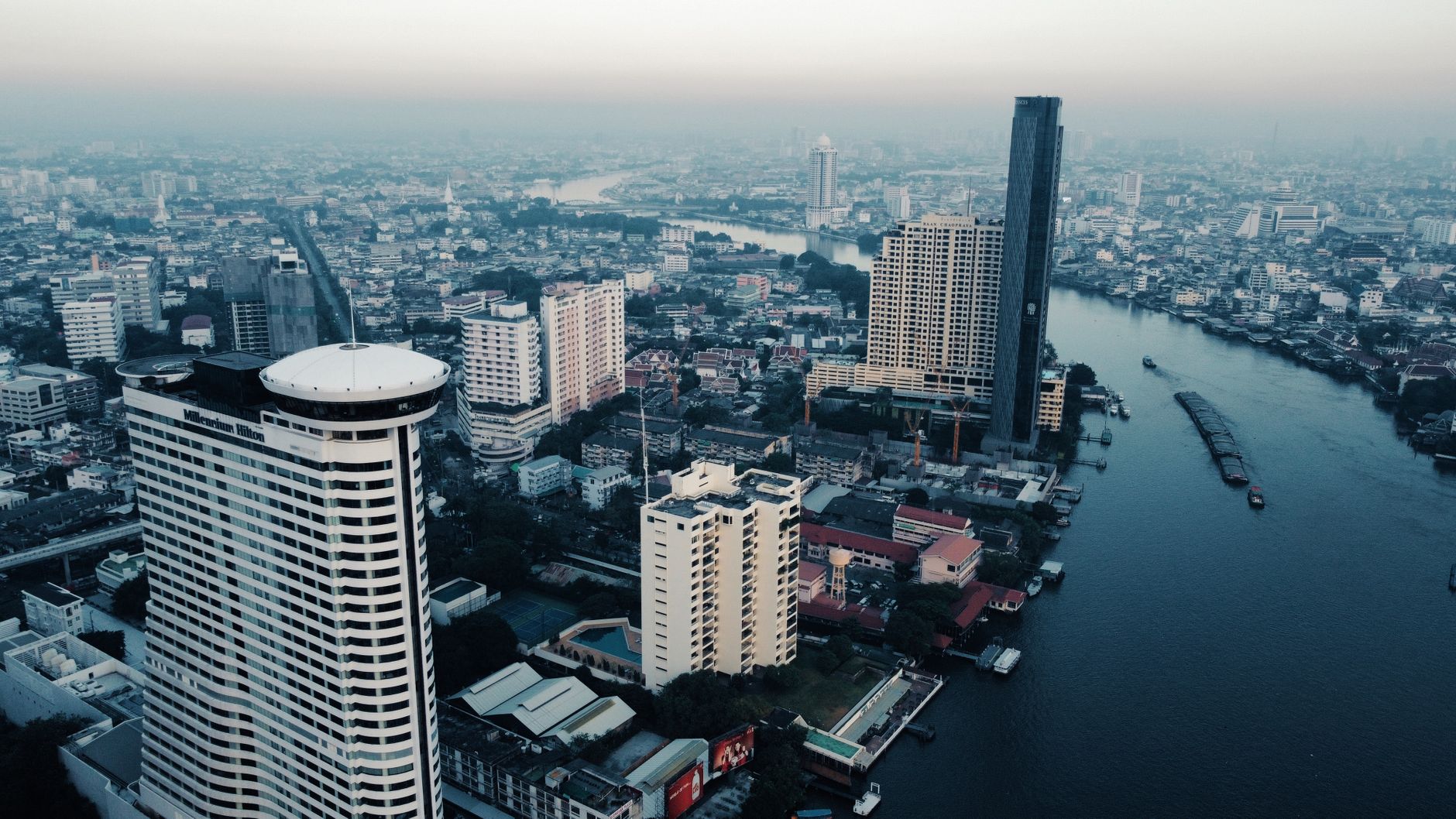 Sunset over the Chao Phraya River with temple spires
The cool season: November to February
This is when everyone tells you to visit, and they are right. Daytime highs sit at 30 to 32 degrees, nights drop to 22, and rain is rare. Humidity finally dips below 70 percent, which changes the entire experience of walking around. December and January are the peak of the peak: hotel rates jump 30 to 50 percent, and river-view rooms at places like Anantara Riverside book out 6 weeks ahead. Expect to pay $130 for a hotel that costs $90 in June.
The trade-off for the perfect weather is crowds at every temple. The Grand Palace at 9am in January is a slow-moving current of 20,000 people a day. Go at opening (8:30am) or wait until 2pm when the tour buses clear out. Book restaurants like Gaggan Anand and Le Du 3 to 4 weeks ahead — walk-ins are near impossible. Sukhumvit and Silom hotels quote their highest rates of the year in the last 2 weeks of December.
The hot season: March to May
April is the hottest month on the planet in Bangkok — literally, by some measures. Daytime highs regularly hit 38 to 40 degrees, and the pavement is uncomfortable to stand on by 11am. Temples with dress codes (long trousers, covered shoulders) become an endurance test. On the plus side, this is when hotel rates crash: four-star Sukhumvit properties drop to $70, and even the Peninsula runs promotions under $300.
April 13-15 brings Songkran, the Thai new year water festival, which is either the best or worst thing about visiting in April depending on your temperament. Silom Road, Khao San, and Sukhumvit Soi 71 turn into 3-day water fights. Everyone gets soaked. If you are staying near any of these, plan on being wet from noon to 6pm daily. Hotel prices spike again for Songkran itself, then collapse the week after.
The rainy season: June to October
Bangkok's monsoon is not the all-day washout many visitors imagine. Rain typically arrives in intense 45 to 90 minute bursts in the late afternoon, then clears. Mornings are usually dry. September is the wettest month, averaging 340 mm across 20 rain days. October carries flood risk in the low-lying eastern districts and around the river when combined tides run high. In 2011 and 2022 parts of the outer city flooded meaningfully.
The upside is real. Hotel rates run 30 to 40 percent below December, restaurants take walk-ins, and temples are quiet. Pack a compact umbrella or buy one at any 7-Eleven for $2. The BTS and MRT never flood, so plan around them. Skip the boat commutes on days with heavy morning rain — the Chao Phraya can run fast and choppy. September specifically is when locals travel because kids are still in school abroad; deals are best.
Festival and event timing
Chinese New Year (late January or February) turns Yaowarat into a spectacular street party with dragon dances and dumpling stalls open until 2am. Loi Krathong in November — the floating lantern festival — sees thousands of candlelit banana-leaf boats released on the Chao Phraya and every canal. Book a river hotel weeks in advance for Loi Krathong. Vegetarian Festival in October (Chinese-Thai communities) means most street stalls in Chinatown serve meatless versions for 9 days, marked with yellow flags.
The King's Birthday (July 28) and Queen's Birthday (August 12) are public holidays with government offices closed but tourist sites open. The Grand Palace closes for royal ceremonies occasionally — check the official website before booking a tour for a specific day. Bangkok has no Muslim New Year impact but Ramadan reduces daytime dining slightly in the small Muslim quarter near Silom.
The month-by-month verdict
Best overall: late November and early February — cool, dry, and the December price spike has passed or not yet started. Best value: September — cheap, quiet, and rainy afternoons force useful naps. Worst: April — hot beyond description unless you specifically want Songkran, in which case it is essential. Avoid mid-December to January 5 unless you have booked far in advance; expect to pay double and queue everywhere.
For a first Bangkok trip focused on temples and street exploration, aim for early December or January. For a food or shopping trip where you spend more time indoors, June through September is fine and cheaper. For a river-focused visit, avoid September and October when the water runs high and muddy. Layovers of any length work year-round — the airports are climate-controlled and reliable.
What to pack for each season
Year-round: lightweight cotton or linen, sandals, sun hat, sunscreen (Thai sunscreen has whitening agents — bring your own if this bothers you), and one long-sleeve layer for over-air-conditioned malls and buses. Temples require covered shoulders and knees, so pack one pair of light trousers and one long-sleeve top. Flip-flops are useful because you remove shoes at every temple.
Cool season only: a light sweatshirt for early mornings and rooftop bars, where wind chill on the 30th floor can drop the perceived temperature to 20 degrees. Rainy season: quick-dry shoes, not sandals for anything involving city walks (the drains overflow), a packable rain jacket rather than umbrella if you plan to walk far, and a waterproof phone pouch for boat rides. A universal power adapter — Thai sockets accept both flat and round pins but not consistently.
Frequently asked questions
What people ask before they set off on this one.
September is generally the cheapest for hotels, with rates 30 to 40 percent below December peaks. May and June are close behind. Flights follow a similar pattern from Europe and North America. Book hotels 4 to 6 weeks ahead in these months and you can find genuinely nice four-stars for $60 to $80 that would cost $110 to $140 in high season.
It is genuinely uncomfortable — 38 to 40 degrees most afternoons. Sightseeing outdoors between 11am and 4pm is brutal, and temple visits require constant water and shade breaks. If you go, plan mall time and hotel pool time midday, and do temples at 8:30am or after 4pm. Songkran on April 13-15 is a specific reason to visit if the water festival appeals; otherwise, choose another month.
Almost never. Bangkok's rain typically comes in short intense bursts, not all-day downpours. You will lose 60 to 90 minutes of outdoor time on a rainy afternoon, no more. Malls, temples with covered galleries, cafes, and rooftop bars with retractable awnings all work fine. Only serious tropical storms — 2 or 3 days a year on average — genuinely disrupt travel.
For December 20 to January 5, book hotels 6 to 8 weeks ahead if you want a specific property, and 10 to 12 weeks for river-view rooms or five-star suites. Restaurants like Gaggan and Le Du need 3 to 4 weeks. For the rest of December, 3 weeks is usually enough. For November or early December, 2 weeks works. Flights follow a similar curve — cheapest 10 weeks out.
It depends entirely on how you feel about being soaked in public for 3 days. If the water festival sounds fun, it is genuinely one of the great parties on earth — Silom, Khao San, and RCA all run massive street events. If you want to visit temples or take photos with expensive cameras, avoid April 13-15 or stay in a quieter district like Sathorn and take taxis everywhere.
Hotels in Bangkok
More guides to Bangkok
All guides Itineraries · 8 min read
48 hours in Bangkok
Itineraries · 8 min read
48 hours in Bangkok
Two days is enough to nail the temples, one great market and a proper rooftop — if you sleep in the right neighborhood. This itinerary keeps transfers under 20 minutes and dinners under $15.
 Itineraries · 10 min read
One week in Bangkok
Itineraries · 10 min read
One week in Bangkok
Seven days is the sweet spot: temples, two day trips, real neighborhoods, and enough downtime to eat properly. Here's how we’d split a week if we were doing it again tomorrow, hotel by hotel.
 Itineraries · 8 min read
Bangkok in 3 days on a budget
Itineraries · 8 min read
Bangkok in 3 days on a budget
Three days in Bangkok on under $60 a day is genuinely doable — hostels at $12, meals under $3, and every temple within reach on public transport. Here's the honest plan.
Real photos, real prices, and one tonne of carbon removed with every booking — at the same rate you would pay anywhere else.