Ayutthaya
The 14th-century royal capital 80km north of Bangkok — brick ruins, riverside guesthouses, and the best boat noodles in Thailand.
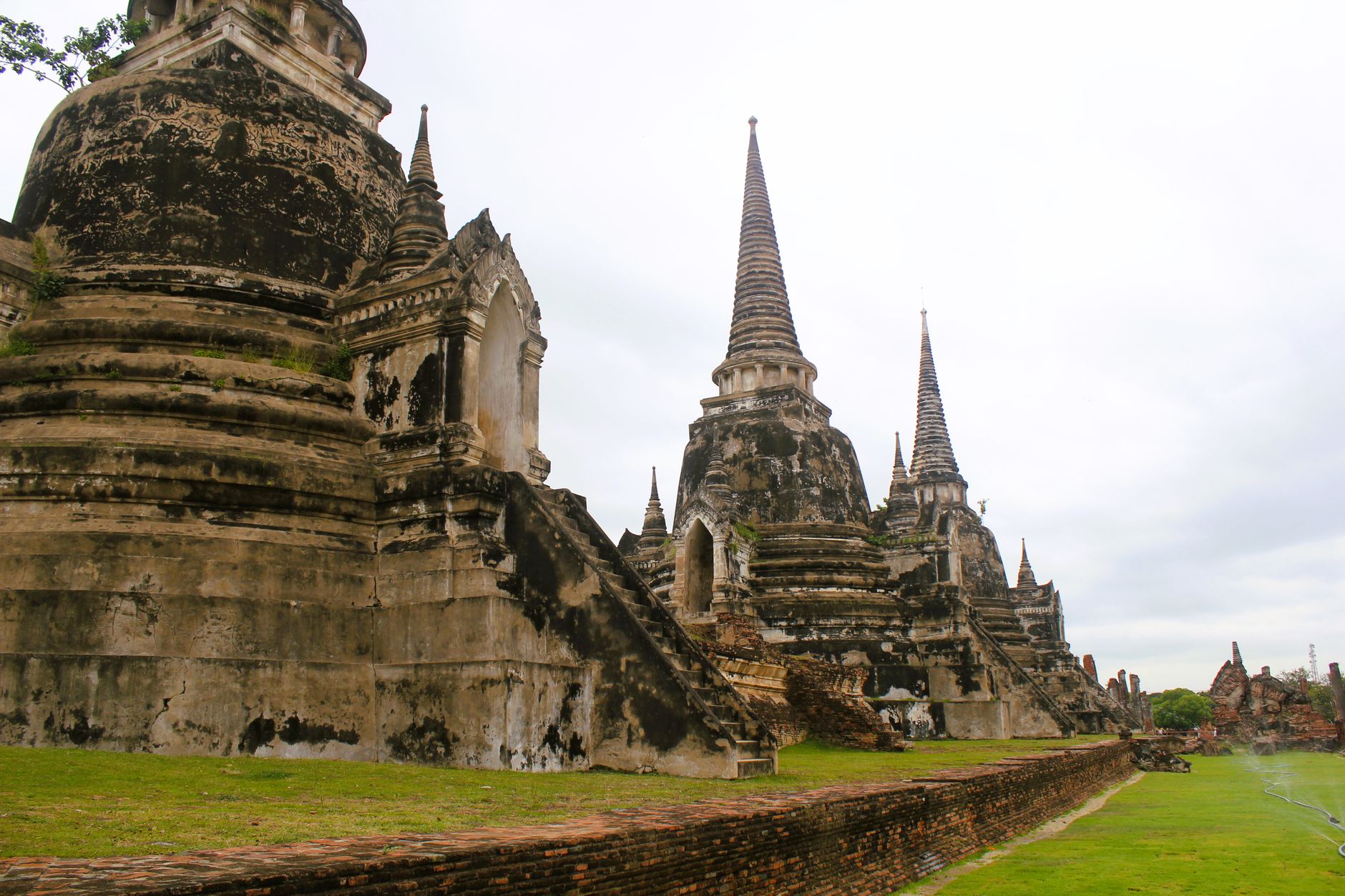 Brick prangs of Wat Chaiwatthanaram at sunset
Why people stay in Ayutthaya
Ayutthaya was the capital of Siam from 1350 to 1767, when Burmese armies sacked it and the court retreated south to found Bangkok. What remains is a UNESCO-listed island city ringed by three rivers, covered with the brick shells of temples that were once gold-leafed to the sky. This is not central Bangkok, not a suburb, not a day-tripping annex — it is a separate city 80km north, 60 minutes by train, and one of the two or three most important historical sites in Southeast Asia.
The temple-ruin core (Wat Mahathat with the Buddha head in tree roots, Wat Ratchaburana, Wat Phra Si Sanphet, Wat Chaiwatthanaram across the river) is walkable or bikeable in a day. But the city is alive around the ruins — a working market on U Thong Road, riverside noodle boats at Chao Phrom pier, a real Muslim quarter east of the railway station, and elephant camps that are mostly awful and one that is not (Elephantstay, no rides, sanctuary work only). Evenings on Naresuan Road bring backpackers to a small bar strip that shuts by 1am.
Base here for two or three nights if history matters to you at all. It is a mistake to try to see Ayutthaya as a day-trip from Bangkok — you get one hot midday visit and miss the two things that make it — dawn light on the prangs and the boat noodle stalls at dusk. Skip it if temple ruins bore you or if your total trip is under five days. Prices are dramatically below Bangkok: full-service four-stars at $50-80 and clean guesthouses at $15-25.
The best base is the historical island itself, on the western side near Wat Phra Si Sanphet — small hotels and guesthouses at $25-60 within cycling distance of every major ruin. Naresuan Road (the backpacker strip) has $12-20 dorm beds and cheap fan rooms but noisy weekends and mediocre food. For a proper hotel with pool go to the eastern riverside near Chao Phrom market or the outer bank across Pridi Damrong Bridge — $40-80, quieter, and you cross into town by tuk-tuk for $1.50. Avoid the highway-side chain hotels on the Bangkok road — cheap ($30) but 15-20 minutes from anything worth seeing. In the old city itself, the sois behind Wat Ratchaburana are the sweet spot: quiet at night, three temples on foot, a good breakfast market at dawn.
Things to do in Ayutthaya
The Khmer-style temple across the Chao Phraya river, west of the island, built 1630. The 35m central prang catches gold-hour light beautifully. Entry $2. Open 8am-6:30pm. Come 4:30-6pm for photography. Reach by bike (15 min from the island) or tuk-tuk ($3 return).
The floating noodle boat at Chao Phrom pier, next to the market on U Thong Road east side. Three tiny bowls of pork or beef broth noodles for $1 each — you order in threes and stack the finished bowls. Open 4pm-9pm, always a queue but it moves fast. Cash only.
The most photographed image in Ayutthaya — a sandstone Buddha head grown into a bodhi tree root at the base of Wat Mahathat. Squat when photographing (temple rule: your head must not be higher than the Buddha's). Entry $2, open 8am-6pm. Go 8-9am to beat tour buses.
Rama V's summer palace 20km south of Ayutthaya — a mix of Thai, European and Chinese pavilions on a lake. Entry $3, open 8am-4pm. Take the local train from Ayutthaya station ($0.30, 15 min) or a Grab ($8). Two hours is enough. Combine with Wat Niwet Thammaprawat, the Gothic-style temple across the river.
Any guesthouse rents bicycles at $2/day. The island is 4km east-west, 3km north-south, and mostly flat. A 12-15km loop hits Wat Phra Si Sanphet, Wat Mahathat, Wat Ratchaburana, the Chao Sam Phraya Museum, and the reclining Buddha at Wat Lokayasutharam. Do it early morning or late afternoon.
The best archaeological museum outside Bangkok — gold treasure from Wat Ratchaburana's crypt, bronze Buddha heads, and the reconstructed royal barge fittings. Entry $5, open Wednesday-Sunday 9am-4pm. On the southern edge of the island by Naresuan Road. Two hours is plenty.
What to see
Hotels near Ayutthaya
No hotels are listed in Ayutthaya yet. The nearest ones are on the region page.

Getting around Ayutthaya
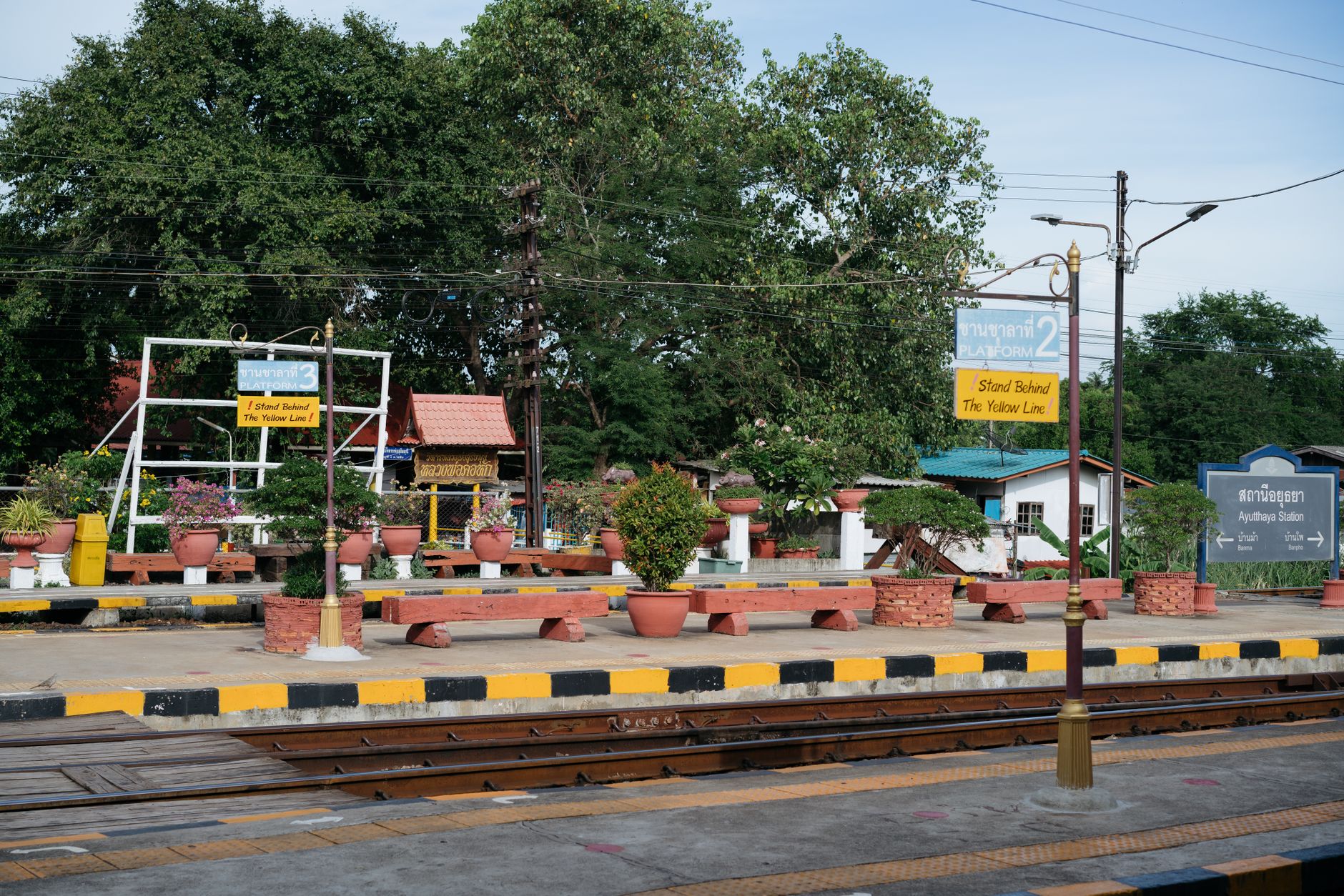
From Bangkok take the northern-line train from Hua Lamphong or Bang Sue to Ayutthaya station ($0.60-3 depending on class, 90 min). Trains leave hourly. Alternatively minivans from Mo Chit ($2, 75 min) run every 30 minutes. Grab from central Bangkok is $25-35 and 90-120 minutes with traffic. From Don Mueang Airport a taxi is $20 in 60 minutes. Inside Ayutthaya rent a bicycle ($2/day) or a scooter ($5/day) — the island is flat and small. Tuk-tuks charge $1.50-3 for hops within town and $8-12 for the cross-river temples. For a full day of ruin-hopping hire a tuk-tuk driver for $20-25.
Questions about Ayutthaya
Stay at least one night, ideally two. Day trips arrive midday in 36°C heat, do three temples in the worst possible light, and leave. Staying overnight gives you dawn at Wat Chaiwatthanaram, boat noodles at dusk, and a cool morning bike loop. Guesthouses start at $15 — cheaper than a day-tour minivan ticket.
Wat Mahathat, Wat Ratchaburana, Wat Phra Si Sanphet, and Wat Chaiwatthanaram — all $2 each. The reclining Buddha at Wat Lokayasutharam is free. A $10 combo ticket at any of the paid sites covers all four. Skip Wat Phanan Choeng unless you have a specific interest in Chinese-Thai syncretism.
No. The commercial camps offering rides in howdahs on the temple ring road are the worst kind of tourist elephant tourism — cramped enclosures, hook training, exhausted animals in midday heat. Elephantstay (Rommaneenat Park) does genuine sanctuary work with no rides and requires advance booking. That is the only Ayutthaya elephant experience worth engaging with.
One full day covers the top four temples if you cycle. Two days is comfortable and adds Bang Pa-In, the museum, and dawn photography. Three days lets you slow down, do a longtail boat river tour, and see the outer temples like Wat Yai Chai Mongkhon. More than three and you have exhausted it unless you are doing serious archaeological reading.