Kanchanaburi
Provincial capital 130km west of Bangkok — the Death Railway, WWII cemeteries, Erawan waterfall, and limestone karst country.
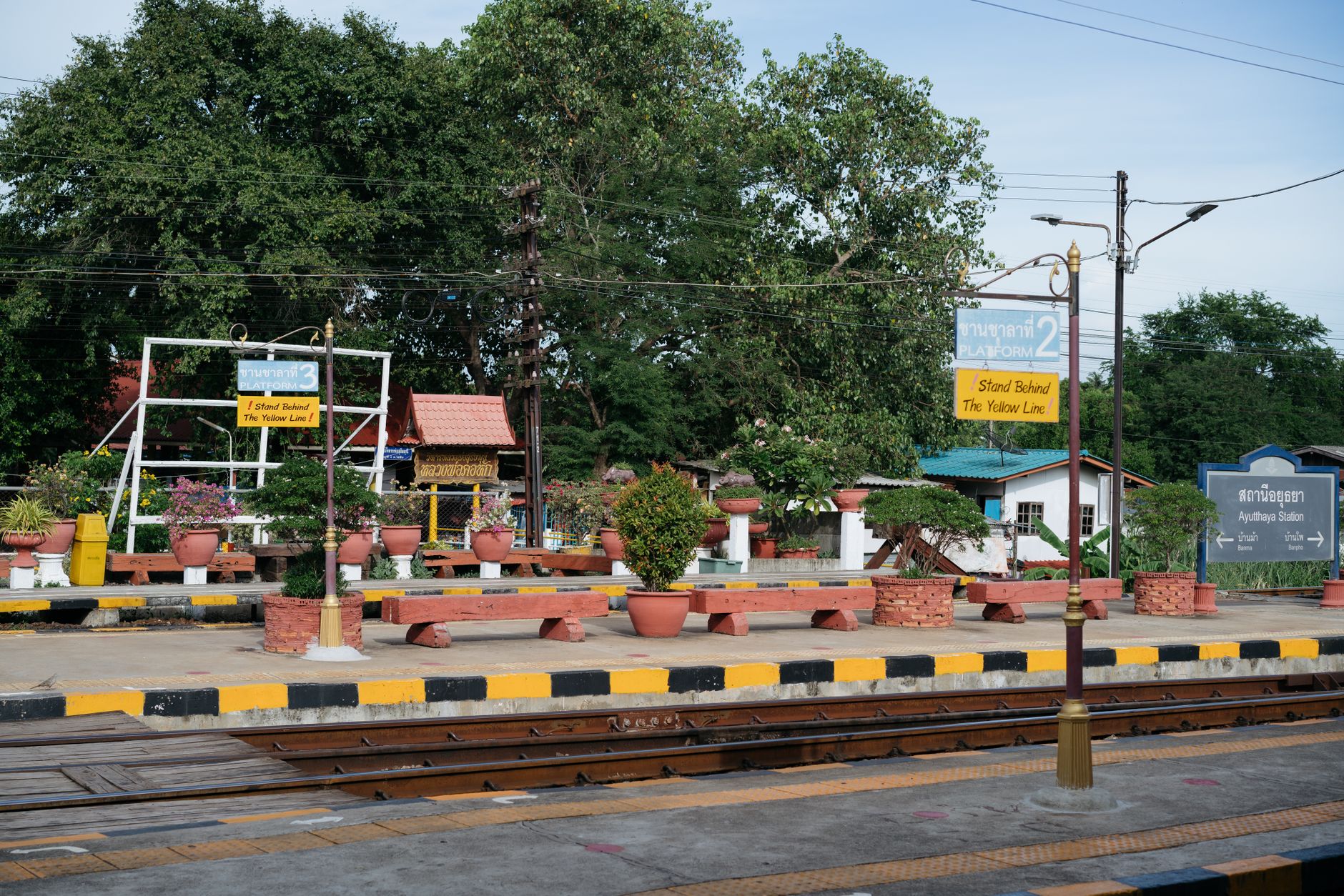 Death Railway curving along limestone cliff above River Kwai
Why people stay in Kanchanaburi
Kanchanaburi is not a Bangkok neighbourhood — it is a full three-hour drive west, a separate province, and the gateway to a landscape that looks and feels nothing like the central plains. Limestone karsts rise straight out of the River Kwai valley. National parks (Erawan, Sai Yok, Srinakarin) fill the western half of the province. The town itself sits on the confluence of the Kwai Yai and Kwai Noi rivers, which the Japanese army bridged in 1942-43 using 60,000 Allied POWs and 200,000 Asian labourers to build the Death Railway toward Burma. Around 100,000 men died. The town lives with this history openly — three cemeteries, two museums, the bridge itself, and a working section of the original railway that still runs trains.
The town is a two-street strip along the river (Mae Nam Kwai Road) and a broader modern grid inland around the market and bus station. Mae Nam Kwai in the evenings is a raft-restaurant and backpacker-bar scene — floating restaurants, live music from 7pm, cheap Chang beer at $1.50, and a small nightlife wave that ends by 1am. It is not a party town and does not want to be. Days are for the bridge, the museums, and (if you have two or more nights) a day trip to Erawan Falls or Hellfire Pass.
Base here for two or three nights, minimum. A day trip from Bangkok is technically possible but crushes the experience — you get the bridge and a museum, miss the countryside entirely, and spend six hours in a van. Skip Kanchanaburi only if WWII history and karst-country landscape both leave you cold — otherwise it is one of Thailand's most rewarding secondary destinations. Prices are among the lowest of any major stop: $20-40 riverside guesthouses, $50-90 raft-hotels on the water.
The two useful zones are Mae Nam Kwai Road (the backpacker riverfront) and the raft hotels a few kilometres upriver near the bridge. Mae Nam Kwai has $15-30 guesthouses with river-facing rooms, walkable to bars, restaurants, and the bridge (1.5km north). The raft hotels — actual bamboo bungalows floating on the river, no engine noise, wake to mist on the water — run $40-90 and require a $2-3 tuk-tuk from town for meals. The bridge-side hotels around the JEATH Museum and Bridge Station are convenient for the Death Railway train but touristy and food is worse. Avoid the highway-side motels on Route 323 west of town — they exist for tour groups and are 15 minutes from anything walkable. For families or groups, the mid-range resorts 5km upriver (Felix, Xen) at $80-140 give you pool, quiet, and boat access.
Things to do in Kanchanaburi
The two-hour ride from Kanchanaburi station along the original Burma Railway, crossing the wooden Wampo Viaduct on limestone cliffs above the Kwai Noi. Third-class ticket $2, no aircon, benches. Trains leave 6:07am and 10:35am, return 12:55pm and 3:20pm. Get a right-hand window seat heading west. Genuinely moving landscape.
80km west of town — the most powerful WWII memorial in Southeast Asia, at the pass where POWs cut a rail bed through solid rock by hand. Free audio guide, well-designed exhibits, a 4km walking trail down through the cutting itself. Free entry, open 9am-4pm daily. Take a Grab or hire a driver ($30 return, 90 min each way).
Right in town on Sangchuto Road, 300m north of the bus station. Seven thousand Allied POW graves in an immaculate British-commission cemetery. Free entry, always open. Combined with the Thailand-Burma Railway Centre (small museum) opposite — entry $6, open 9am-5pm, the best factual account of the whole railway story.
The seven-tier turquoise waterfall 65km north, in a limestone forest. Entry $10 foreigner rate, open 8am-4:30pm. Levels 1-4 are easy walks (30 min from gate), 5-7 require another hour uphill. Bring swimming clothes — you swim in the pools. Grab return is $30, or take the 8170 public bus from town ($2.50, 90 min).
The bridge is not the original wooden one (that was bombed 1945) but the postwar rebuilt steel-and-concrete crossing, still in daily use. Walk across free of charge, 5-10 minutes. Best light 4-6pm. When a train comes, step into one of the passing bays. The surrounding tourist strip is skippable.
Twin hilltop temples 10km south — one Thai, one Chinese-style, on adjacent limestone outcrops. Great views over rice paddies and the Kwai valley. Free entry, open 8am-5pm. 300 stairs to the top. A Grab return with wait is $10. Best 4-5:30pm to avoid heat and catch the late light.
What to see
Hotels near Kanchanaburi
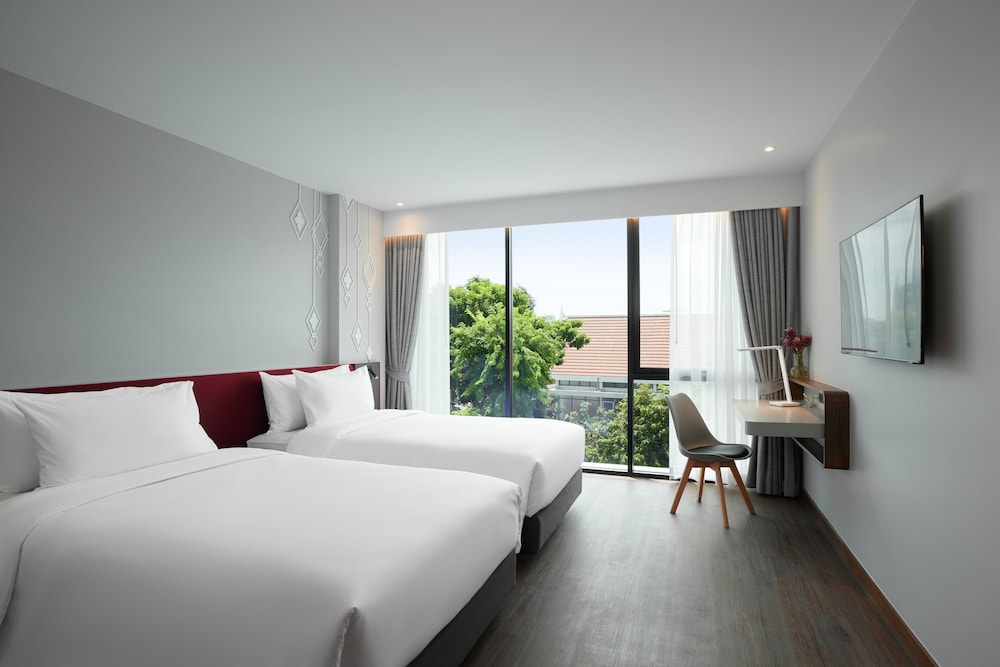
No hotels are listed in Kanchanaburi yet. The nearest ones are on the region page.
Getting around Kanchanaburi
From Bangkok the easiest option is a minivan from Mo Chit or Sai Tai Mai to Kanchanaburi bus terminal ($4-5, 2-2.5 hours, every 30 minutes 6am-6pm). The Thonburi-Nam Tok train is scenic but slow — $3, 3 hours, only two departures daily (7:50am and 1:55pm from Thonburi Station). A Grab from central Bangkok is $50-70 and 2.5-3 hours. Inside Kanchanaburi town everything is walkable or a $1-3 tuk-tuk. For outer sights (Erawan Falls, Hellfire Pass, Sai Yok) you need a Grab ($25-40 return), a hired driver ($40-60/day), or a rented scooter ($6/day if you are confident on Thai country roads). Public buses to Erawan and Hellfire exist but the schedules are limited.
Questions about Kanchanaburi
The current bridge is a postwar rebuild — the original wartime bridge was bombed by Allied aircraft in 1945 and reconstructed with steel spans provided by Japan as war reparations. Two of the curved spans in the middle are original 1943 sections. The film location was in Sri Lanka, not here — do not expect the movie scene.
Two nights minimum. Day one for the town — bridge, cemetery, museums. Day two for Erawan Falls or Hellfire Pass (choose one). Three nights lets you do both plus a riverside slow morning. Any less and you have wasted the travel time. Any more is only worthwhile if you are doing multi-day treks in Sai Yok or Thong Pha Phum national parks.
Most are not. The riverside 'elephant show' camps offering rides and bathing photos operate on the same welfare basis as the worst Chiang Mai operations. Elephants World, 40km northwest of town, is a genuine sanctuary — no rides, feeding and river-bathing only, advance booking required ($90/day). If you must engage with elephants, that is the honest option here.
November-February is dry and pleasantly cool (20-30°C). March-May is brutal, often 38-40°C with no sea breeze this far inland. June-October is rainy season — Erawan Falls are at their most spectacular but landslides can close park roads. Book any waterfall trip with a weather-flexible schedule between June and September.